


Hands-Free Dog Leashes: What Active Dog Owners Actually Need
 Beyond
Written by
Dog Lover ContributorUpdated 25 May 2026 · 4 Min Read
Our niche sponsors, who share our love of dogs, contribute articles to the site.
The category of hands-free dog leashes has grown up considerably in the last few years. What started as a niche product for ultra-runners and trail runners has expanded into a mainstream piece of gear that any owner with an energetic dog has reason to consider. The reason is simple. Hands-free leashes let the human use their arms naturally, whether running, hiking, pushing a stroller, or just enjoying a walk without the fatigue of holding a traditional leash for an hour.But the category has also fractured. The market is now full of products that range from genuinely engineered gear to repackaged waist bands with a clip. For owners trying to find a leash that will hold up to real use, the differences matter.
What a Real Hands-Free Leash Actually Includes
A well-designed hands-free dog leash is built around four non-negotiable components. The first is the waist belt itself, which needs to sit comfortably on the hip bone, distribute force across the lumbar region rather than concentrating it in one spot, and stay in place during dynamic movement without riding up or rotating.The second is the bungee section. Without elastic shock absorption between the belt and the dog, every pull becomes a jolt to the runner's spine and a corresponding jerk on the dog's neck or harness. Quality bungee construction absorbs sudden tension and releases it gradually, which is better for both ends of the leash.The third is the clip and connection hardware. A leash is only as strong as its weakest carabiner, and budget products skimp here. Trigger-snap hooks rated for the dog's pull strength matter, and double-attachment points (one to the dog's harness, one optional to the collar) prevent failure.The fourth is the handle override. Even on a hands-free leash, there should be a traditional handle near the clip end. When you need to take direct control quickly, for example at a busy crosswalk or when meeting another dog, the override handle is what makes the leash safe for varied environments rather than just open trails.
The Active Owner Use Case
The hands-free category gets the most use from owners who run with their dogs regularly. For a daily 3 to 5 mile run, the difference between a hands-free leash and a traditional one is substantial. The runner's form improves, their pace stays consistent, and the dog can move more naturally within the bungee's range without being constantly corrected.The category also serves hikers, cyclists with stationary dog walkers, dog parents with strollers, and anyone managing more than one dog at once. The common thread is that the human needs their hands free for something else, whether that is balance, navigation, drinking water, or holding a second leash.

What to Look for When Buying
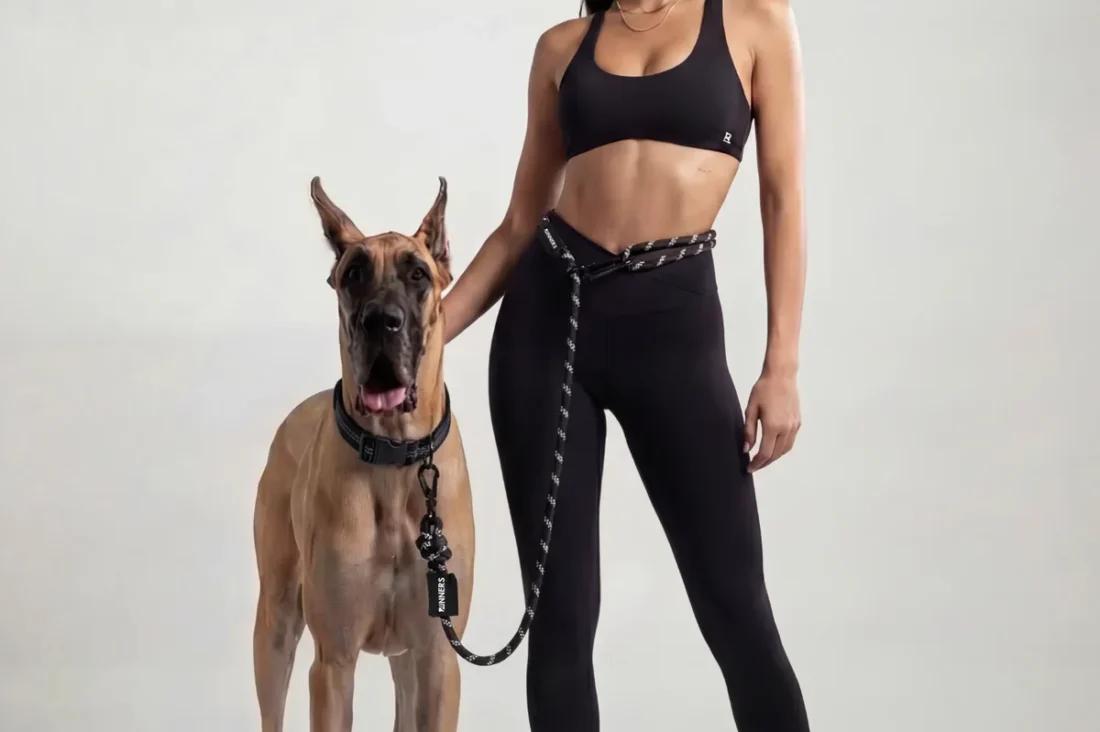
The price range in this category spans wildly. The cheapest options are around 15 dollars and the high end runs to 80 or 90 for premium gear. The honest answer is that the difference between cheap and quality is felt within the first two weeks of regular use. Cheap belts roll up, cheap bungees lose their elasticity within a month, and cheap clips fail at the worst possible moment.For owners who run with their dogs daily or who manage a larger or stronger breed, the investment in quality gear earns itself back across a multi-year ownership window. ARunners Athletics dog leash from a brand engineered for active humans (the Runner's Athletics brand specifically builds gear for runners and active dog owners) is one example of the category done with the right priorities, including a proper hip belt construction, real bungee elasticity, and an override handle for situational control.
The Setup Detail Most Owners Skip
The single most-skipped setup step is matching the bungee length to the dog's stride relative to the human's. A bungee that is too short means the dog gets jolted on every pace mismatch. Too long, and the dog drifts into traffic, other dogs, or the human's feet on stops. The right length lets the dog move comfortably ahead or beside the human without constant tension, with the bungee absorbing brief mismatches naturally.Most quality leashes come with adjustable bungee sections specifically for this reason. Adjusting it once, on a calm walk in the neighborhood, will reveal what works for your dog's pace, and you can leave it set from there.
Worth the Upgrade
For owners who already run with their dogs, the hands-free upgrade pays itself back within the first month. The reduced grip fatigue, the better posture, and the more relaxed dog all show up immediately. For owners considering whether to start running with their dog, the right leash is the difference between something the dog enjoys and something that becomes a chore. The category has matured to the point that quality options exist at a fair price, and the gap between cheap and quality gear has become large enough that the upgrade decision is straightforward.
Related Reading

