


Dog Blankets: How to Choose the Right One
 Dog Products Shopping Guide
Some dogs claim a blanket the moment it comes home, dragging it from room to room like a trophy. Others sniff it once and walk away. The difference usually comes down to a few practical choices: the material, the size, and where the blanket is meant to live. Get those right and a dog blanket becomes the spot your dog chooses over the sofa cushion, a calming anchor on anxious nights, and the easiest thing in the house to toss in the wash when muddy paws happen.
This guide walks through all of it, from the warmest fabrics for winter to the safest picks for a chewing puppy, so the blanket you bring home is the one your dog actually keeps. If a proper bed is also on the list, start with this dog bed buying guide and treat the blanket as the softer layer on top.
Why Dogs Love Having Their Own Blanket
Dogs are scent-driven animals, and a blanket that carries their own smell becomes deeply familiar and calming. That is why a worn blanket settles a nervous dog faster than almost anything else, whether the setting is a vet waiting room, a holiday rental, or the back seat of the car. There is a practical payoff for the household too: a dedicated blanket catches the fur, dirt, and oils that would otherwise sink into the sofa, and a blanket is far easier to wash than an entire couch.
Why dogs nest, burrow, and scent-mark their blankets
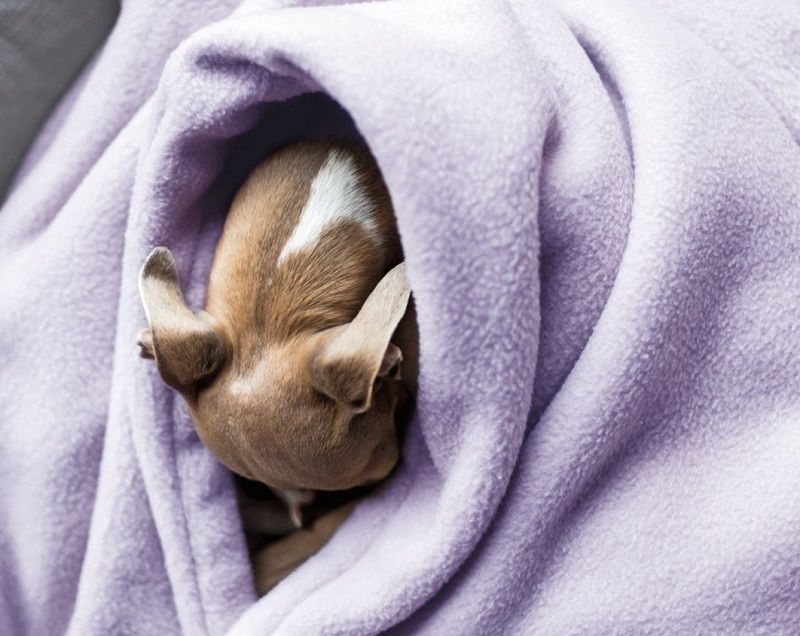
If your dog bunches a blanket up before lying down, tunnels under the covers, or seeks a blanket out when storms roll in, that behavior is normal and rooted in instinct.
- Nesting instinct. Many dogs, especially smaller breeds, are driven to burrow and arrange their bedding. Rearranging a blanket before settling is the canine version of fluffing a pillow.
- Scent security. Blankets hold scent, and a blanket that smells like home gives a dog a portable sense of safety in unfamiliar places.
- Temperature control. Dogs regulate heat differently than people do. A blanket lets them add warmth when they want it and push it aside when they do not.
Some dogs also gently nibble or cob their blankets as they wind down for sleep. As long as no fabric is being swallowed, it is usually a harmless comfort habit, and it is one more reason a durable, tightly woven blanket is worth choosing.
How blankets calm anxious dogs and ease travel
Dogs who are rattled by thunderstorms, fireworks, or new environments often look for a soft, enclosed place to tuck into. A blanket gives them something to burrow under, which lowers arousal and helps them self-soothe. The same effect makes a familiar blanket one of the simplest travel tools there is: tucked into a carrier or over a car seat, it brings the smell of home into an otherwise stressful trip, and for an anxious traveler that can be the difference between a dog that paces and one that sleeps.
Best Material for a Dog Blanket
The best material for a dog blanket depends on the season and your dog's habits. Fleece is the most versatile choice, warm enough for most of the year, light, and easy to wash. Sherpa and plush are warmer for cold climates and dogs that like to burrow, cotton is the most breathable pick for summer and sensitive skin, and a waterproof backing is the most practical option for puppies, senior dogs, and the car. The table below compares the materials you are most likely to see on the shelf.
| Material | Warmth | Best for | Machine wash | Avoid if |
|---|---|---|---|---|
| Fleece | Medium-high | Everyday use, crates | Yes | Your dog runs hot |
| Sherpa / plush | High | Cold climates, seniors | Yes, gentle | Summer months |
| Cotton | Low | Summer, warm homes, sensitive skin | Yes | Cold-sensitive breeds |
| Microfiber | Medium | Drool, quick cleanup, durability | Yes | You prefer natural fibers |
| Bamboo | Low-medium | Sensitive skin, warm sleepers | Yes | You want maximum warmth |
| Waterproof-backed | Medium | Puppies, car, furniture | Yes | Your dog dislikes the texture |
| Heavy-duty | Medium | Chewers and diggers | Yes | Softness is the priority |
For dogs with allergies or easily irritated skin, natural fibers like cotton and bamboo tend to be the gentlest. They breathe well, hold less heat, and usually involve simpler dyes than heavily treated synthetics.
Warmest blankets for winter: fleece, sherpa, and plush
In cold months, a dog needs a blanket that genuinely traps heat rather than just feeling soft. Fleece, sherpa, and plush do this best without becoming so heavy that they are uncomfortable. Short-haired dogs, small breeds, and older dogs feel the cold more sharply, so a thicker double-layer blanket makes a real difference overnight. For dogs that are cold even on walks, a blanket pairs naturally with a good winter dog coat for outdoor time.
- Fleece: lightweight warmth, fast-drying, and easy to layer.
- Sherpa: plush and insulating, ideal for dogs that like to burrow in.
- Double-layer blankets: a soft top with a warmer backing, best for truly cold homes.
Cotton and other breathable fabrics for summer
In warm weather, a heavy fleece or sherpa blanket can tip a dog into overheating, especially a thick double-coated breed. A cotton dog blanket is the better call: light, washable, and breathable enough that it gives your dog a familiar spot without trapping heat. A thin cotton throw on the sofa or over their bed does the job in summer, and pairing it with a cooling mat helps dogs that overheat easily.
Waterproof and heavy-duty picks for chewers and messes
When accidents, drool, or digging are part of the picture, a waterproof-backed blanket earns its place. The soft top keeps your dog comfortable while the backing stops moisture and oils from soaking through to the bed or upholstery. For determined chewers and diggers, a dense, heavy-duty weave holds up far better than a soft knit, and it leaves fewer loose fibers behind. It is worth comparing a few options side by side in the Beds and Blankets directory before you commit.

Sizing a Dog Blanket: How to Measure Your Dog
Size matters more than most buyers expect. A blanket that is too small gets abandoned, while one that is too large becomes unwieldy and bunches up, which is both uncomfortable and, for small dogs, a tangling risk. Measuring takes a minute and removes the guesswork.
How to measure your dog for a blanket
Two quick measurements cover it. For length, measure from the tip of the nose to the base of the tail to find the shortest the blanket should be. For width, measure from the floor to the top of the shoulder while your dog is lying down on their side, then add a few inches so they can stretch and reposition. If your dog falls between two sizes, size up: dogs almost always prefer a little extra room to shift around in, and the spare fabric rarely gets in the way on a bed or sofa.
| Dog size | Breed examples | Recommended size | Best use |
|---|---|---|---|
| Small | Chihuahua, Dachshund | 24" x 30" | Crate, lap |
| Medium | Beagle, Spaniel | 30" x 40" | Bed, sofa spot |
| Large | Labrador, Husky | 40" x 60" | Full bed, sofa |
| XL / Giant | Great Dane, Mastiff | 60" x 80" | Floor, car, full sofa |
Crate, bed, and sofa blanket sizing
For a crate, measure the floor of the crate and pick a blanket that lies flat without piling up at the sides, since folds create pressure points and bunch under a restless dog. For a bed, match the blanket roughly to the sleeping surface so it drapes without trailing. For a sofa, size it to the seat your dog actually claims, with enough overhang to protect the cushion edges where fur and paws land.
The Right Blanket for Crates, Sofas, Cars, and Travel
The best blanket for your dog often depends less on the dog and more on where it will be used. Here is what to prioritize in each spot.
Crate blankets
A crate blanket needs to fit the crate floor, stay put, and come out easily for washing. Flat, dense fleece is the usual winner because it is warm, light, and keeps its shape. Skip thick, padded, or stuffed blankets in a crate for puppies or chewers, since the filling becomes an ingestion hazard the moment it is torn open.
Sofa and furniture covers
On the couch, a blanket's main job is protecting the fabric. Choose enough coverage to drape over the area your dog uses, and a surface that releases hair easily so it brushes off before washing. A waterproof-backed blanket is especially good here, keeping the dog comfortable up top while the backing blocks moisture and oils from reaching the upholstery.
Car and travel blankets
Car blankets take more abuse than any other kind, between muddy paws, wet fur, drool, and the occasional bout of motion sickness, so a waterproof outer surface that wipes clean or machine-washes is worth prioritizing. A non-slip backing matters just as much: a blanket that slides on a seat during braking can unsettle an already nervous dog.
For any kind of trip, the simplest comfort trick is to bring the blanket your dog already sleeps with, which is one small part of traveling with your dog more calmly. That one familiar scent does more for a nervous traveler than any amount of extra padding.
If you would rather build a lightweight, packable blanket sized to your own dog, you can even make your own no-sew travel blanket to keep in the car.

Choosing a Blanket for Puppies and Senior Dogs
The youngest and oldest dogs have the most specific needs, and the wrong blanket causes the most trouble for them.
Puppy blankets: safe, simple, and washable
Puppy blankets have to survive accidents without soaking through, which makes a waterproof backing under a soft fleece top the most practical choice during house training. Just as important is what to avoid: puppies investigate everything with their mouths, so skip loose threads, fringe, tassels, and textured knits that shed fibers.
- Best material: fleece or cotton with a waterproof backing.
- Avoid: tassels, fringe, loose knit textures, and electric blankets.
- Size tip: start with a blanket that fits their crate or sleep area rather than one they get swamped by.
Senior dog blankets: warmth and cushioning
Older dogs often feel the cold more, carry thinner coats, and have joint pain that makes hard surfaces uncomfortable, so a thicker, more cushioned blanket helps on all three fronts. A waterproof backing is worth it if incontinence is a factor, since the blanket can be washed often without breaking down. Look for one that holds up to repeated washing without pilling or losing loft, and size up slightly so your dog can shift position without sliding off the edge. Warmth and padding are part of the wider picture of caring for senior dogs comfortably.
Blanket Safety: What to Look For and Avoid
A blanket that looks cozy in a product photo can still carry features that make it risky for unsupervised use. Run any blanket through this checklist before it goes to your dog.
Look for:
- Machine washable at a warm temperature
- Tight, secure stitching with no loose threads
- Breathable fabric that will not cause overheating
- Non-toxic dyes and materials, since most dogs mouth their bedding at some point
- A size suited to your dog and the space
- Construction that holds its shape after repeated washing
Avoid:
- Tassels or fringe, which are chewing and ingestion hazards
- Decorative buttons or embellishments
- Loose knit weaves that snag on claws
- Very thin fabric that tears easily, and anything that pills heavily into ingestible fibers
- Weighted blankets made for people, which are too heavy for a dog's frame and often filled with beads or pellets that are dangerous if chewed open
- Electric or heated blankets left with an unsupervised dog, which risk overheating, burns, and cord chewing
Keeping your dog's blanket clean
Even the best blanket becomes a hygiene problem if it is not washed. Aim for at least once a week, and more often if your dog spends time outdoors, drools heavily, or is still house training. Most fleece and cotton blankets go on a warm cycle with a pet-safe detergent; skip fabric softener, which coats the fibers and reduces breathability over time, and dry on low or flat. Keeping a second identical blanket in rotation means your dog always has a familiar spot while the other is in the wash, which matters for dogs that get attached to one particular blanket.
Quick Pick: Best Dog Blanket by Situation
Not sure where to start? This at-a-glance guide matches the best dog blanket type to each situation. The one that works is simply the one your dog uses, so lead with size, material, and where it will live, then keep the basics non-negotiable: machine washable, breathable, and free of loose threads.
| Situation | Best type | Best material | Key feature |
|---|---|---|---|
| Daily sofa use | Reversible or waterproof | Fleece or cotton | Easy to wash |
| Crate use | Flat fleece | Fleece | Fits the crate floor |
| Car travel | Waterproof-backed | Waterproof plus fleece top | Non-slip backing |
| Puppy | Waterproof-backed | Fleece top plus waterproof | No loose threads |
| Senior dog | Thick sherpa or plush | Sherpa | Cushioned and warm |
| Summer | Lightweight throw | Cotton | Breathable |
| Winter | Sherpa or double fleece | Sherpa or fleece | Heat-retaining |
| Anxious dog | Any, start with a worn one | Fleece or sherpa | Scent retention |
Get those few things right and the blanket stops being one more thing in the laundry pile and becomes the spot your dog chooses every time.
FAQ
Frequently asked questions
1Do dogs really need blankets?
Dogs do not need blankets the way people do, but most genuinely benefit from one. Small breeds, short-haired dogs, puppies, and senior dogs feel the cold more and actively seek out warmth. Beyond temperature, a blanket gives a dog a scent-marked, familiar resting spot, which supports calm behavior and helps them settle in new places.
2What material is best for a dog blanket?
It depends on the season and your dog's needs. Fleece is the most versatile: warm enough for year-round use, light, and easy to wash. Sherpa and plush suit cold climates or dogs that like extra warmth, cotton is the best choice for summer and sensitive skin, and a waterproof backing is the most practical option for puppies, senior dogs, and the car.
3Should dogs sleep with blankets?
For most dogs, sleeping with a blanket is fine and often helpful, since a familiar blanket aids settling, eases anxiety, and adds warmth. The main exceptions are very young puppies and flat-faced breeds that overheat more easily. Make sure the blanket is breathable and that your dog can move away from it if they get too warm, especially if they like to burrow all the way underneath.
4Can I use a human blanket for my dog?
Often yes, as long as it meets the same safety checks: a breathable fabric, a tight weave, no fringe, tassels, or buttons, and a suitable size and weight. A plain, tightly woven fleece throw is as safe for a dog as one marketed specifically for pets. Steer clear of loose knits and anything weighted or heated.
5Are weighted blankets safe for dogs?
Weighted blankets designed for people are not appropriate for dogs. The weight-to-body ratio is too high, and most use glass beads or pellets that are hazardous if chewed open. Purpose-made calming blankets for dogs use gentle pressure safely, and for significant anxiety it is worth asking your vet about the right option rather than reaching for a human weighted blanket.
6How often should I wash my dog's blanket?
At least once a week under normal conditions, and more often if your dog spends time outdoors, is house training, drools heavily, or has a skin condition. Use a pet-safe detergent on a warm cycle and skip fabric softener. Keeping a spare to rotate means your dog always has their familiar spot while one is in the wash.
7Can puppies use blankets?
Yes, with care. A puppy blanket should be flat, simple, and free of loose threads, tassels, fringe, or buttons, since puppies mouth everything and anything that can be pulled apart and swallowed is a risk. A flat fleece or cotton blanket with tight stitching is safest. For a very young puppy, a blanket carrying the scent of their mother and littermates can ease the move to a new home.
Related Reading


Share a thought, ask a question, or tell us about your own dog. We read every comment.