


Why Does My Dog Sleep Under the Covers?
 Health & Wellbeing
Copy: Katy & Shell Photography: Katy & Shell

Written by
Shell & KatyUpdated 2 September 2026 · 6 Min Read
Shell & Katy are two style-savvy dog mums celebrating the best in pet-friendly living. A pet photographer and dog lifestyle writer, together they share trending pet products, recipes, inspiration and expert tips with discerning dog lovers around the world.
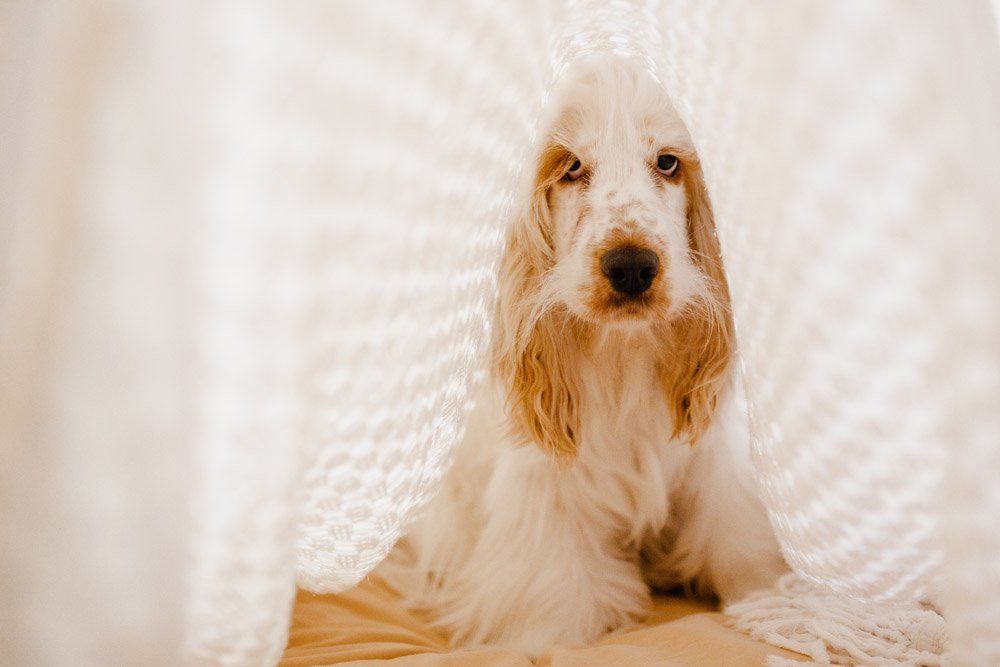
There is a particular lump that appears in the bed at around nine every night. If you have ever wondered why dogs sleep under the covers, you are in very good company. Burrowing is one of the most common things dogs do at bedtime, and one of the most misunderstood.
It is also the habit that worries people most, because a dog cannot push a duvet off their face the way we can. So the question that follows is always the same. Is it actually safe?
Dogs sleep under the covers because burrowing satisfies a denning instinct, keeps them warm, and surrounds them with your scent. For a healthy adult dog under a light, loose blanket it is safe, since air passes through the fabric and a dog moves once they feel too warm. Take more care with puppies, seniors, flat-faced breeds, and bedding that is heavy, weighted or tightly tucked.
Can Dogs Suffocate Under Blankets?

Suffocation under household bedding is very unlikely for a healthy adult dog. Blankets and sheets are woven rather than sealed, so air keeps moving through them, and a dog that feels stuffy or too warm will shift, work their nose into the open, or leave the bed. The risk rises only when a dog cannot do those things, because the bedding is too heavy or tucked too tightly, or because the dog is too young, too old or too unwell to move.
How Do Dogs Breathe Under Blankets?
Air travels through the weave of a sheet, quilt or fleece throw the whole time your dog is underneath it. What they breathe is warmer and more humid than the air in the room, but it is not running out, and most settled burrowers leave a small gap near the nose without thinking about it. The exception is bedding that stops behaving like fabric, such as a folded pile of heavy blankets or anything plastic-backed.
Which Blankets Are Safe for Dogs to Sleep Under?
| Bedding | Airflow | Verdict |
|---|---|---|
| Cotton sheet | High | Safest, and best in warm weather |
| Light fleece throw | Good | Fine for most dogs, warm in summer |
| Quilt or comforter | Moderate | Fine while loose and untucked |
| Heavy winter duvet | Low | Supervise small or short-nosed dogs |
| Weighted blanket | Low | Avoid. Too heavy for a dog to lift |
| Electric or heated blanket | Varies | Avoid unsupervised. Burn risk |
Weight and tuck matter more than fabric. A loose cotton sheet your dog can flip with their head is safer than a luxurious throw pinned under the mattress, and our guide to choosing the right dog blanket covers materials and sizing.
Dogs That Need Closer Supervision
Most dogs regulate themselves beautifully. These ones need you watching.
Puppies. Poor temperature control and less strength to shift bedding. Keep blankets light and flat, skip fringe and loose threads, and check often. Our new puppy checklist covers the rest of the sleep setup.
Senior dogs. Stiffness makes it harder to get out from under a blanket quickly, so lighter bedding and an easy route off the bed matter, alongside the other adjustments in our guide to caring for a senior dog.
Flat-faced breeds. Pugs, French Bulldogs, Boston Terriers and Shih Tzus already work harder to breathe and cool themselves. Warm, still air under a duvet is what they cope with least well.
Dogs who are unwell. A dog recovering from anesthesia, or one with a back or neck problem, may not be able to reposition. Keep them on top of the covers.
Can Dogs Overheat Under the Covers?
This is the genuine risk, and a far more realistic one than suffocation. Dogs cool themselves mainly by panting, which works poorly in a small pocket of warm, humid air. Watch for heavy panting, drooling, bright red gums, restlessness and weakness. VCA Animal Hospitals notes that a dog is hyperthermic once body temperature passes 103F, and heat stroke is an emergency. If you see those signs, move your dog somewhere cool and call your vet rather than managing it at home.

Prevention is simple. Swap heavy bedding for cotton in summer, leave a corner of the bed uncovered, and keep water within reach. Our dog bed buying guide covers what to look for in a breathable spot they can move to.
Why Does My Dog Burrow in Blankets?

Nobody teaches a dog to do this. Several instincts push in the same direction at once, and which one is driving your dog is usually readable in the rest of their body, so it helps to read dog body language alongside the behavior.
The denning instinct. Dogs descend from animals that slept in enclosed spaces, and a small dark pocket still reads as safe.
Warmth. Short-haired and small dogs lose heat quickly, and burrowing traps their own body heat around them.
Your scent. Your bedding is the most concentrated version of your smell in the house, which is enormously settling for a social sleeper.
Quiet and darkness. Blankets mute noise and block light. For a dog that startles easily, going under is the canine version of an eye mask.
Dog Breeds That Like to Sleep Under the Covers
Any dog can be a burrower and plenty of large ones are, but some breeds arrive practically pre-programmed for it. The keenest diggers include Dachshunds, Cairn Terriers, Bedlington Terriers, Jack Russell Terriers, Beagles, Miniature Schnauzers, Siberian Huskies, Alaskan Malamutes, Border Collies and Australian Shepherds. The terriers and hounds were bred to tunnel after prey, while Huskies and Malamutes descend from dogs who dug into snow for shelter. A duvet is simply the indoor version.
Thin-coated breeds burrow for a different reason. Greyhounds, Whippets, Vizslas and Italian Greyhounds carry very little insulation, so they are chasing warmth rather than a tunnel.
Why Does My Dog Sleep Against Me?
Burrowing and pressing up against you are the same instinct wearing different clothes. Dogs are social sleepers. Puppies pile together in the litter, and adults carry that preference for contact into your bed, where you are both the warmest thing available and the one they trust most.
The research on whether this helps your own sleep is more nuanced than it is usually reported. A Mayo Clinic Proceedings study tracked forty adults and their dogs over seven nights and found that a dog in the bedroom preserved good sleep efficiency at 83 percent, while a dog on the bed dropped it to around 80 percent with more waking overnight. Both sit inside the normal range. Sharing the bed costs a little sleep quality, and most of us decide the trade is worth it.
When Burrowing Under Blankets Is a Warning Sign
Burrowing is normal. A change in burrowing is worth a second look. Pay attention if your dog starts hiding under blankets during the day, or stays under there instead of coming out to greet you. Hiding that comes with trembling, refusing food or reluctance to move can point to pain or illness, and that is a call to your vet rather than a wait-and-see.
Anxiety is the other common driver. A dog using the covers as a bunker during fireworks or when left alone is telling you something about their baseline stress, and the fix is the fear rather than the blanket. Our guide to training a reactive dog is a sensible starting point.
One more thing to take seriously. If your dog growls, stiffens or snaps when you reach under the covers, that is resource guarding, not grumpiness at being woken. It responds well to professional help and gets worse if ignored.
FAQ
Frequently asked questions
01Can dogs sleep under the covers all night?
Most healthy adult dogs can, and many do. Air moves through normal bedding and a dog repositions or comes out when they want to. Keep the blanket loose rather than tucked, use lighter fabric in warm weather, and leave a clear route off the bed.
02Why has my dog suddenly started sleeping under the covers?
A sudden change usually tracks something in the environment. Colder nights, a new blanket that smells like you, a house move or a recent fright are all common triggers. If it comes with daytime hiding, trembling or appetite changes, book a vet check rather than assuming it is a preference.
03Should I stop my dog sleeping under the covers?
There is no need to, unless your dog falls into a higher-risk group or you are not sleeping. If you would rather they stopped, a covered cave bed or a burrow-style blanket beside your bed satisfies the same instinct. Move them gradually rather than shutting them out.
04Can puppies sleep under blankets?
Puppies can, with supervision. They regulate temperature poorly and have less strength to push bedding aside, so use a light, flat blanket with no fringe or loose threads. Very young puppies are better off in a warm bed of their own.
05Do dogs sleep under the covers because they are cold?
Warmth is one reason but rarely the only one. Dogs also burrow for the enclosed feeling, for your scent, and for quiet and darkness, which is why plenty of thick-coated dogs do it in summer. A dog burrowing in a warm room is after comfort, not temperature.
Related Reading

