


Dog Photography Ideas at Home
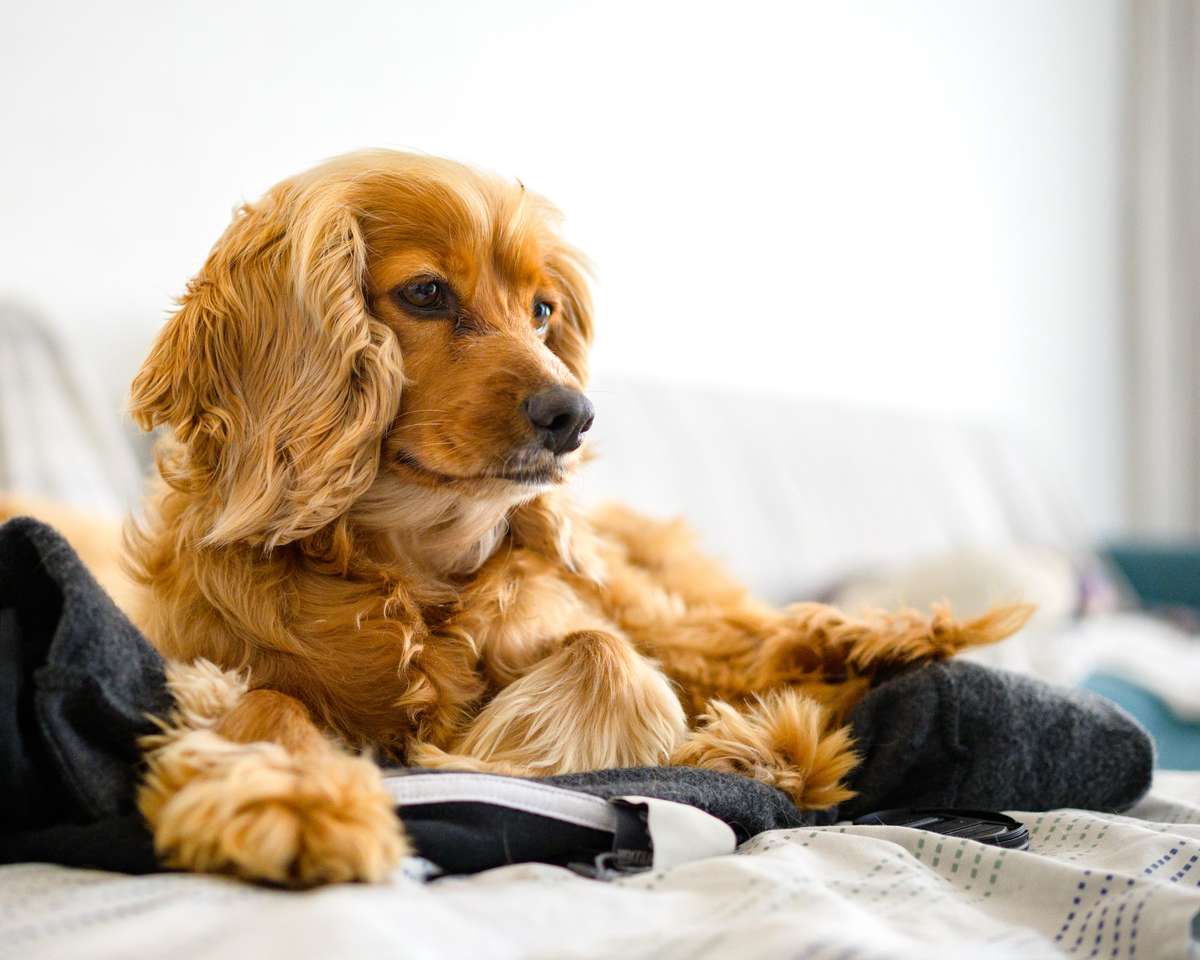 Pet Photography
Written by
Shell & Katy Updated 10 August 2026 · 7 Min Read
Shell & Katy are two style-savvy dog mums celebrating the best in pet-friendly living. A pet photographer and dog lifestyle writer, together they share trending pet products, recipes, inspiration and expert tips with discerning dog lovers around the world.
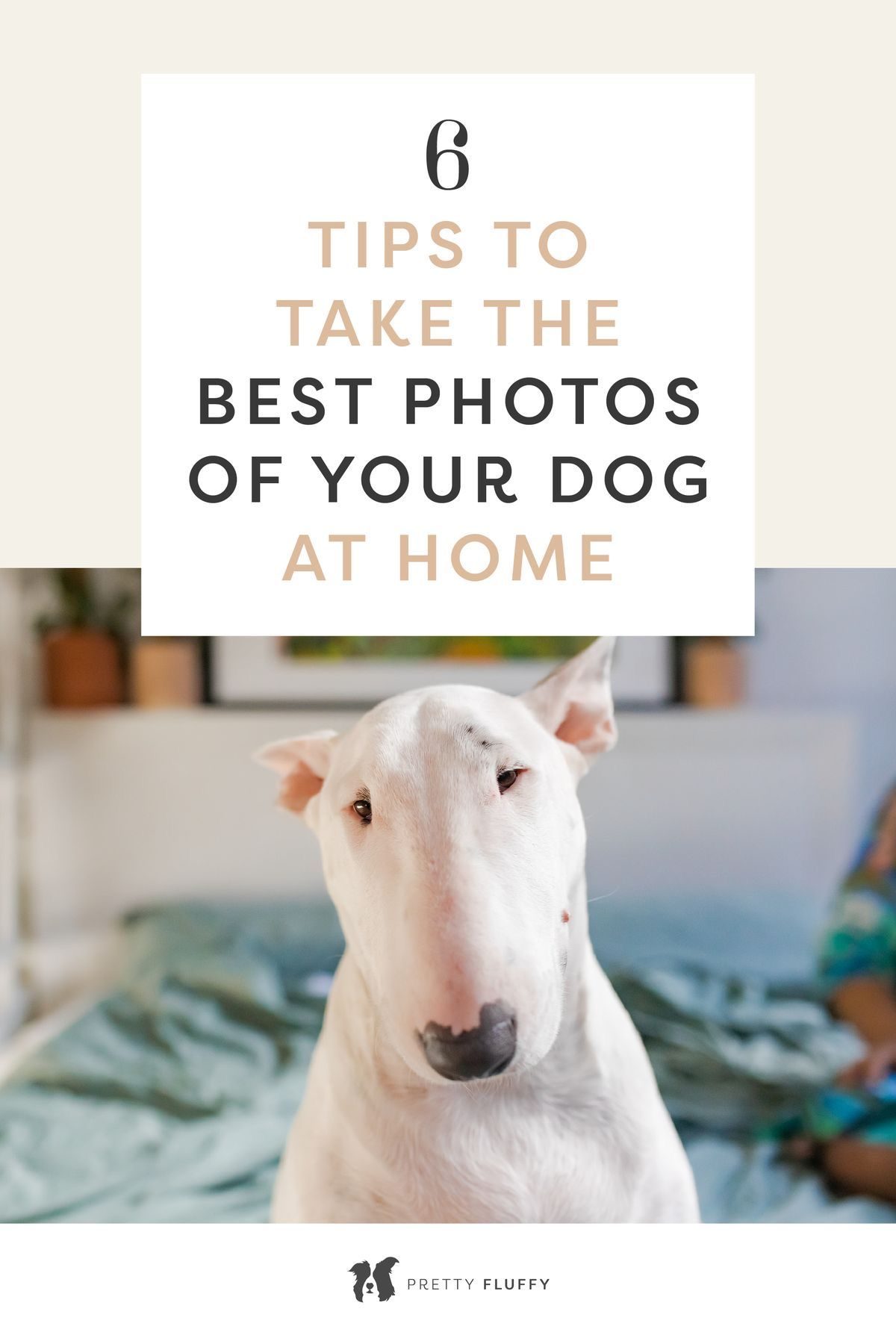
The best dog photography ideas at home need almost nothing from you: a patch of window light, a familiar couch, and a dog who has no idea anything is happening. We can say that with some confidence, because as well as editing Pretty Fluffy, the two of us photograph dogs for a living. We spend our working weeks in other people's living rooms with a camera, and the images families choose to print are almost never the posed ones. They are the yawn, the stretch, the sideways glance from the end of the bed. Better still, almost everything we do on a paid shoot works just as well with a phone in your kitchen.
Cute Dog Photo Ideas to Try Indoors
Good photo ideas at home fall into four groups: portraits by a window, resting shots on the couch or bed, close-ups of paws, ears and noses, and candid moments during play or everyday routines. Pick one group per session rather than attempting all four. Working through a single idea properly beats rushing a dozen, and it keeps things short and pleasant for your dog.
Window portraits are what we shoot first at almost every booking: your dog a foot or two back from the glass, photographed side-on so the light rakes across their face. Rest photos come next, because they are the ones people print, whether that is a chin on the edge of the bed or a nose just visible inside a blanket. Close-up details of a paw, an ear or the freckles on a muzzle are easiest of all, since your dog need not cooperate, and as a set of three they make a lovely wall grouping. Last come the moments that are pure personality: the tug of war face, the wait by the door before a walk, the head tilt at a treat bag.
Pet Photographer Tips for Better Dog Photos
These are the things we do on every shoot, in the order we think about them. None require anything you do not already own.
1. Best Lighting for Indoor Dog Photos
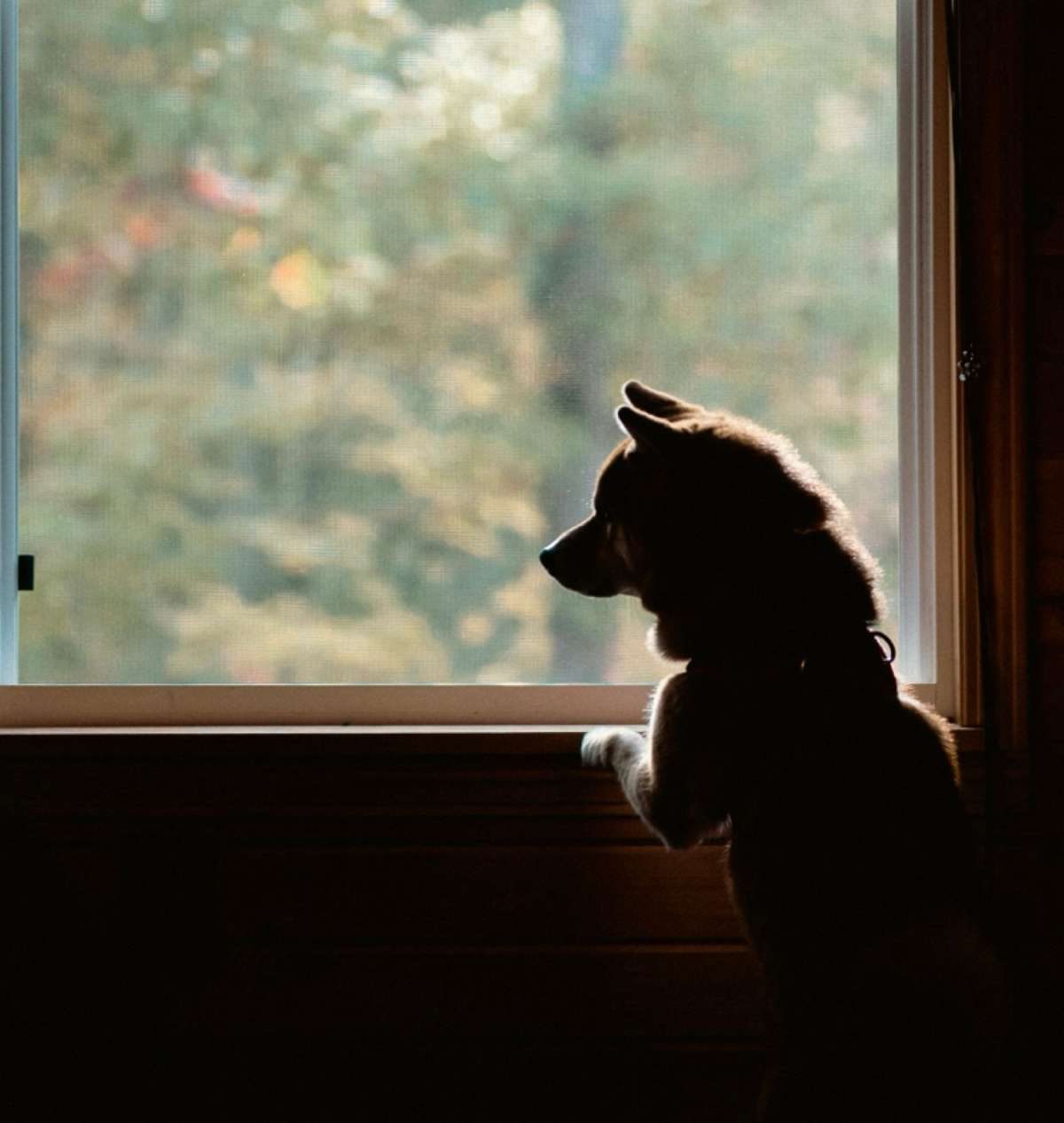
Natural light is the answer to capturing your dog's best features when at home. Soft, filtered light is best. When photographing your dog at home, position them near a window or door where they are close to a natural light source.
Just be careful of harsh sunlight though, as this can easily be diffused and softened by hanging up a thin white sheet across the window. Generally speaking, we don't recommend using artificial lighting such as lamps and down lights. These can have the unwanted effect of altering the natural color tone of your space and your dog, and create unwanted shadows.
We skip flash on shoots too, less because it does any harm and more because it startles most dogs and throws a green reflection into their eyes. Besides, it's always fun to find nice pockets of light around your home to get creative with!
2. Focusing on Your Dog's Eyes and Catchlights
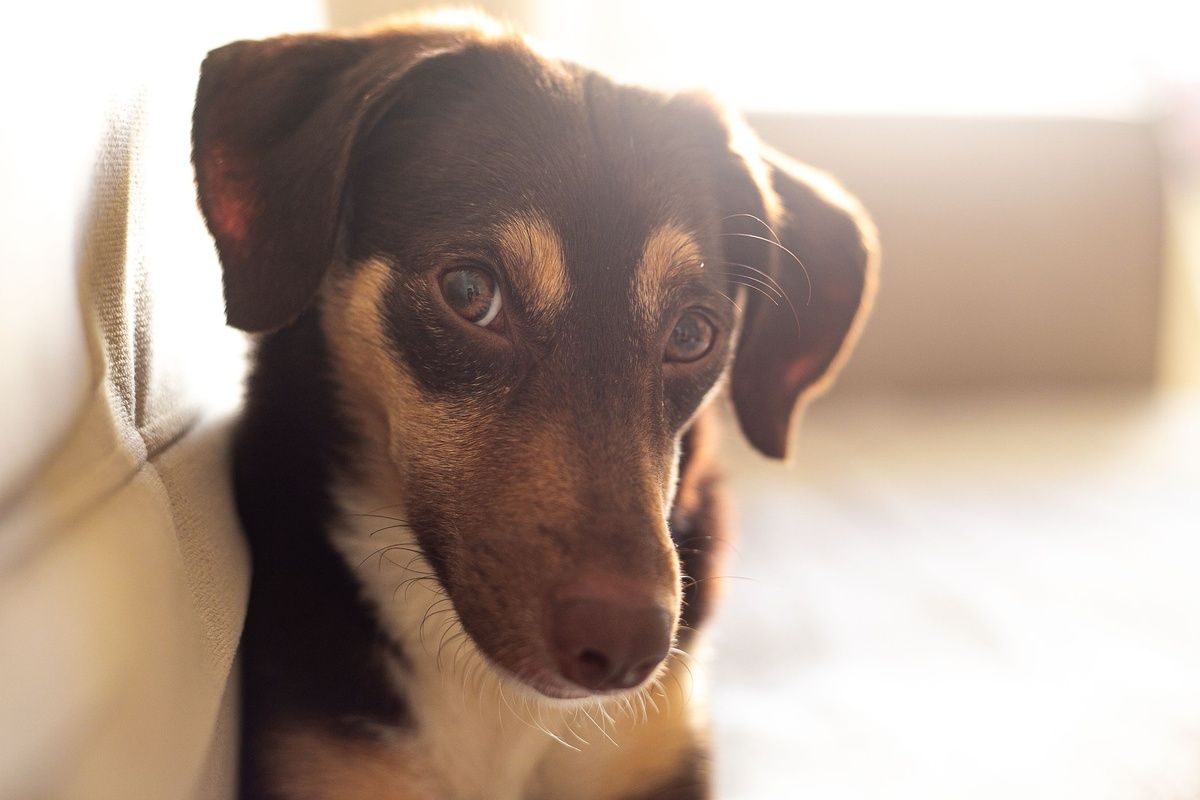
We all know the popular saying, "Eyes are the window to the soul." And this certainly applies to our furry best friends! That's why focusing on your dog's eyes is a beautiful, effective way to capture an insight into their personality and soul.
And if you really want to bring a depth of emotion and connection to your photographs, look for catchlights, those little white reflections of light in your dog's eyes.
Capturing these can easily be done by having your dog face a window, door or natural light source to create the reflection.
3. Getting Your Dog's Attention Without Treats
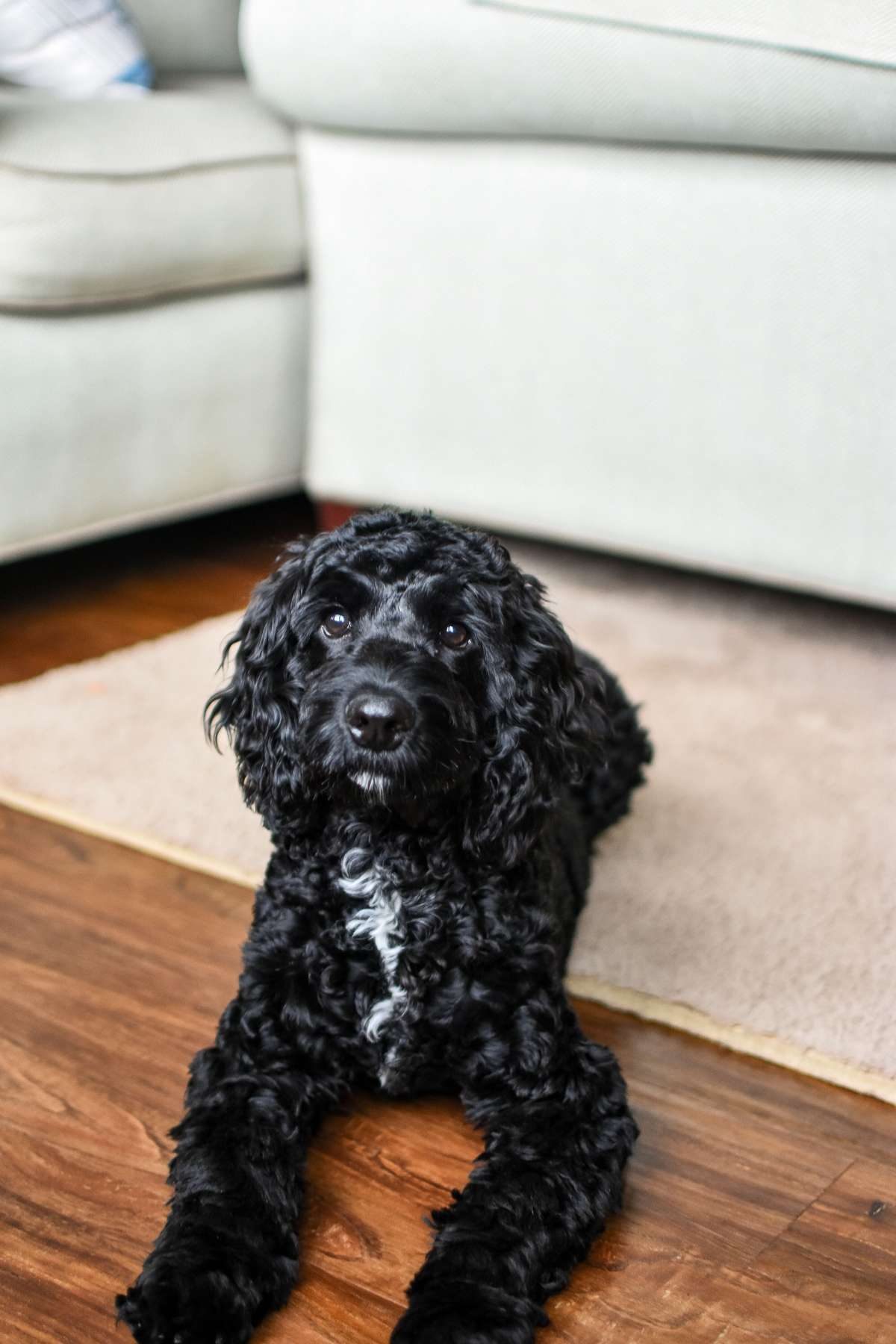
This can be done in several ways. While most pet parents use dog treats as their go-to, we generally prefer not to. Controversial we know, but we swear by it! After all, what we love most about in-home pet photography is capturing a dog's true personality at their most calm and content.
Using treats can switch your dog's mood from easy-going to intense in under a second, which is reflected in the photos. So, what else can you do to get your dog looking at the camera? Try holding a toy right by the camera lens. Or, hold their attention by placing the toy in front of their nose, then bring it back slowly to just above the lens. Honestly, you don't even need a toy, as any random item around the house can work.
At many of our shoots, Shell pulls out her lip balm and taps it on the camera. Dogs are often so mesmerized by it as they haven't seen it before! Making strange noises works well too, but if you don't fancy your skills you can always go with an animal sounds or squeaky toy app. We have four of these on our phone.

4. Best Camera Angle for Dog Portraits
One of the best ways to capture your dog's features is by getting up close, and down to their level. If your dog is lying on the ground, lie flat on the floor, stomach down, and position your camera or smartphone in between the two of you.
If they are sitting on the couch, crouch down so you're at the same height. Taking a photo from your dog's perspective can really bring depth to the image. It's like you're seeing the world just as they do.
5. Choosing a Background for Dog Pictures
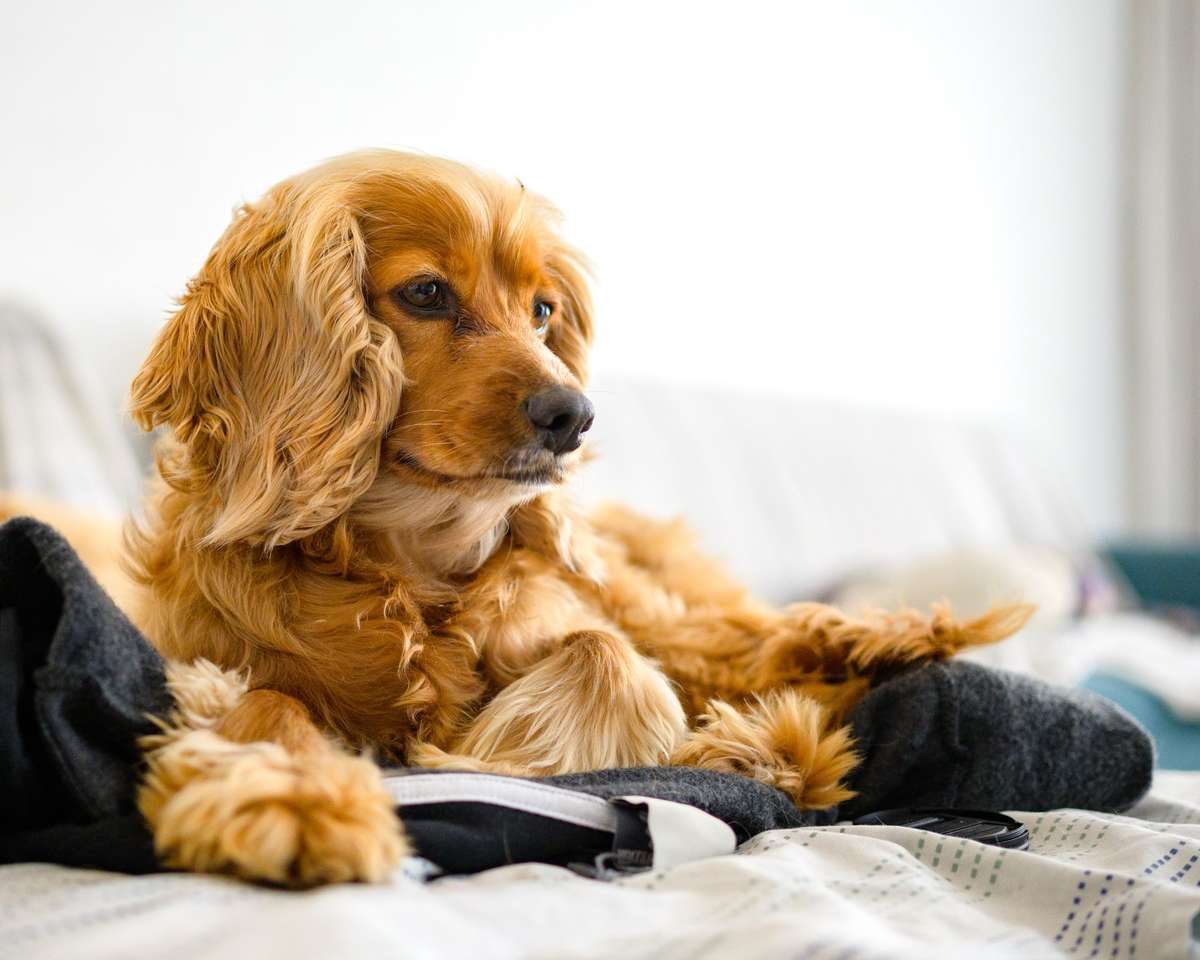
Your dog may be the cutest on the block, but if your space is cluttered with bright or unsightly objects such as clothes or coffee cups, these will detract from the main star of the show. That's why it's always a good idea to quickly scan your environment and background before taking your photo, and declutter if necessary.
Trust us on this. You don't want to take an amazing shot, only for it to be ruined by something in the background you hadn't noticed earlier!
6. Capturing Candid, Natural Dog Photos
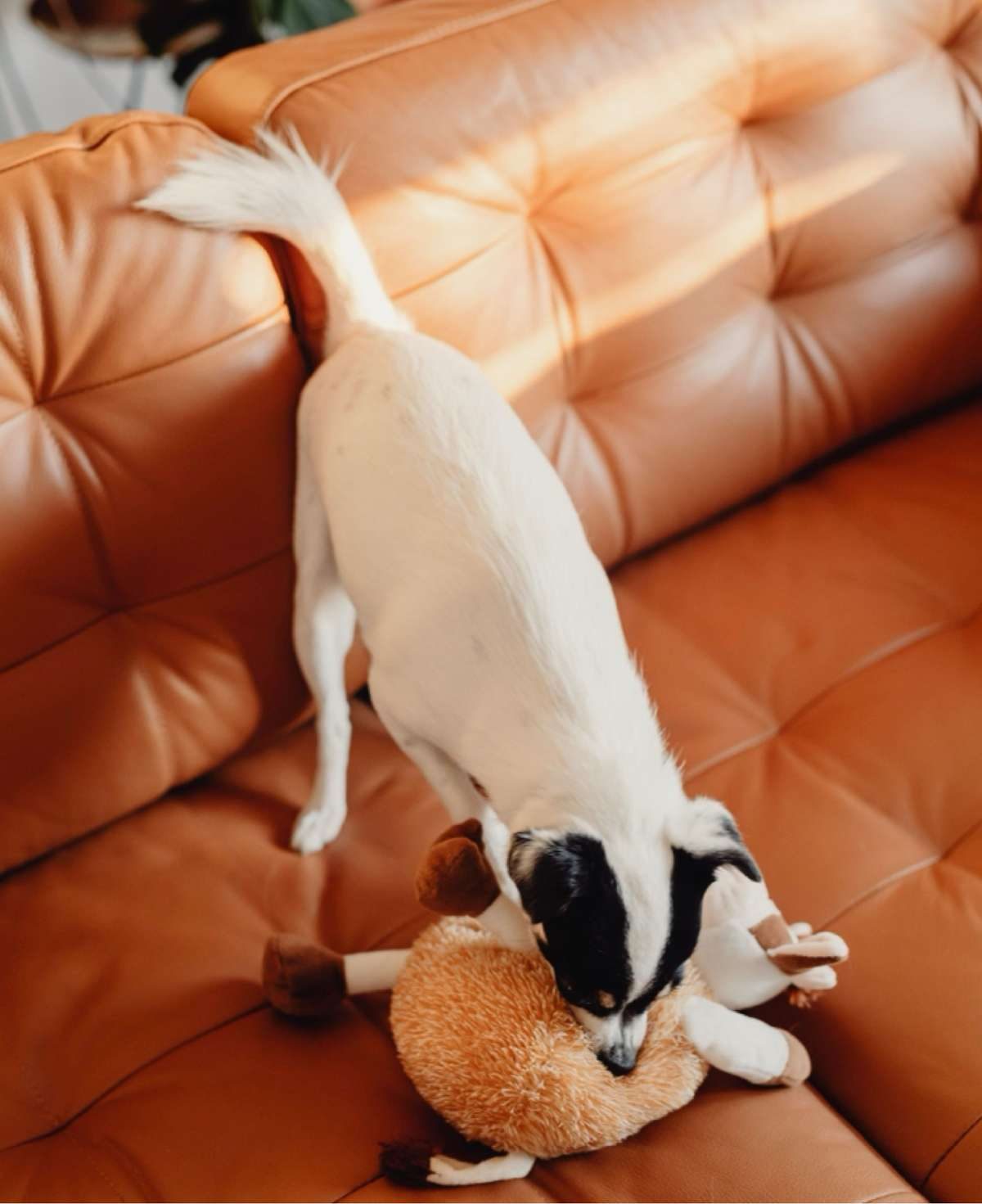
In our opinion, the most beautiful photos of dogs happen naturally. Therefore, the best photos will of course depend on your dog's mood!
Try to be patient and spend some time watching your dog going about their day. When the moment is right, and it may be a yawn, a stretch, or glancing at you, then start snapping away. We keep our own sessions short for exactly this reason, because two or three minutes of relaxed shooting will always give you more than twenty minutes of asking a dog to sit still.
Capturing natural, spontaneous moments will reflect your dog's true temperament and personality, resulting in a beautiful photograph you'll want to proudly show off to the world.
7. Signs Your Dog Is Uncomfortable With the Camera
This is the one we would add after years of shoots. Plenty of dogs are not keen on cameras, and it is rarely stubbornness. A lens is a large object pointed at their face by someone whose eyes have disappeared behind it.
Watch for the quiet signals: lip licking with no food around, yawning when they are not tired, a shake off when they are dry, or the whites of the eyes showing. VCA Animal Hospitals lists these among the everyday signs of stress in dogs, and our guide to reading dog body language covers them in detail. When we see them on a booking, we put the camera down.
How to Take Dog Photos With Your Phone
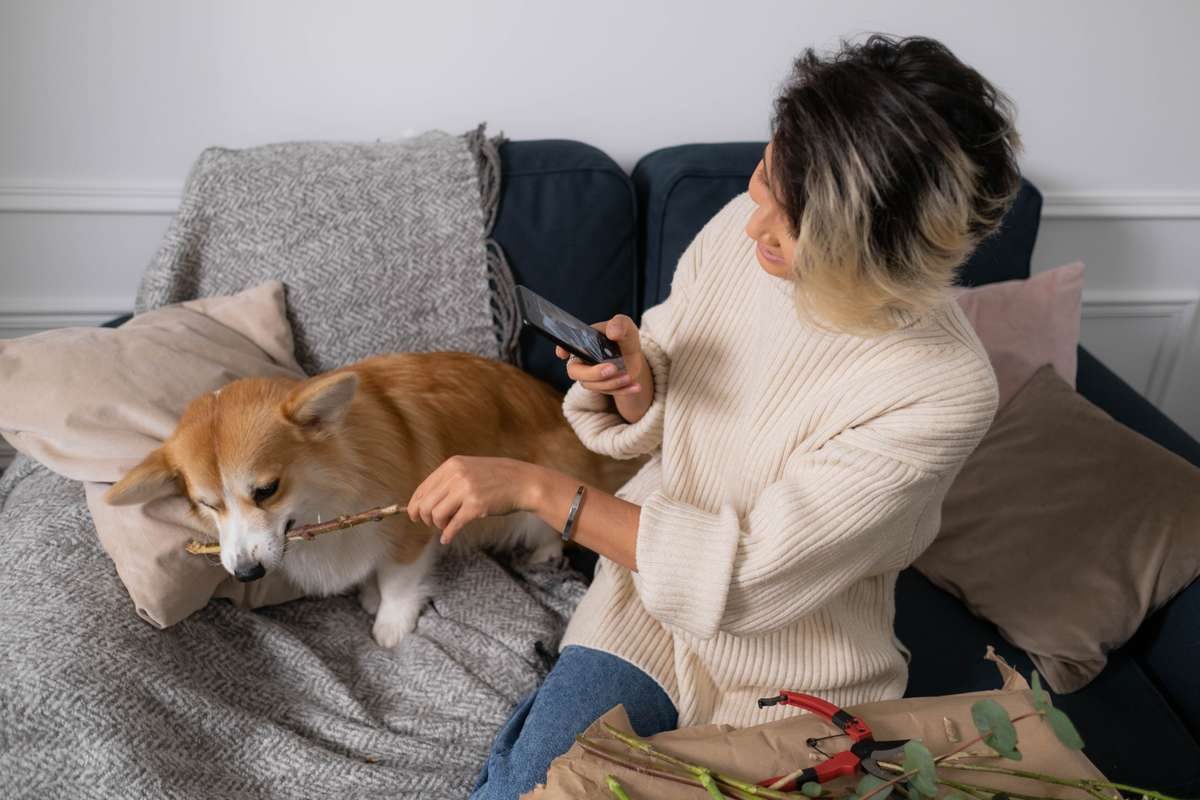
Everything above still applies, with a few extras. Clean the lens, which fixes more hazy images than anything else. Tap your dog's eye to set focus, then drag the exposure slider down slightly, because phones overexpose light coats and lose the detail in white or cream fur.
Skip digital zoom and move your feet instead, since zooming just crops and softens. Use burst mode for movement and pick the sharp frame afterward. Portrait mode is good on a still dog and unreliable on a fluffy one, because the software blurs away ear tips.
FAQ
Frequently asked questions
01 What are easy photos to take of my dog indoors?
Photograph your dog by a window, curled on the couch, resting on your bed, or waiting by the door before a walk. Close-ups of paws, ears and noses are easiest, since your dog does not need to cooperate.
02 How do I take better pictures of my dog?
Use soft natural light, focus on the eye closest to your lens, drop to your dog's eye level, clear the background, and follow their mood rather than directing it. Take plenty of frames so you have real moments to pick from.
03 What time of day is best for taking dog photos?
Indoors, whenever your window light is bright but indirect, which is usually mid-morning or mid-afternoon. Avoid the hour either side of noon on a clear day, when light comes in hard and casts sharp shadows across your dog's face.
04 Can I take good dog photos with my phone?
Absolutely. Clean the lens, tap your dog's eye to lock focus, lower the exposure slightly for pale coats, skip digital zoom and use burst mode for movement. Phones handle window light well, which is what you have indoors.
05 Why does my dog hate having their photo taken?
Usually because a camera is a large object aimed at their face by someone whose eyes they cannot see. Lower it between shots, let them see your face, keep sessions short and finish with praise.
If there is a puppy in the house, our puppy photoshoot ideas cover the details worth capturing before they grow. For a change of scenery try these spring dog photo ideas, go all in on a birthday with our dog cake smash tips, or plan something bigger with our advice on running a themed pet photoshoot. Prefer to hand the camera over? Here are five reasons to book an in-home shoot, plus our full pet photography section.
Related Reading


Join the Conversation Be the first to comment