


How to Transport a Puppy in a Car Safely
 Pet Travel

Most new owners spend weeks puppy-proofing the house and about ten minutes thinking about the car. Then the breeder hands over a wriggling eight-week-old. Knowing how to transport a puppy in a car safely is worth sorting out before collection day, because a loose puppy in a moving vehicle puts everyone at risk.
Almost all of the setup carries over into the rest of your dog's life. If collection day is still ahead, this new puppy checklist covers what is waiting at the other end.
Where Should a Puppy Sit in the Car?
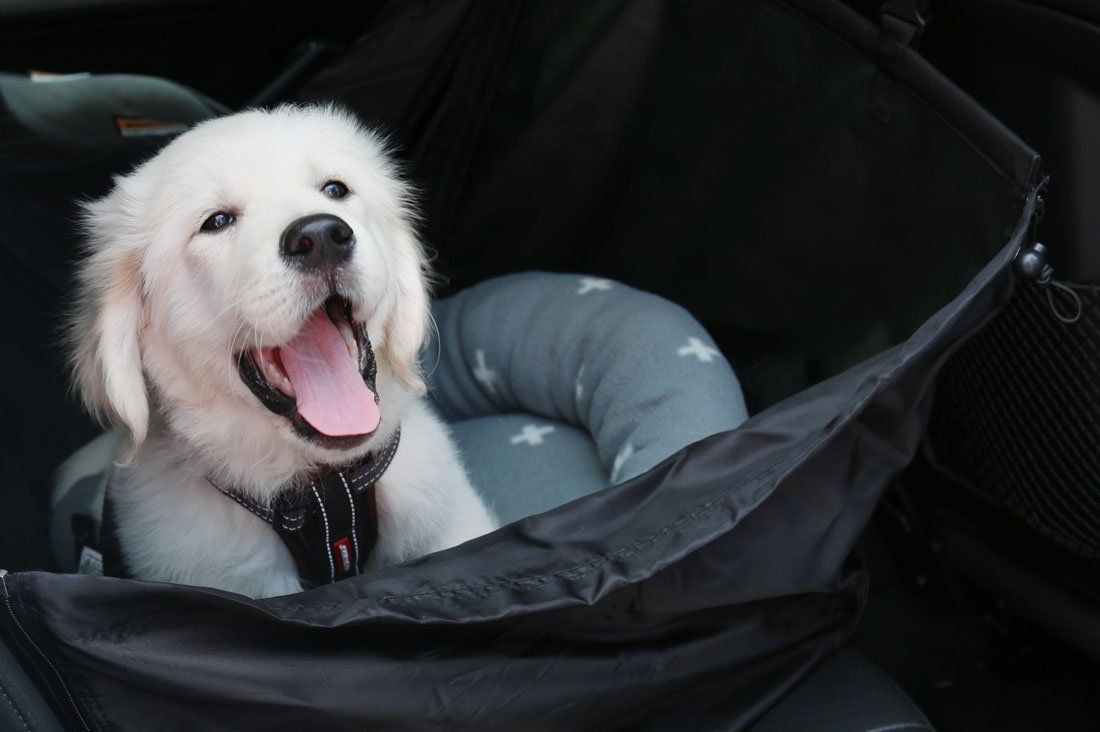
The safest place for a puppy is the back seat, contained and secured, never loose in the cabin and never in the front. A crate or carrier strapped down with a seat belt gives the most protection in a crash. A crash-tested harness clipped into the seat belt system is the next best option. The front seat is off limits for a small dog because an airbag deploys with enough force to cause serious injury.

Crate or Carrier in the Back Seat
A hard-sided crate is the most protective setup. Size it so the puppy can stand, turn and lie flat, and no bigger, because a puppy slides around an oversized crate every time you brake. A travel-friendly dog crate that doubles as the crate at home saves buying twice.
Strap it down. An unsecured crate is a heavy object moving at the car's speed. Run the seat belt through the handle, and keep it on the back seat, not in the trunk. Start crate work at home well before collection day, using this guide to introducing your dog to a carrier.
Car Harness and Seat Belt Clip

A car harness clips into the seat belt and anchors the puppy to one seat while letting them lie down. Look for a broad chest plate rather than thin straps, and one tested for car use. A regular everyday walking harness is not built to take crash forces, even with a loop on the back.
Fit matters more than brand. Puppies outgrow harnesses fast, so measure the chest rather than guessing by breed, as this guide to how to choose a dog harness explains. Never clip a restraint to a collar alone.
Puppy Car Seats and Back Seat Hammocks
A booster-style seat lifts a small puppy high enough to see out, which settles some dogs and not others. It clips into the seat belt with a short tether, like the Indie Boho dog car booster seat tested here.
These picks of the best dog car seats compare booster and carrier styles by size.
For a setup built around crash protection rather than the view, Tavo's dog car seat carrier works more like an infant seat.
A hammock clips to the headrests and turns the rear footwell into a flat, walled platform, so the puppy cannot roll off or get wedged underneath. That is containment, not restraint, so it works best alongside a harness. If none of these is an obvious fit, start with sizing a carrier to your dog.
When Can Puppies Travel by Car?
A healthy puppy can ride in a car from the day they leave the litter, which for most breeders is around eight weeks. No minimum age applies the way it does to walks in public. What changes with age is stamina and bladder control.
Traveling With an 8 Week Old Puppy
At eight weeks a puppy sleeps most of the day, and a car moving steadily usually sends them straight off. Keep the first journey as short as the collection distance allows, skip the shops on the way back, and resist introducing them to everyone at the gas station.
Newborn puppies are different. Under about six weeks they are still nursing and cannot regulate their own temperature, so they should not travel anywhere except to a veterinarian.
Car Trips Before Vaccinations Are Complete
The car itself is safe. The ground at the other end is the problem. Puppies are not fully protected until roughly two weeks after the final shot in their core vaccine series, usually between sixteen and twenty-two weeks, and veterinary guidance is to keep them off shared public ground until then. Highway rest stops are exactly where unknown dogs toilet.
That does not rule out stops. Carry the puppy to grass well away from the usual dog-walking strip, or lay down a pee pad from home.
Bringing a Puppy Home in the Car for the First Time
The drive home is the first thing that happens to a puppy after losing their mother and littermates. The aim is not to make it exciting. It is to make it boring, warm and short.
What to Ask the Breeder or Shelter
A few questions before you leave save a lot of guessing later:
- When did the puppy last eat and drink? A full stomach and a winding road go badly together.
- Has the puppy been in a car before, and how did it go?
- Can you take something that smells like the litter, such as a scrap of blanket?
- What food have they been on, and how much of it can come with you?
Collect the vaccination record and microchip paperwork while you are there, and sit with the puppy for ten minutes before you go.
Keeping the Drive Home Calm
Two people make this easier. One drives, one sits in the back beside the crate, talking quietly and keeping a hand where the puppy can reach it. Going alone works too, it just means more talking to an empty back seat.
Keep the radio low, the cabin cool and the driving smooth, because sharp cornering turns a settled puppy into a drooling one. Timing collection close to their usual nap window helps more than almost anything else.
What to Pack for a Puppy Car Trip

Keep it all within arm's reach in the back seat. Seven things cover almost everything a puppy can produce on the way home:
- A crate, carrier or hammock. Set it up the night before, not in the driveway.
- A car harness and seat belt clip. Fitted at home, where a wriggling puppy is less of a problem.
- Water and a collapsible bowl. Offer small amounts at stops, never in a moving car.
- A leash. The most forgotten item. Clip it on before the door opens, every time.
- Old towels and grooming wipes. For sickness, muddy paws and the accident four minutes from home.
- Waste bags. A roll clipped to the leash, plus a spare in the door.
- A blanket or toy that smells like the litter. Scent is the one familiar thing left.
A DIY dog first aid kit is worth building before a long drive, when the nearest vet may be an hour away.
For longer trips, the full dog packing list covers food, bedding and paperwork.
How Long Can a Puppy Travel in a Car?
Bladder control is the limiting factor, not patience. The rule of thumb vets and shelters use is a puppy's age in months plus one, in hours: an eight-week-old can hold on for roughly three hours at the absolute maximum, a four-month-old for about five. Treat that as a ceiling, and stop every one to two hours whether or not the puppy seems to need it.
Planning Rest Stops on a Long Drive
Work the stops out before you leave rather than taking whatever exit appears at the two-hour mark. Quiet picnic areas beat busy highway services, both for the ground contact risk and because a crowded parking lot is a lot of noise for a puppy who has never seen a truck.
At each stop: leash on first, lift the puppy out rather than letting them jump, let them toilet, offer water, then back in. Five minutes is plenty. The gear that makes stops easier sits in these dog travel accessories.
Never Leave a Puppy Alone in a Parked Car
Not for a coffee, not with the windows cracked, not in the shade. A parked car climbs past dangerous temperatures within minutes on a mild day, and puppies tolerate heat far less well than adult dogs. These notes on how quickly dogs overheat cover the warning signs worth knowing.
Puppy Car Sickness and Travel Anxiety
Car sickness is common in puppies and not a sign that something has gone wrong. The inner ear structures that manage balance are not fully developed yet, which is why young dogs are affected far more often than adults. Most grow out of it by around their first birthday.
Signs of Motion Sickness in Puppies
- Heavy drooling, or repeated lip licking
- Whining and pacing that does not settle after a few minutes
- Yawning when the puppy is clearly not tired
- Vomiting, usually within the first twenty to thirty minutes
- Going quiet and flat, and staying that way on arrival
Travel anxiety looks similar from the driver's seat, and the two often turn up together. The difference shows at the car door: an anxious puppy resists getting in, a car-sick one is fine until the wheels turn.
Helping a Nervous Puppy Settle
Short, pointless trips are the cure for both. Drive to the end of the street and back, then around the block, then somewhere good like a friend's house, so the car stops predicting the vet. Feed a small meal a couple of hours ahead rather than right before, crack a window, and keep the cabin cool.
If sickness is severe, lasts beyond the first few months, or your puppy seems distressed rather than queasy, your vet can talk through anti-nausea and calming options. The VCA guide to motion sickness in dogs sets out what is available.
Making Car Rides Easy for a Growing Puppy
The first drive is the hardest, and it sets the tone. A puppy who is secured properly, stopped often and driven home gently decides early that cars are uneventful places where you sleep. Keep practicing in short bursts, and upgrade the harness as they grow.
For bigger journeys, these tips for traveling with a dog pick up where this leaves off.
These dog holiday tips cover the booking and packing side.

Related Reading


Share a thought, ask a question, or tell us about your own dog. We read every comment.