

Visiting a Dog Parent? How to Stay Safe by Reading a Dog’s Signals
 Beyond
Written by
Dog Lover Contributor Updated 19 August 2026 · 5 Min Read
Our niche sponsors, who share our love of dogs, contribute articles to the site.
You’ve been invited to your friend’s place for dinner. You’re so looking forward to the people you’ll meet, the conversation, and yes, the food. But there’s one small detail you almost forgot: they have a dog.
Maybe it’s a fluffy golden retriever or a compact terrier; either way, you’re not sure how to act around it. Not every dog is instantly thrilled to see a new face in their home. It’s their domain after all.
The good news is that most scary or awkward encounters can be avoided if you know how to read a dog's body language. Understanding their little cues can save you a world of misunderstanding and a not-so-friendly nip.
So read on as we discuss some of the key cues or body language signals to look out for when you’re around dogs.
What to Do Before Approaching the Dog
First things first. Don’t assume that because you’re friends with a dog parent, their dog is your friend, too. Even if this isn’t your first visit, at that moment, you might just be a giant, noisy stranger, suddenly in their space. This can be stressful.
According to the World Health Organization (WHO), more than 4.5 million people are bitten by dogs every year in the U.S. In the UK, the official figure is around 22,000, according to the BBC.
Surprisingly, most of these incidents happen with familiar dogs. That’s right — the ones you figure already know you.
So take it slow. Don’t be in a hurry to hug and pet the dog. Avoid direct eye contact and loud sounds. Let them approach you first, sniff your hand, and take their own sweet time making up their mind about you. If you’re visiting for the first time, ask a few questions beforehand.
- Does your dog like new people?
- Is your dog shy?
- Is your dog a jumper?
Listen to your friend and follow their lead. They know their dog better than you.
What to Do If a Dog Seems Agitated or Bites
The truth is that even the best-behaved dogs can have bad days. Maybe you walked in and waited for the dog to recognize you, but instead, it charges. Maybe you made a loud noise or your scent threw it off (it happens). The key is not to panic, but act carefully.
First, stop whatever it is you are doing. If you were reaching towards them, pull your hand back slowly, no sudden movements. Give the dog space and let them retreat if they want to.
If the dog actually bites, don’t pull away too quickly to avoid complicating things. As soon as possible, wash the bite with soap and water, apply an antiseptic, and get medical attention.
If it’s a serious bite and you’re not willing to let things slide, talking to a dog bite attorney will help you know your options. According to the Freeman Law Firm, dog owners are responsible when their dog bites someone.
Legal expertise is essential because rules differ from state to state. For example, owners in Washington face strict liability from the first bite unlike those in Texas, where one-bite rule is applicable. Caution can help prevent a dog bite lawsuit for owners, regardless of the state.

Dog Body Language You Should Know
So, how can you avoid getting bitten? By knowing what to look for when visiting a dog parent. Understanding their signs and body language is the ultimate dog safety tip.
Here’s what to know:
A relaxed, happy dog has a soft, wiggly body. Their tails wag in broad, sweeping motions, not just side to side or left to right. In fact, their whole back end might get caught up in the wagging.
Their mouth might look like it's smiling, and their ears will be in the neutral position. This is the dog basically saying, “I think you’re alright”.
But here’s the thing: not all tail wagging means the same thing. A stiff, rapid wag to the left could mean that the dog is nervous or getting set to be aggressive. Wagging to the right means they’re happy, likely because they’re around familiar faces.
To avoid getting confused, pay attention to the rest of their body. Look for loose, wiggly posture, and a wag where the entire back is involved. This means you’re good to go.
However, tail or not, if the dog growls, freezes, or stares at you intently, that’s the sign not to push your luck.
Here’s a quick cheat sheet:
- Tail wagging isn’t always friendly. A high, stiff wag can mean agitation.
- Yawning or lip licking might signal stress, not sleepiness.
- Whale eyes, when you can see the whites of their eyes, often mean discomfort.
Watch the ears, too. Pinned-back ears usually mean fear or submission. Forward ears show that they are alert and interested in you.
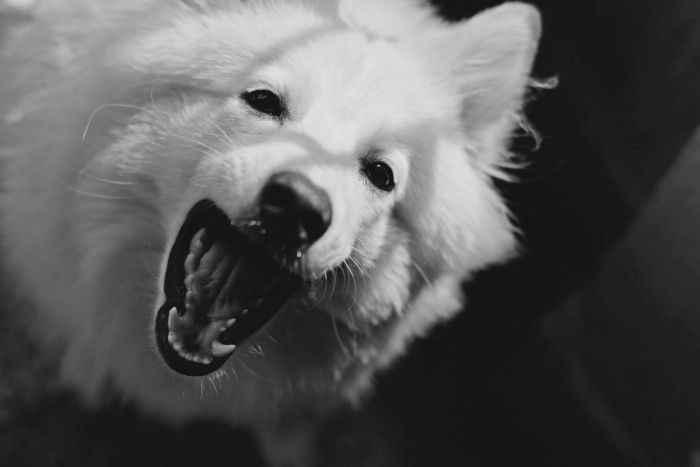
Raised hackles, a tail stiff like a board, or a mouth that’s suddenly closed tight, they’re all signs of a dog that’s uncomfortable or on edge. In situations like these, your first thought may be to run, but that can be counterproductive.
Running can trigger their chase response. Just back away slowly, and let your friend handle things.
How to Be Every Dog’s Favorite Guest
If you want dogs to love you, the secret is simple: listen to them.
Of course, they don’t speak in vowels and consonants, but when you pay attention to their subtle and not-so-subtle body language, you’ll understand how to act around them so that they’re comfortable and happy.
When next you visit a dog parent, remember to pay attention to the signs discussed here, respect boundaries, and most importantly, understand that not every dog wants to be friends right away.
Related Reading

Join the Conversation Be the first to comment