


How to Teach a Dog to Sit
 Tips & Training
Sit is the first cue most of us reach for, and once you know how to teach a dog to sit properly it quietly solves a dozen everyday problems. Five short sessions is often all it takes.
My dog has strong opinions about most things, but she picked this up in a single afternoon on the kitchen floor, largely because I had roast chicken and she is deeply food motivated. Your dog may take a week. That is normal, and it says nothing about how clever they are.
Below is the lure method in five steps, how to adjust it for a puppy, and why a sit stalls halfway.
Key takeawaysThe lure method suits most dogs: treat at the nose, hand lifts up and back, bottom lowers.Mark the moment their bottom touches the floor, not a second later.Add the word "sit" only once the movement is reliable, or the word attaches to nothing.A dog who suddenly cannot sit comfortably needs a vet, not more training.
Train Your Dog to Sit Using the Lure Method

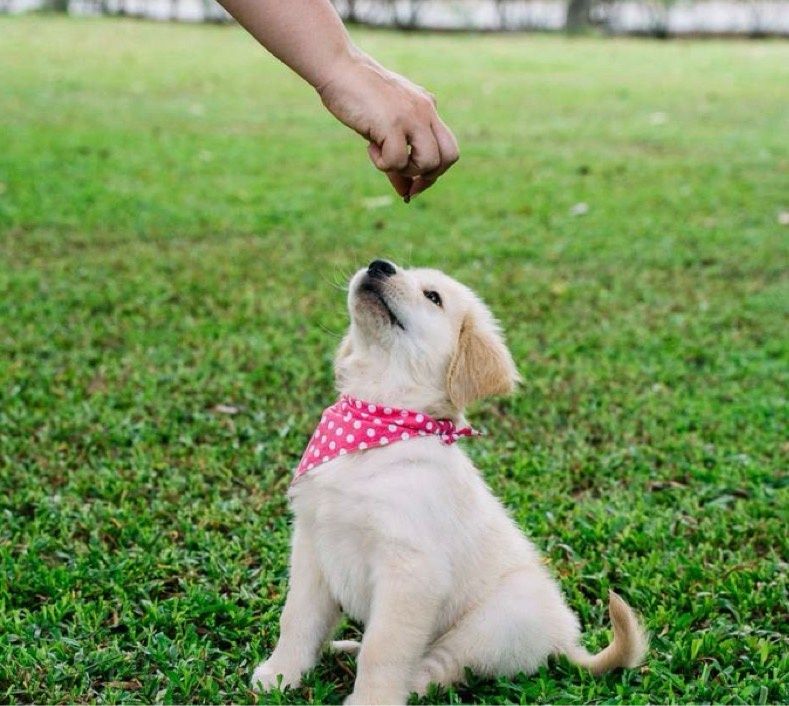
To teach a dog to sit, hold a small treat right at your dog's nose, then move your hand slowly up and back over their head. As their nose follows the treat, their back end lowers to the floor. The instant their bottom touches down, say "yes" and hand over the treat. Repeat five or six times per session, add the word "sit" once the movement happens reliably, and practice in short bursts across several days.
That is the whole method. The detail below is about doing it cleanly, because sit training goes sideways on timing far more often than technique.
What You Need Before You Start
Soft treats about the size of a pea, small enough to swallow in a second so the session keeps moving. Dry biscuits crumble and cost you focus. A quiet room with a non slip surface, since a dog sliding on floorboards will not commit to lowering their weight. And a marker, either a clicker or a short word said the same way every time. "Yes" works perfectly.
Keep sessions to two or three minutes. Reward based methods are what the American Veterinary Society of Animal Behavior recommends for all training, so there is no pushing, no pressing on hips, and no repeating the word louder.
Step 1: Lift the Treat Over Their Nose
Kneel facing your dog while they are standing. Hold the treat between your thumb and fingers, palm up, close enough to smell but not snatch. Move your hand slowly upward and slightly back toward their tail. Their nose tracks it, their head tips up, and the physics does the rest. Slow is the operative word, because fast hands lose the nose.

Step 2: Mark the Moment They Sit
The second their bottom makes contact with the floor, say "yes" or click, then deliver the treat. That gap between the sit and the marker is the entire lesson. Mark late and you have rewarded whatever came next, which is usually standing back up. Do five repetitions, then stop while your dog still wants more.
Step 3: Take the Treat Out of Your Hand
Once your dog sits easily on the lure, empty your hand and make the same motion with your palm up. Their nose still follows. When they sit, mark it, then reach into your pocket for the treat. You have just turned the lure into a hand signal, and that signal will outlast the food.
Step 4: Add the Word "Sit"
Now the word goes in, and the order matters. Say "sit" once in a warm, ordinary voice, pause for a beat, then give the hand signal. Mark and reward. After a dozen repetitions, say "sit" and simply wait, counting to five in your head. Most dogs sit. If yours looks blank, show the hand signal and reward anyway, then run a few more pairs before testing again.
Say it once. Repeating "sit, sit, sit" teaches your dog that the cue is the third one.
Step 5: Practice Somewhere New
Dogs are literal learners, so one who sits beautifully in the kitchen may look puzzled by the same request in the front yard. Move one thing at a time: new room, then the garden, then the quiet end of the street. Return to the hand signal whenever you raise the difficulty, and pay better for harder conditions. The dog training basics that make new tricks easier apply to every cue you build after this one.

How to Train a Puppy to Sit
The method is identical, but the packaging changes. Puppies have a focus window measured in seconds, so aim for 60 to 90 seconds of training three or four times a day, ideally just before a meal. Use part of their daily food allowance so the treats do not add up.
Puppies are also wobbly. Sitting takes more balance than it looks, and a puppy on a slippery floor will hover rather than commit, so choose rug or grass. Expect the sit to last half a second, and reward the touchdown rather than waiting for stillness. Duration comes months later.
If everything is currently a chew toy and every greeting involves paws, work on this alongside our guide to puppy jumping and biting, and get the house sorted first with our puppy proofing checklist.

How to Make a Dog Sit Without Treats
Some dogs are not especially food driven, and some are too excited to notice a piece of chicken. The first alternative is capturing. Rather than asking for anything, carry your marker with you, and every time your dog sits of their own accord, mark it and reward with whatever they actually value: a tossed toy, real praise, the back door opening. Within days most dogs start offering sits at you, hopefully, which is the moment to attach the word.
The second is life rewards. Sit before the leash clips on, before the bowl goes down, before the ball gets thrown. The reward is the thing your dog already wanted, and it costs nothing. This is how sit stops being a party trick and becomes manners, which is the same principle behind teaching a dog not to jump on everyone who walks through the door.
Why Won't My Dog Sit?
Almost every stall has a mechanical cause, and most are fixable in a session or two.
Your Dog Backs Away From Your Hand
You are leaning in, and your dog is buying back some space. Step backward instead and lift the treat toward your own chest so your dog steps in to follow. A wall or sofa behind them removes the reverse gear entirely.
Your Dog Jumps Up Instead
Your hand is too high. Keep the treat almost touching their nose through the whole arc. Drift more than an inch or two away and the lure becomes a target to leap at.
Their Bottom Hovers Above the Floor
Some body shapes rest naturally in a half sit, and that counts. If your dog can physically go all the way down but is not, reward smaller and smaller increments of lowering rather than holding out for the finished product.
They Sit, Then Pop Straight Back Up
Usually marker timing, occasionally too much environment. Deliver the treat while your dog is still sitting, low and close to their chest rather than up at your waist. If the room is busy, drop back somewhere calmer. Working under a dog's threshold is the same principle our behaviourist led guide to training a reactive dog covers in depth.
When Sitting Is Genuinely Uncomfortable
Sitting loads the hips, knees and lower spine, so arthritis, hip dysplasia, luxating patellas and back pain all make it something a dog will avoid. If your dog used to sit and now hesitates, sits crookedly, or lowers themselves in stages, stop training and book a veterinary exam. The same goes for a dog who yelps or refuses to sit on hard floors, and reading the quieter signals in our guide to dog body language helps you catch this early. Deep chested breeds like Greyhounds often find sitting awkward for reasons of build alone, and a stand is a fine substitute.
What to Teach Your Dog Next
Sit is a foundation rather than a finish line. Down and stay build directly on it, and sit is the polite default that makes vet visits, doorways and street corners easier. If children are part of your household, our list of the skills to teach your dog around children puts sit alongside the other cues that matter most there.
Keep sessions short and end while your dog is still enjoying it. Training is mental work, and a few minutes tires most dogs more thoroughly than a long walk, which is why our roundup of ways to mentally stimulate your dog leans on brain games. If walks are the sticking point, start with our guide on what to do when your dog will not walk on a leash. Yuki took three days to offer a sit without a treat in my hand, and has never once let me forget dinner time.
FAQ
Frequently asked questions
01How long does it take to teach a dog to sit?
Most dogs offer a reliable sit on a hand signal within three to five days of short daily sessions. Adding the verbal cue takes a few days more, and generalizing it to busy places outdoors usually takes two to three weeks.
02At what age can you teach a puppy to sit?
From about eight weeks, as soon as your puppy is home and settled. Keep sessions under two minutes and use part of their daily food. Very young puppies are wobbly, so train on carpet or grass rather than slippery floors.
03Should I push my dog's bottom down to make them sit?
No. Pushing on the hips is uncomfortable, can aggravate joint problems, and teaches your dog to brace against your hand. Lure the movement with a treat instead so your dog chooses the position themselves.
04Why does my dog sit at home but not outside?
Dogs learn in context rather than in the abstract, so a cue practiced only in the kitchen belongs to the kitchen. Rebuild it in each new location, starting with the hand signal and paying more generously when there are distractions.
05What do I do if my dog stops sitting on command?
Check for physical discomfort first, particularly in an older dog or one who used to sit readily. If your dog is comfortable, return to the hand signal for a few sessions and simplify the environment before rebuilding the verbal cue.
Related Reading


Share a thought, ask a question, or tell us about your own dog. We read every comment.