


Dog Chocolate Toxicity Calculator
 Dog Nutrition & Diet
Written by
Kosar KoohiUpdated 6 August 2026 · 3 Min Read
Kosar is the editor of Pretty Fluffy, a lifelong dog lover, and the proud mom of Yuki, a Maltese who has very high standards. So does Kosar. She researches everything obsessively before it ever makes it onto the page.
If your dog just got into the chocolate, you want a number and you want it fast. This dog chocolate toxicity calculator estimates the theobromine dose from your dog's weight, the type of chocolate and how much of it disappeared.
Call your vet or a pet poison line either way. A calculator cannot examine your dog. Use this to work out how urgent the call is, not whether to make it.
How Much Chocolate Is Toxic to Dogs?
Chocolate becomes toxic to dogs at roughly 20 mg of theobromine per kilogram of body weight, which is where vomiting, diarrhea and restlessness typically begin. Heart effects appear around 40 to 50 mg/kg, and seizures at 60 mg/kg and above, according to the Merck Veterinary Manual. Because cocoa powder and dark chocolate carry many times more theobromine than milk chocolate, a 10 kg dog reaches that first threshold on about 90 g of milk chocolate, or on roughly one tablespoon of cocoa powder.
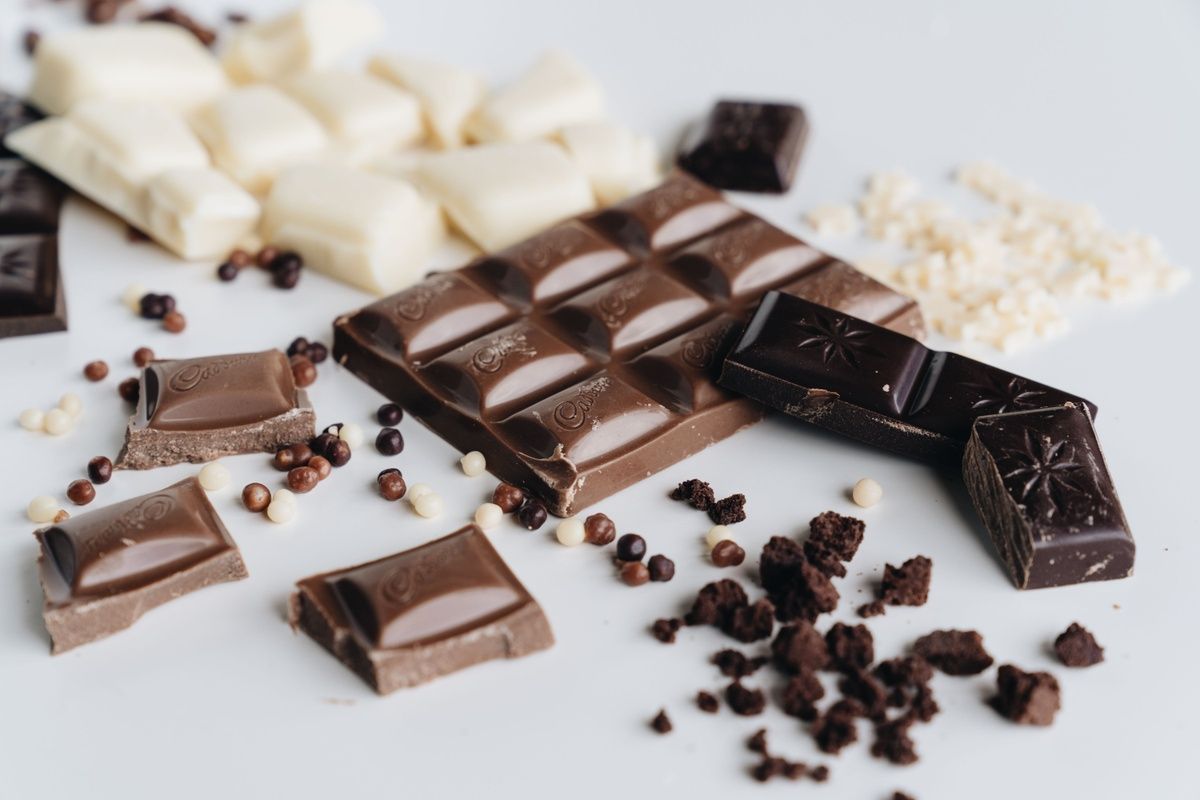
Theobromine Levels by Chocolate Type
The rule every dog mom eventually memorizes is that darker means more dangerous. Here is what that looks like in numbers.
| Type | Theobromine and caffeine per 100 g | Amount that reaches 20 mg/kg in a 10 kg dog |
|---|---|---|
| White chocolate | About 4 mg | Not realistically reachable |
| Milk chocolate | About 220 mg | About 90 g |
| Dark chocolate, 45 to 59 percent | About 600 mg | About 33 g |
| Very dark chocolate, 70 percent and up | About 880 mg | About 23 g |
| Cooking or baking chocolate | About 1,550 mg | About 13 g |
| Cocoa powder | About 2,830 mg | About 7 g |
Brands vary, and a bar labeled dark can sit anywhere in a wide range. Treat these as working estimates.
Why Your Dog's Size Changes Everything
The same dropped square is a shrug for a Labrador and an emergency for a Chihuahua, because the dose that matters is per kilogram of body weight. Cornell's canine health center notes that even small amounts in a small dog should be treated as an emergency.
What to Do if Your Dog Ate Chocolate
Work quickly and calmly, in this order.

- Move the remaining chocolate out of reach, and check whether another pet got to it.
- Keep the wrapper. The cocoa percentage and total weight are what matter.
- Assume the worst case. If half a block is missing, assume your dog ate all of it.
- Note the time. Vets decide differently at 30 minutes than at six hours.
- Run the numbers, then call your vet, an emergency clinic or a poison line.
Do not try to make your dog vomit at home. Some of the methods circulating online cause real harm, and whether vomiting helps at all depends on timing and on how your dog is presenting. That call belongs to a vet.
Symptoms of Chocolate Poisoning in Dogs
The early signs are easy to mistake for an ordinary upset stomach. Vomiting, diarrhea, unusual thirst and lots of urinating come first, often alongside a dog who cannot settle. As the dose climbs, VCA Animal Hospitals lists a racing or irregular heartbeat, panting, muscle tremors, stiffness and seizures. A dog who is pacing, trembling or breathing hard after finding chocolate needs to be seen straight away.
Signs usually appear within two to twelve hours. Theobromine clears slowly, with a half-life of around 17 hours, so effects can persist for one to three days and dogs are often monitored longer than owners expect.
Hidden Sources of Theobromine at Home
The blocks in the pantry are only part of the problem. Cocoa powder is the most concentrated source in most homes, and a spilled bag is a genuine emergency for a small dog. Cocoa bean mulch on garden beds smells irresistible and carries roughly as much theobromine as very dark chocolate. Then come the seasonal hazards: advent calendars at dog height, foil Easter eggs hidden in the garden, chocolate coins in stockings. Wrappers add a blockage risk on top.
Chocolate is not the only staple worth locking away. Onions and garlic deserve the same treatment, as do grapes and raisins, which is worth remembering when you are choosing which fruits are safe to share.
Dog-Safe Alternatives to Real Chocolate
None of this means your dog sits out dessert. Carob looks and melts like chocolate but contains no theobromine or caffeine, which makes it the standard swap in treat baking, from peanut butter and carob treats to a dog-friendly chocolate bark. Check the label on store-bought carob drops, since some brands add sugar.
FAQ
Frequently Asked Questions
01How much chocolate can a dog eat safely?
There is no amount worth offering deliberately. As a guide, signs start around 20 mg of theobromine per kilogram of body weight, which a 10 kg dog reaches on about 90 g of milk chocolate or 7 g of cocoa powder.
02How long after eating chocolate will a dog show symptoms?
Usually within two to twelve hours, sometimes faster after a large dose. Because theobromine clears slowly, signs can carry on for one to three days. Call your vet as soon as you know, rather than waiting for symptoms.
03Is white chocolate safe for dogs?
White chocolate contains almost no theobromine, so poisoning is very unlikely. It is still rich in fat and sugar, which can trigger vomiting, diarrhea or pancreatitis, so it is not a treat to hand over.
04What if my dog ate chocolate but seems fine?
Signs can take hours to appear, so a dog who looks fine now may not be later. Treatment is simpler and more effective before symptoms start, so call your vet with the numbers rather than waiting.
05Can a small amount of chocolate kill a dog?
Deaths are uncommon but possible, usually involving dark chocolate, baking chocolate or cocoa powder in a small dog. A single square of baking chocolate can push a toy breed into the serious range, which is why size and cocoa content matter most.
Related Reading


Share a thought, ask a question, or tell us about your own dog. We read every comment.