


9 Best No-Pull Dog Harnesses
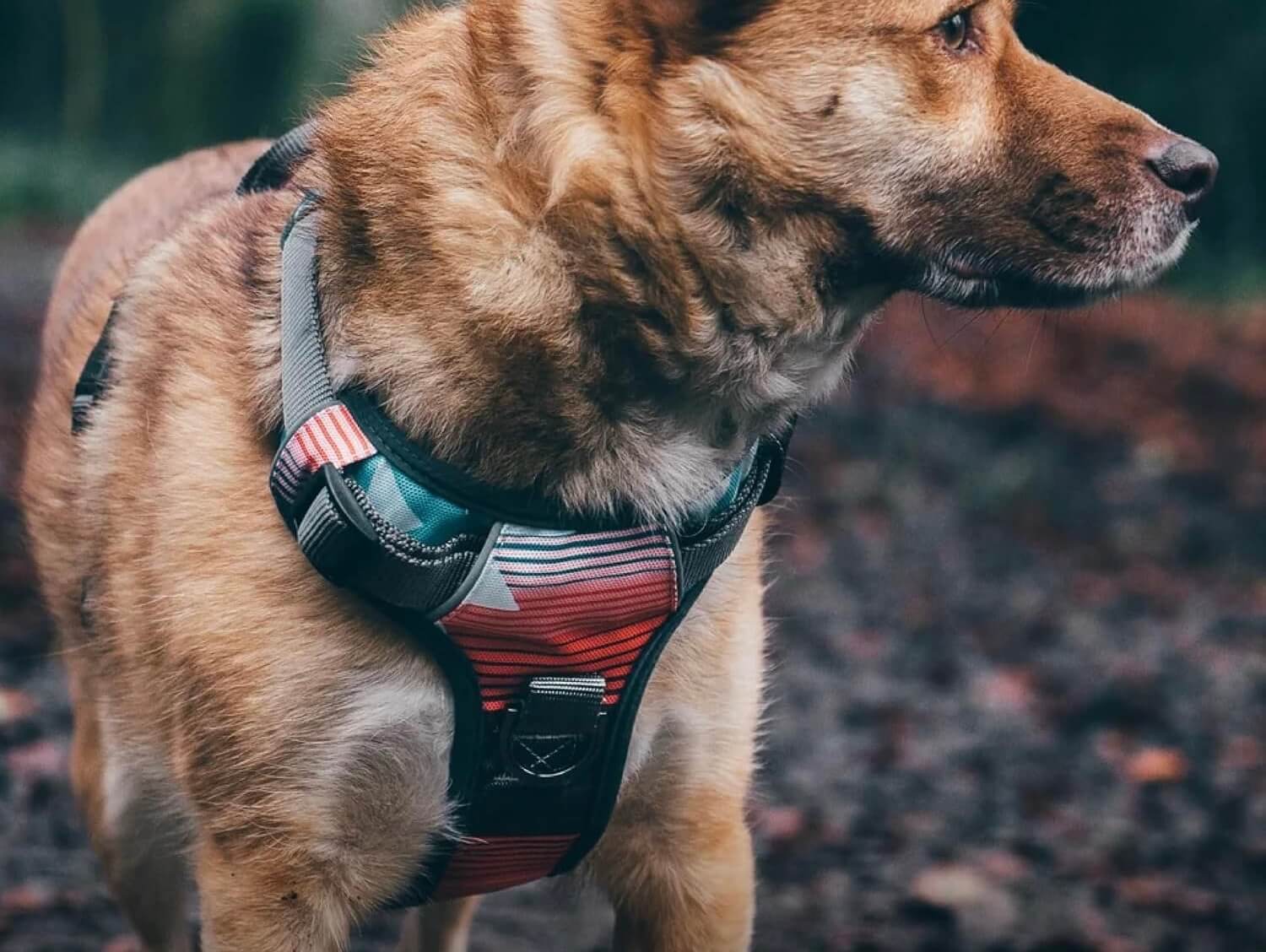 Editor's Picks
If your shoulder aches by the end of every walk, you are not alone, and you are not doing anything wrong. Pulling is one of the most common things dog moms write to us about, and the right no pull dog harness makes the difference between bracing yourself at the front door and actually enjoying the block.
Below are nine harnesses worth your money, chosen for front clip design, comfortable fit and honest value across a wide price range. There is a $10 option and a $60 option, and the cheaper one is not the compromise you might expect.
A no pull harness earns the name through where the leash attaches, not the label on the packaging. A front D-ring sits on your dog's chest, so when they surge forward the leash turns their body gently back toward you instead of giving them something to lean into. Look for a chest attachment point, at least four adjustment points, padded straps clear of the armpits, and metal hardware on anything bigger than a small breed. Harnesses that tighten or squeeze when your dog pulls are an older design worth skipping.
| Harness | Best for | Price | Leash clips |
|---|---|---|---|
| Embark No Pull Dog Harness | Most dogs, all sizes | $34.98 | Front and back |
| PetSafe Easy Walk | Strong pullers | $34.95 | Front only |
| Canada Pooch Everything No Pull | Everyday walking | $32.99 | Front and back |
| Frisco Padded Reflective No Pull | Smaller budgets | $10.99 | Front and back |
| Lucy & Co. No-Pull Harness | Style with function | $32.00 | Front and back |
| Sunny Tails Cloud Lite Waterproof | Wet weather, deep chests | $54.00 | Front and back |
| Carhartt Nylon Duck No Pull | Big dogs, rough weather | $36.97 | Front martingale |
| Tails & Trails Sahara Adventure | Hikes and trails | $40.00 | Front and back |
| DOGISTRY SoHo | Small and head-shy dogs | $45.00 | Front and back |
Harnesses for Dogs That Pull: Our Top Picks
1
Embark No Pull Dog Harness

Price last checked September 2026 · may vary
This is the harness we would hand to almost anyone. Metal leash rings front and back let you clip the front for training walks and switch to the back once your dog settles, and the padded gel handle covers the moments you need to shorten up fast. The rip-stop nylon and Oxford build is a step above standard mesh, the brand rates it to over 750 pounds of pulling tension, and four layers of cushioning sit between the webbing and your dog's skin. Two quick-release buckles mean nothing slides over the head, and reflective strips handle the early starts and late finishes.
2
PetSafe Easy Walk Harness

Price last checked September 2026 · may vary
The Easy Walk has been the trainer's shorthand for a front clip harness for two decades, and it is still the one we suggest for a genuinely determined puller. Designed by a veterinary behaviorist, it uses a martingale loop that tightens slightly across the chest and steers your dog sideways rather than pressing on the throat, well clear of the windpipe. Quick-snap shoulder and belly straps make fitting straightforward. It is a training tool first and a walking harness second: no back clip, no grab handle, though the minimal coverage does keep it cooler in summer.
3
Canada Pooch Everything No Pull Harness

Price last checked September 2026 · may vary
Neoprene is the reason this one gets picked up again and again. It stays soft against the coat, dries quickly after a rainy walk, and does not hold the damp smell that padded nylon can. You get a front D-ring for redirecting, a back D-ring for calm days, a built-in grab handle that owners of senior and mobility-limited dogs mention constantly, and on some versions a poop bag dispenser built into the strap. Reviewers consistently say it runs small, so measure chest girth properly and size up if your dog lands between two sizes.
4
Frisco Padded Reflective No Pull Harness

Price last checked September 2026 · may vary
At just under eleven dollars, this is the harness to buy while your puppy is still growing or while you work out whether a front clip suits your dog at all. It has nylon webbing, real padding, reflective stitching, five sizes and four adjustment points, plus a different colored belly strap so you stop putting it on upside down in the dark. The chest strap carries a cinching no pull D-ring alongside a fixed ring. Worth knowing: several owners report the chest straps loosen a little under heavy sustained pulling, so check the fit mid-walk with a serious puller.
5
Lucy & Co. No-Pull Harness

Price last checked September 2026 · may vary
Lucy & Co. built their name on prints, and this is the rare harness that looks good in photos and still does the job on the leash. Water-resistant neoprene sits over a breathable mesh interior with extra padding through the chest, and both the neck and chest straps adjust independently, which is what you need for a barrel-chested or unusually proportioned dog. Front and back D-rings give you both walking modes, and the collars, leashes and poop bag holders match if coordinating your walking gear is your idea of a good time. Ours is.
6
Sunny Tails Cloud Lite Waterproof Harness

Price last checked September 2026 · may vary
This is the most thoughtfully shaped harness on the list. The straps form a Y across the chest, leaving the shoulder blades free rather than crossing them, and five adjustment points mean it works on deep-chested dogs that most harnesses gape on. The PVC-coated webbing is genuinely waterproof, wipes clean after a muddy field, and does not hold odor. A neck buckle plus two side chest buckles means nothing goes over the head, which matters for anxious dogs, rescue dogs and flat-faced breeds. The brand is upfront that it is not chew proof.
7
Carhartt Nylon Duck No Pull Harness

Price last checked September 2026 · may vary
Built the way you would expect from Carhartt: 500-denier CORDURA nylon with a water repellent finish, a spacer mesh backer so it breathes, and a back handle for the moments you need immediate control. The no pull function comes from a martingale chest strap rather than a simple front ring, which gives a firmer, more gradual correction on a large strong dog. Reflective accents handle low light. It goes on over the head, and it is not chew resistant, which several owners have learned the expensive way. Check both retailers before buying, the price gap is substantial.
8
Tails & Trails Sahara Adventure Harness

Price last checked September 2026 · may vary
Made for dogs whose walks involve creeks, dirt and long days. The materials are water-friendly and hold up to constant use without the weight that usually comes with rugged gear, and the adjustable fit keeps a dog secure while leaving full range of motion for climbing and scrambling. Two attachment points cover both the training clip and the everyday clip. If your weekends look like hiking with your dog more often than a lap of the park, this is the one on the list built for that.
9
DOGISTRY SoHo Harness

Price last checked September 2026 · may vary
Small dogs are badly served by most no pull harnesses, which tend to be either too bulky or too flimsy, and the SoHo is the exception. It is a step-in design, so nothing passes over the head, and it closes with adjustable velcro plus a buckle, a genuinely secure combination for a dog who backs out of things. You get a front D-ring for redirecting, a back D-ring for everyday walks, soft built-in reflectors, and rose gold hardware that looks far more expensive than it is. Sizing runs by weight, so check the chart and size up between sizes.
How Does a No Pull Harness Work?
The mechanics are simpler than the marketing suggests. On a standard back clip harness, the leash attaches behind your dog's shoulders, which is exactly the position a sled dog is harnessed in. Your dog leans forward, the harness pushes back against their chest, and they get to keep going. It is comfortable, but it does nothing to discourage the behavior.

Move that attachment point to the chest and the physics change. When your dog surges ahead, the leash pulls from a point in front of their center of gravity, so their shoulders rotate back toward you and the forward momentum stops. There is no pressure on the throat and no pain involved, just a loss of leverage. Some designs, including the PetSafe and the Carhartt, add a martingale loop that tightens slightly across the chest for a firmer version of the same effect.
Front Clip vs Back Clip Harnesses
Most of the harnesses above give you both, and there is a good reason to use each. Clip the front during the training phase, when you are actively teaching loose leash walking and you need the leverage. Clip the back once your dog is walking politely, for running, or for any activity where you want them to move freely without the leash crossing under their chest.
Front clips do have limits. On a very small dog, a chest attachment can press on a delicate frame, which is why small-breed designs keep the ring low and the structure supportive. On a dog who lunges hard and suddenly, a front clip can twist the harness sideways, so a snug fit matters more than usual. If the lunging is triggered by other dogs or traffic rather than general enthusiasm, the harness is only half the answer, and our guide to training a reactive dog covers the rest.
What to Look For in a Harness for a Strong Puller
Four adjustment points is the minimum, six is better. You need to set the neck and the chest independently, because a dog whose chest fits a medium rarely has a medium neck. A harness with one or two adjustment slides will always sit slightly wrong somewhere.
Hardware matters more as your dog gets bigger. Plastic buckles are fine on a small dog and a liability on a Labrador, and the D-ring should be metal on any dog over about twenty pounds, since it takes the full force of a lunge. Padding needs to sit where the straps make contact, particularly behind the front legs where chafing shows up first as redness or thinning fur. Reflective detailing is not a luxury if you walk after dark.
Skip anything that works by tightening under the armpits when your dog pulls. That style predates the current generation of front clip designs, and discomfort is doing the work rather than physics. Research on harness pressure distribution has found the highest loads concentrate in the chest region, which is a good argument for choosing padding and fit carefully in that exact spot (Peham et al., The Veterinary Journal, 2013).
Getting the Fit Right
Measure your dog's chest girth just behind the front legs with a soft tape, standing up rather than sitting, and check that against the brand's chart rather than assuming your dog's usual size. Once it is on, you should be able to slide two flat fingers under every strap. Any tighter restricts movement, any looser and a determined dog will reverse straight out of it. Our full dog harness buying guide walks through measuring, fitting and every harness style in detail.
Do No Pull Harnesses Stop Pulling on Their Own?
Not permanently, and it is worth being clear about that before you buy. A front clip harness is a management tool. It makes pulling less rewarding and gives you back control immediately, which is a real and immediate improvement, but it does not teach your dog what you would rather they did. Take the harness off, or clip the back ring, and most dogs pull again.
The lasting change comes from pairing the harness with reward-based training, which veterinary behavior professionals consistently recommend over any correction-based approach (AVSAB position statements).
In practice that means stopping when the leash goes tight, moving again when it loosens, and paying your dog generously for the moments they choose to walk beside you. Our tips to stop leash pulling break the process into steps you can start on today's walk.
Give it a few weeks of consistency. Most dogs improve noticeably in that window, and the harness quietly becomes the thing you clip on out of habit rather than the thing standing between you and a pleasant walk.
SEE ALSO: Designer Dog Collars, Leashes & Harnesses | Cute Floral Dog Harnesses | Collars, Leads & Harnesses Directory
FAQ
Frequently asked questions
1What is the best no pull harness for a dog that pulls hard?
For a genuinely strong puller, a martingale-style front clip gives the firmest redirection. The PetSafe Easy Walk and the Carhartt Nylon Duck both use one, tightening slightly across the chest rather than pressing on the throat. Pair either with consistent loose leash training, since the harness manages the pulling rather than resolving it.
2Do no pull harnesses hurt dogs?
A well-fitted front clip harness should not cause pain. Discomfort usually comes from poor fit, straps sitting too close to the armpits, or older designs that tighten under the front legs when a dog pulls. Check for redness or thinning fur behind the front legs after the first few walks and adjust the fit accordingly.
3Can puppies wear a no pull harness?
Yes, provided it fits properly and the straps are soft and adjustable. Puppies grow quickly, so a harness with four or more adjustment points is worth prioritizing over an expensive one they will outgrow in two months. Introduce it slowly with treats before the first walk.
4Should I clip the leash to the front or the back?
Use the front ring while you are actively working on pulling, since it removes your dog's leverage and turns them back toward you. Switch to the back ring once they walk politely, or for running and hiking where you want unrestricted forward movement. Harnesses with both rings let you move between the two.
5How tight should a no pull harness be?
You should be able to slide two flat fingers, not curled, under every strap. Tighter than that restricts your dog's shoulders and can cause rubbing. Looser and a determined dog can back out of it. Recheck the fit every few weeks, especially on a growing puppy or a dog whose coat changes with the season.
Related Reading


Share a thought, ask a question, or tell us about your own dog. We read every comment.