
Dog Harnesses: Complete Shopping Guide

Walking your dog should be the best part of your day. It shouldn’t feel like a tug-of-war or a workout.
If you struggle with pulling or worry about neck strain, the right gear changes everything.
With so many straps, clips, and styles on the shelves, finding the best dog harness is often more confusing than it needs to be.

You just want something safe and comfortable for your dog’s unique shape. We’re here to help you find exactly that, so you can get back to enjoying your walks.
How to Choose the Best Dog Harness
Picking the right gear starts with your dog’s unique shape. A Pug needs very different support compared to a Greyhound.
Start by looking at your dog’s morphology. Flat-faced breeds, like French Bulldogs, often struggle with breathing. A standard collar can put dangerous pressure on their windpipes, so a harness is essential to protect their delicate necks.
Next, think about what you actually do together. Are you going for a sniff-walk or a serious run? Here is a look at the styles that actually work.
Y-Harness: The Gold Standard for Walking
This is the top choice for most pet parents. It forms a Y-shape on your dog’s chest and is perfect for daily adventures.
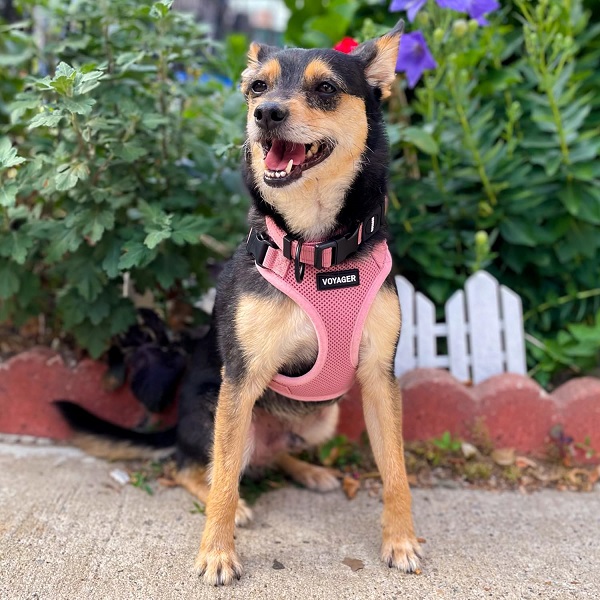
- Why we love it: It leaves the shoulders completely free, allowing a full range of motion.
- Best use: Everyday walks, long hikes, and off-leash play.
- Safety check: It distributes pressure evenly, so it won’t choke your dog if they pull.
H-Harness: Maximum Security for Escape Artists
Shaped like an H when viewed from the side, this classic style features a strap around the neck and another around the ribs.
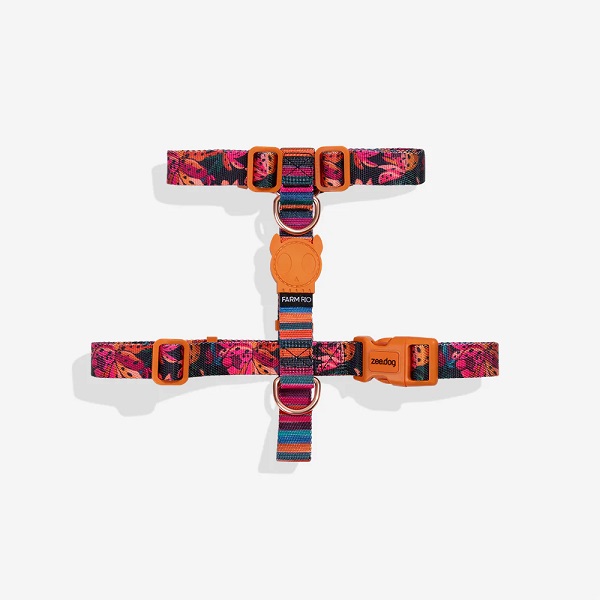
- Why we love it: It is incredibly secure. If your dog is an escapologist who backs out of gear, this is your safest bet.
- Best use: General walking and anxious dogs who need extra security.
- Fit tip: Check the straps regularly to ensure they don’t rub the sensitive skin under the armpits.
Anti-Pull Harness: The Solution for Strong Pullers
Does your dog walk you? These harnesses feature a leash clip on the front (chest) rather than the back.
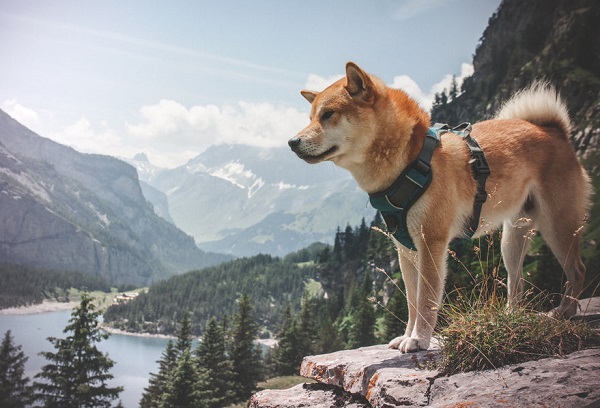
- How it works: When your dog pulls, the leash gently steers their body sideways toward you, naturally stopping the forward momentum.
- Best use: Training strong pullers and teaching loose-leash walking.
- Pro tip: Once your dog learns not to pull, you can switch to a back-clip harness.
Sport Harness: Essential for Running & Cani-cross
If you are an active duo who loves running or cycling, you need specialized gear.
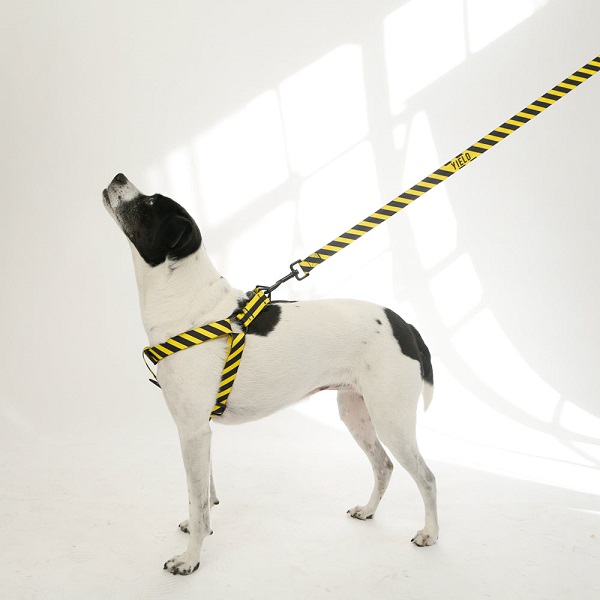
- Design: These are padded and sit further back on the body to allow for safe pulling.
- Best use: Cani-cross, running, and bikejoring.
- Health benefit: They allow your dog to pull into the harness without restricting their lung capacity or breathing.
Key features of a good dog Harness
Some harnesses look great on the shelf but fall apart in the park. When shopping, look for these specific quality markers to ensure safety and longevity.
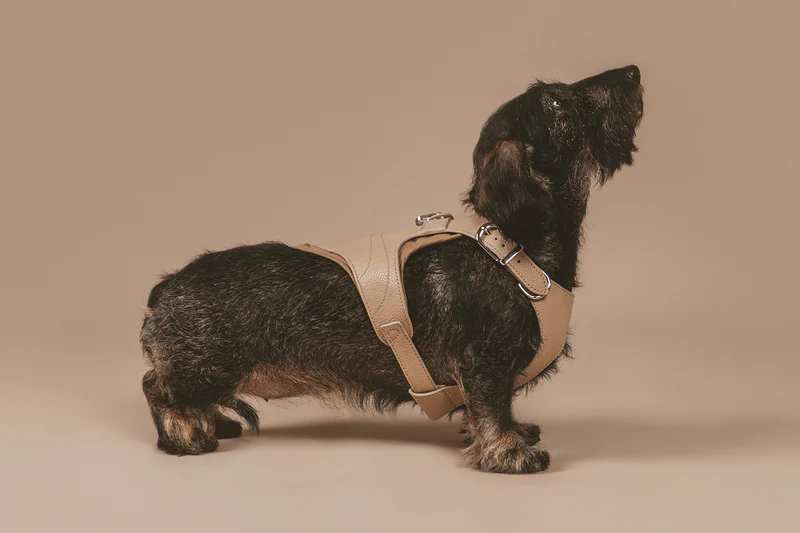
Pagerie Designer Dog Harness – Featured on Pretty Fluffy
1. Multiple Adjustment Points
A good harness isn’t “one size fits all.” Look for at least four adjustment points. You need to tweak the fit at the neck and the chest independently. This ensures the gear hugs your dog without gaps.
2. Breathable Materials
Your dog runs hot, especially in summer. Avoid heavy, thick fabrics that trap heat.
- Look for: Mesh or lightweight nylon.
- Avoid: Thick leather for hot climates.
- Padding: Neoprene padding prevents nylon burns on sensitive skin.
3. Durable Hardware
Plastic buckles are fine for small dogs, but metal is better for larger breeds. The leash attachment ring (D-ring) should always be metal. It must withstand sudden lunges without snapping.
4. Safety Handles
A handle on the back is a fantastic feature. It allows you to grab your dog quickly in an emergency. It is also helpful for lifting senior dogs into cars.
5. High Visibility
Safety matters when the sun goes down. Look for reflective stitching or piping. This helps cars see your pup during early morning or late-night potty breaks.
What harness hurts a dog?
A harness is meant to be safer than a collar, but the wrong one can cause pain. Poor fit or design leads to long-term injury. Three specific design flaws cause the most trouble:
- Restrictive Shoulder Straps: Stay away from harnesses with a straight strap across the chest. It blocks the shoulder joints and forces your dog to take shorter steps. This changes their natural gait and leads to sore muscles.
- Chafing and Rubbing: Straps that dig into the armpits act like sandpaper. Check for redness or hair loss behind the front legs. To fix this, make sure the chest strap sits a few inches further back.
- The “No-Pull” Squeeze: Some older harnesses stop pulling by tightening under the armpits. This pinches the skin and hurts. Stick to modern designs that gently steer the body instead of using pain.
How to Fit a Harness Correctly
Even the most expensive gear is useless if it doesn’t fit right. A loose harness is an escape risk; a tight one is painful. Follow these four steps to measure, adjust, and check your dog’s gear for the perfect fit.
Step 1: Measure Twice
Do not guess the size. Grab a soft tape measure and check two key areas: the neck (where a collar would sit) and the chest (the widest part of the ribcage, just behind the front legs). For the best fit, add about 5cm (2 inches) to your final measurement to account for movement and fur thickness.
Step 2: The Initial Adjustment
Loosen all straps before putting the harness on your dog. This prevents the gear from getting stuck over their ears or startling them. Clip it on securely, then tighten the straps slowly until it looks snug but comfortable.
Step 3: The Two-Finger Rule
This is the most important check. Once the harness is on, try to slide two fingers flat under the straps. If you can’t get two fingers in, it is too tight and needs loosening. If you can fit your whole hand underneath, it is too loose and needs tightening.
Step 4: The Movement Check
Watch your dog walk around the living room before heading outside. Look closely to see if the harness twists to one side or if the straps dig into the skin when they sit. Ensure their shoulders move freely without restriction. If they seem stiff or try to chew the straps, adjust the fit again. Patience here ensures miles of happy walking later.
Pretty Fluffy is the ultimate lifestyle destination for dog lovers. Discover the best designer & emerging dog brands, the latest dog accessories, pet lifestyle inspiration, healthy dog treat recipes, dog training tips and much more. Thank you for being part of our dog-loving community!
Fluffy Editorial is our in-house team of writers and dog nerds. We research every topic carefully, talk to professionals when needed, and focus on sharing honest advice we’d follow with our own dogs.



-
 Dog Mom Gift Basket
The perfect Valentine's Day gift for a dog mom!
-
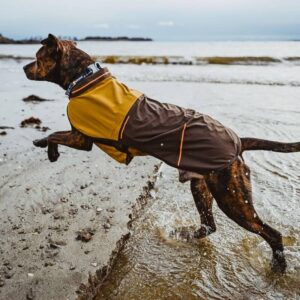
Ruffwear Sunshower Dog Rain Jacket
Your pet's perfect company for the days that pours cats and dogs!

-
Dog Mom Gift Basket
The perfect Valentine's Day gift for a dog mom!
-
Ruffwear Sunshower Dog Rain Jacket
Your pet's perfect company for the days that pours cats and dogs!