
Ragdoll Cat and Dog: Can They Coexist Peacefully?
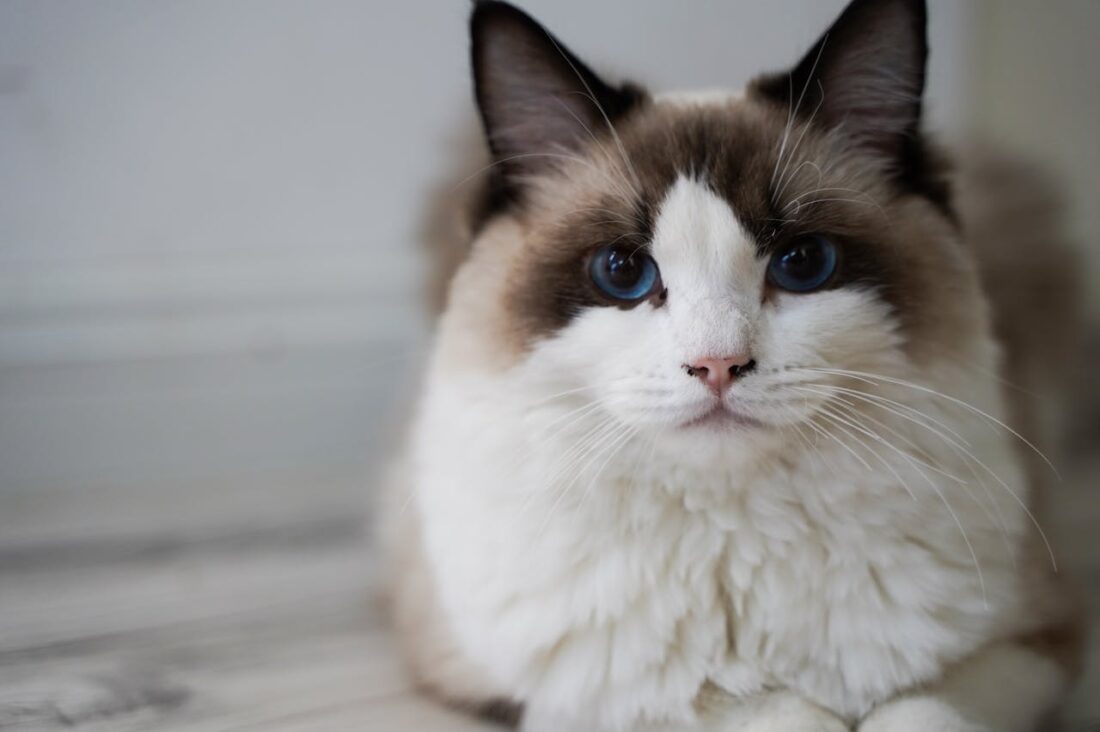
A Ragdoll cat is a large, semi-longhaired breed developed in California in the 1960s, defined by its unusually docile temperament, tendency to go limp when held, and a non-territorial, people-oriented personality that consistently makes it one of the most dog-compatible cat breeds available.
The question is not simply whether a Ragdoll and dog can share a home. They can. The more useful question is how to make that coexistence as smooth and successful as possible – and which dogs are genuinely the best match.
Do Ragdoll Cats Get Along With Dogs?
Yes, Ragdoll cats are among the cat breeds most reliably compatible with dogs, specifically because of how their temperament differs from most other breeds. Where many cats respond to dogs with territorial aggression or chronic stress, Ragdolls typically respond with curiosity and, often, genuine interest in companionship.

According to Amy Stadter, TICA Ragdoll Breed Committee chairperson, as cited in PetMD’s veterinary breed review, Ragdolls are “one of the most laid-back, most adaptable breeds” and are “typically very well-suited to all types of living situations” – a characterization that extends directly to multi-species households.
Two specific traits drive this compatibility. First, Ragdolls lack the strong territorial instincts that cause most cats to view a dog as a domain threat. Second, their substantial size – males typically reach 15 to 20 pounds – means they are not easily intimidated by dogs during play or shared space. A Ragdoll does not need to flee a medium-sized dog. That physical confidence enables engagement rather than avoidance.
The critical qualifier: a Ragdoll’s temperament creates favorable conditions, but it does not guarantee success. The dog’s prey drive, training history, and individual personality carry equal weight in the outcome.
What Makes the Ragdoll Cat Uniquely Suited to Living With a Dog?
Temperament: The Non-Territorial Advantage
The Ragdoll’s defining personality trait – the quality that distinguishes it from most other cat breeds in a multi-pet context – is the near-complete absence of territorial aggression. Most cats establish spatial boundaries and defend them. Ragdolls establish social connections instead.
This means a dog entering the household is processed as a potential companion rather than an intruder. The Ragdoll’s default response to a new animal is investigation, not confrontation – a baseline that dramatically shortens the adjustment period compared to introducing a dog to a more reactive breed.
Size: A Physical Confidence Factor
Ragdolls are one of the largest domestic cat breeds. Adult males weigh 15 to 20 pounds; females 10 to 15 pounds. This size matters in a dog-sharing household for two practical reasons: the cat is not easily overwhelmed during play, and dogs with moderate prey drives are less likely to trigger on an animal their own approximate size.
A small cat with a high-pitched retreat response activates chase instincts in many dogs. A large, calm Ragdoll that holds its ground and maintains composure does the opposite. Size, in this context, is a behavioral moderator.
The Dog-Like Personality
Ragdolls display a cluster of social behaviors that parallel dog behavior more than typical cat behavior: following owners between rooms, greeting people at the door, seeking proximity rather than solitude, and responding reliably to their names. These traits make the transition to a shared social environment with a dog significantly easier – the Ragdoll already operates on a social wavelength that dogs understand.
What Is the Best Dog for a Ragdoll Cat?
The dog’s prey drive is the single most predictive factor in Ragdoll-dog compatibility. According to the American Kennel Club, low-prey-drive breeds with gentle dispositions adapt to new cat housemates significantly faster than high-prey-drive sighthounds or terriers. That principle narrows the field considerably.
| Dog Breed | Prey Drive | Energy Level | Compatibility With Ragdolls |
| Golden Retriever | Low | Moderate-High | Excellent |
| Cavalier King Charles Spaniel | Low | Low-Moderate | Excellent |
| Labrador Retriever | Low-Moderate | High | Very Good |
| Beagle | Moderate | Moderate | Good with proper intro |
| Border Collie | Moderate-High | Very High | Caution advised |
| Jack Russell Terrier | High | Very High | Not recommended |
| Siberian Husky | High | Very High | Not recommended |
Golden Retrievers are the most consistently recommended match. Their patient temperament, trainability, and natural gentleness mean they read and respect a cat’s body language well – a skill that determines the day-to-day quality of a multi-species relationship.
Cavalier King Charles Spaniels offer the most compatible energy level. Their calm, low-intensity approach to interaction aligns closely with how a Ragdoll prefers to engage – measured, social, and non-demanding.
Labrador Retrievers bring high trainability and good-natured patience, though their energy level requires management during the introduction phase. A well-trained Lab makes an excellent Ragdoll companion. An untrained, overstimulated one can undermine the relationship before it begins.
Beagles work well when introduced carefully. Their pack-animal heritage means they view other animals as social rather than competitive – but their scent-driven curiosity can feel intrusive to a cat early in the relationship.
Breeds to approach with genuine caution: any terrier with a high prey drive, sighthounds (Greyhounds, Whippets), and Nordic working breeds like Siberian Huskies. These dogs can co-exist with cats in some circumstances, but the management burden is substantially higher, and the risk of a poor outcome is meaningfully elevated.
How Do You Introduce a Ragdoll Cat and Dog Successfully?
Introduction quality determines whether a Ragdoll and dog become companions or merely tolerant housemates. The process is not complicated, but it requires patience and consistent execution.
Preparation Before They Meet
- Set up a dedicated Ragdoll safe zone – a room the dog cannot access, containing the cat’s food, water, litter box, and at least one elevated perch. This remains the cat’s guaranteed retreat throughout the introduction period.
- Exchange bedding between the two animals for three to five days before visual contact. Scent familiarity before physical proximity reduces the novelty stress of the first meeting.
- Feed both animals on opposite sides of a closed door. Repeated positive experiences associated with the other animal’s scent build a favorable association before either sees the other.
- Ensure the dog has a solid “sit” and “stay” command before any face-to-face meeting. A dog that cannot be reliably controlled during the first introduction creates unnecessary stress for both animals.
- Install a baby gate with a cat-sized gap to allow visual contact without physical access. This stage should last at a minimum of two to three days, or until both animals are eating and behaving normally in each other’s presence.
The First Face-to-Face Meeting
Keep the first direct meeting brief – ten to fifteen minutes maximum. The dog should be on a leash. Reward calm behavior in the dog with high-value treats. Do not force the Ragdoll toward the dog; allow the cat to set the pace of approach.
Watch for these stress signals and pause or end the session if any appear in either animal:
- In the Ragdoll: flattened ears, tucked tail, dilated pupils, hissing, or withdrawal to a corner
- In the dog: fixated staring, stiffened posture, lunging, or whining that does not settle
Calm curiosity from both animals is the target outcome of early sessions. Friendship develops after weeks of accumulated neutral and positive interactions – not in a single afternoon.
What Are the Risks and Challenges of a Ragdoll and Dog Household?
Responsible ownership requires understanding what can go wrong, not just what typically goes well.
Prey drive escalation: Even a well-socialized dog with a low baseline prey drive can develop chase behavior if the Ragdoll runs. Ragdolls rarely flee – their temperament works against triggering this response – but kittens in particular may startle and bolt, which can activate a dog’s instinct regardless of training.
Stress-related health effects: A Ragdoll that feels chronically unsafe will reduce food intake, increase hiding, and over-groom. These signs are easy to miss in a multi-pet household where the cat appears physically present but is actually withdrawing. Monitor eating habits and weight monthly during the first six months.
Resource competition: Dogs that guard food bowls, beds, or their owner’s attention can create a low-grade stress environment for a Ragdoll, even without direct aggression. Separate feeding stations, multiple water sources, and individual owner attention, rather than only simultaneous attention, can significantly reduce this risk.
Size mismatch in large dogs: A dog over 60 to 70 pounds that plays enthusiastically – even non-aggressively – can physically injure a Ragdoll without any intent to harm. Even a large Ragdoll is structurally vulnerable to a 90-pound dog’s playful paw swipe. Supervised interaction during play is not optional in these pairings – it is a permanent management requirement.
Ragdoll Cat and Dog Coexistence
The Ragdoll cat’s non-territorial temperament, physical confidence, and social orientation make it the most consistently dog-compatible cat breed available – but the quality of the introduction and the dog’s individual prey drive determine whether that compatibility translates into a genuinely harmonious household.
Frequently Asked Questions
Do Ragdoll cats get along with dogs naturally, or does it take a lot of work?
Ragdolls have a natural temperamental advantage over most cat breeds in multi-pet households – their non-territorial, curious disposition means the adjustment period is typically shorter. That said, structured introductions still matter significantly, and the dog’s prey drive and training history carry as much weight as the cat’s temperament.
What is the best dog breed for a Ragdoll cat in my home?
Golden Retrievers and Cavalier King Charles Spaniels consistently rank as the top matches due to their low prey drives, gentle temperaments, and manageable energy levels. Labrador Retrievers are also strong candidates when well-trained. The most important factor is not the breed label but the individual dog’s prey drive, obedience training, and prior experience around cats.
How long does it take for a Ragdoll cat and dog to get along?
Most Ragdoll-dog pairs reach comfortable coexistence within two to six weeks of structured introductions. Genuine friendship – shared napping, mutual play, physical closeness – typically develops over three to six months.
Are there any dog breeds I should avoid pairing with my Ragdoll cat?
Yes, high-prey-drive breeds – Jack Russell Terriers, Siberian Huskies, Greyhounds, Whippets, and most terrier types – carry a meaningfully higher risk of a poor outcome with any cat, including Ragdolls.
Can a Ragdoll kitten be introduced to a dog more easily than an adult Ragdoll?
Generally yes, with one important caveat: kittens are more physically vulnerable than adults and more likely to startle and run, which can trigger chase behavior in a dog. Early kitten-dog introductions should be even more closely supervised than adult introductions. The behavioral benefit is that kittens socialized with dogs from 8 to 16 weeks are more likely to view dogs as normal parts of their environment throughout adulthood.





-
 WOOF Party Pupsicle
Long-Lasting Interactive Dog Toys for Boredom


-
WOOF Party Pupsicle
Long-Lasting Interactive Dog Toys for Boredom