


Slow Feeder Dog Bowls for Fast Eaters
 Editor's Picks
Written by
Kosar KoohiUpdated 7 September 2026 · 10 Min Read
Kosar is the editor of Pretty Fluffy, a lifelong dog lover, and the proud mom of Yuki, a Maltese who has very high standards. So does Kosar. She researches everything obsessively before it ever makes it onto the page.
There is a particular noise a dog makes when a bowl of kibble disappears in under ten seconds, and a second noise a minute later when some of it comes back up. If that is your kitchen, slow feeder dog bowls are the cheapest thing to try, and for most fast eaters they work. If you are replacing the whole setup rather than just the food dish, start with our guide to the best dog bowls.
What they are not is a medical device, whatever the packaging suggests. Below are eleven, grouped by material, because material is the decision that matters once you accept that any maze will slow a dog down. Plus an honest look at what the research says about bloat, since most articles on this overstate it.
How Does a Slow Feeder Work?
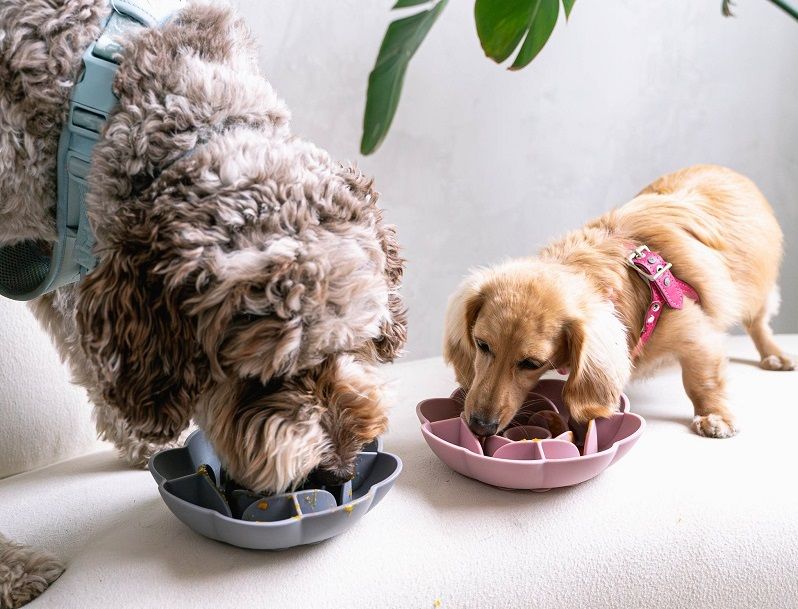
A slow feeder is a bowl with ridges, posts or channels molded into the base, so a dog works food out of the gaps instead of taking it in mouthfuls. A dog who empties a flat bowl in under thirty seconds will typically take several minutes over the same meal. That slower pace means less air swallowed, more chewing, and time for the stomach to register that food has arrived.
The side effect is the interesting part. Working food out of a maze is a small foraging puzzle, so a slow feeder does a job closer to an enrichment toy than a dish. If your dog is bored as well as greedy, our dog enrichment ideas and our favorite dog toys work the same muscle.
Do Slow Feeders Prevent Bloat?
No, and it is worth being clear because most articles on this topic are not. Bloat, properly gastric dilatation-volvulus, is when the stomach fills with gas and twists, and it is a surgical emergency that kills dogs. No bowl prevents it.
What is established is that fast eating is a recognized risk factor. Slowing a dog's eating may help reduce that risk in some dogs, and a peer-reviewed Veterinary Evidence review puts it in exactly those conditional terms. A slow feeder addresses one known risk factor cheaply. That is a good enough reason to own one. It is not a guarantee, and anyone selling you one as bloat protection is overselling.
One thing genuinely worth knowing: raised bowls. Elevated feeders were recommended for years as bloat protection, and the research turned out to point the other way, with elevated feeding associated with increased GDV risk in large and giant breeds. If your dog is a deep-chested breed, floor level is the safer default unless your vet has told you otherwise for a separate reason. That rules out the elevated slow feeders you will find on other lists, and it is why there are none here.
If you have a breed at risk, learn the warning signs properly rather than relying on a bowl. Unproductive retching, a swelling belly and sudden restlessness after a meal mean an emergency vet now, not in the morning. VCA Animal Hospitals has the full symptom list, and it is worth reading before you need it.
Plastic and Silicone Slow Feeder Bowls
The affordable end, with the biggest range of maze designs. Plastic is rigid and holds a sharper pattern, so it slows a dog more. Silicone is soft, grips without a separate base, and suits dogs who shove a bowl around the room. It also lasts longer than plastic, which is why it turns up in our eco-friendly pet products roundup.
Quick Comparison
| Bowl | Material | Notes | Best for |
|---|---|---|---|
| Outward Hound Fun Feeder | Plastic | Non-skid base, several sizes | The safe first buy |
| Frisco Slow Feeder | Plastic | Non-skid, small pet size available | Small dogs and puppies |
| Wilderdog Slow Feeder | Silicone | Non-skid, flexible | Bowl shovers |
| CHEWFFON Lick Bowl | Silicone | Non-slip, doubles as a lick bowl | Wet food and budgets |
| Awoo Lick Dish | Silicone | Lick mat format, dogs and cats | Wet food and calming |
| LE TAUCI Slow Feeder | Ceramic | Heavy, dishwasher friendly | Small to medium dogs |
| vancasso Slow Feeder | Stoneware | Weighty, no rubber ring needed | Hygiene-first households |
| Feedoo Slow Feeder | Stainless steel | Double wall, non-skid | Chewers and allergy-prone dogs |
| dogged Fish Scale | Multi-function | Three uses in one bowl | Small homes |
| Dexypaws Flower | Design-led | Petal channel pattern | Gentle slowing |
| Catenary Slow Feeder | Silicone | Sculptural, premium price | Open-plan kitchens |
1
Outward Hound Fun Feeder Slo Bowl

Price last checked September 2026 · may vary
The one everybody starts with, and there is a reason it has outsold everything else. The maze is deep enough to slow a determined eater, the non-skid base is wider than the bowl so it does not skate across tiles, and it comes in enough sizes to fit a Chihuahua or a Rottweiler.
It is plastic, which is the trade-off. Plastic scratches, scratches hold bacteria, so it needs proper washing and replacing when the surface clouds. At this price that is no hardship. If you are unsure your dog will tolerate a maze at all, start here and spend more later.
2
Frisco Non-Skid Slow Feeder Dog and Small Pet Bowl

Price last checked September 2026 · may vary
Frisco is Chewy's house brand and this is a straightforward maze bowl with a grippy base. The pattern is gentler than the Outward Hound, which sounds like a downside and often is not: a dog who gives up on a hard maze is worse off than one who takes three minutes over an easy one.
The small pet size is the real reason it is here. Genuinely small bowls are hard to find, and a puppy or a toy breed faced with a bowl built for a Labrador will simply eat around the obstacles. Worth adding to the new puppy checklist if you are starting from scratch.
3
Wilderdog Non-Skid Silicone Slow Feeder Dog Bowl

Price last checked September 2026 · may vary
Silicone solves the problem plastic bowls create, which is a dog nosing the bowl around the kitchen until the maze stops mattering. The whole thing grips, not just a ring on the bottom, so it stays put even when a dog gets pushy.
Silicone is soft on teeth and rolls up to pack, which makes this a good travel bowl. The flip side is that a soft maze slows a dog less than a rigid one, so a determined gulper may need the plastic.
4
CHEWFFON Silicone Slow Feeder Lick Bowl

Price last checked September 2026 · may vary
The cheapest silicone option here and a sensible dual-purpose buy: a slow feeder for kibble, a lick bowl for anything spreadable. Wet food, plain yogurt, a smear of pumpkin. Licking is self-soothing for many dogs, so it earns its place beyond mealtimes.
Lick surfaces need a brush to clean properly, since food dries into the grooves and a dishwasher does not always shift it. Still an easy addition to a mental stimulation routine.
5
Awoo Lick Dish Silicone Lick Mat Slow Feeder

Price last checked September 2026 · may vary
A lick mat with a raised rim, which is the detail that matters, because a flat mat lets wet food slide off onto the floor. Textured across the whole surface, so a spoonful of something soft becomes ten minutes of methodical licking.
This is the pick for wet feeders, for slowing a dog who does not eat kibble, and for baths and nail trims where you need a dog occupied. It works for cats too. Not a substitute for a maze bowl if you feed dry food.

Ceramic and Stainless Steel Slow Feeders
Heavier, more hygienic and better looking. Both materials are non-porous, so they do not scratch into bacteria traps the way plastic does, and the weight alone stops a bowl from moving.
6
LE TAUCI Ceramic Slow Feeder Dog Bowl

Price last checked September 2026 · may vary
The ceramic pick, and the bowl to buy once the plastic ones look scruffy. Glazed ceramic is non-porous, so nothing soaks in, and it survives a dishwasher indefinitely without clouding or scratching.
Capacity runs small, which suits small and medium dogs and rules it out for a large breed eating several cups a meal. Ceramic chips if a dog flips it against a hard floor, though the weight makes that unlikely.
7
vancasso Slow Feeder Dog Bowl

Price last checked September 2026 · may vary
vancasso comes to pet bowls from stoneware tableware, and it shows in the finish. This is the one that looks like it belongs with your own crockery rather than beside it, which matters when a bowl sits out all day.
The weight does the work a rubber base does, with nothing to perish or peel off. Check the listed capacity before ordering, since design-led ceramic bowls run smaller than they photograph.
8
Feedoo Double-Wall Stainless Steel Slow Feeder

Price last checked September 2026 · may vary
Steel is the most hygienic material you can feed a dog from and the hardest to press into a maze shape, which is why stainless slow feeders are rare. Feedoo manages it with a double wall, which also keeps food cooler and stops condensation pooling underneath.
The one for a dog who chews their bowl, and for dogs with contact allergies, where plastic is sometimes the culprit behind a stubborn chin rash. The least interesting bowl here and by some distance the most durable.
Designer Slow Feeder Bowls
The bowls you buy partly because you have to look at them three times a day. Function first, but there is no rule that says a dog dish has to be ugly.
9
dogged 3-in-1 Fish Scale Slow Feeder Dog Bowl

Price last checked September 2026 · may vary
The overlapping scale pattern is clever rather than decorative: shallow repeating pockets stop a dog getting a full mouthful without the frustration a deep spiral can cause. Three functions in one bowl, covering dry food, wet food and lick duty.
The case for it is that it replaces two or three separate items. In a small kitchen with limited cupboard space, that is worth something.
10
Dexypaws Flower Dog Slow Feeder

Price last checked September 2026 · may vary
A petal pattern that divides a meal into separate channels radiating from the center. It slows a dog by portioning rather than obstructing, which works better for dogs who get cross with a maze and start tipping the bowl.
Gentle is the word for it. A serious gulper will still get through a meal faster than with the Outward Hound, so treat this as the pick for moderate fast eaters rather than extreme ones.
11
Catenary Slow Feeder Silicone Pet Bowl

Price last checked September 2026 · may vary
The splurge, unapologetically. A sculptural silicone bowl that looks like an object rather than a pet accessory, which is the point if your dog eats in a room you also live in.
Silicone means it grips the floor and is soft on teeth, and it slows a dog moderately, like the other silicone bowls here. You are paying for the form. If that is what gets a slow feeder into daily use, it is not a bad reason. Our bowls and feeding directory has more in this vein.
What to Look for in a Slow Feeder
Maze Depth and Difficulty
Deeper and tighter slows a dog more, up to the point where they give up or flip the bowl. A persistent, food-focused dog can take a hard maze. An easily frustrated one does better with wide channels. If your dog abandons half the meal, the bowl is too hard.
Base and Weight
A slow feeder that slides is not a slow feeder, it is a hockey puck. You want a rubber ring wider than the bowl, all-over silicone grip, or enough weight in ceramic or steel that it needs neither. The most common complaint about cheap maze bowls.
Snout Shape and Size
The bit nobody mentions. A flat-faced dog physically cannot get into a deep narrow channel, so pugs, French bulldogs and Boston terriers need shallow, wide patterns. Long-snouted dogs can work a tight spiral happily. Check capacity against your dog's portion too.
Cleaning
Every ridge is somewhere food dries into. Dishwasher safe is close to essential, and a bottle brush helps with lick surfaces. Plastic needs the closest watching, because scratches hold bacteria, so replace one once it goes cloudy or scored. If you feed raw, ceramic or steel is safer, and these cleaning tips for dog owners cover the floor underneath.
FAQ
Frequently asked questions
01Are slow feeder bowls actually good for dogs?
For fast eaters, yes. They reduce gulping and the vomiting that often follows, they cut the air a dog swallows, and they add a small foraging puzzle to a meal. They are not necessary for a dog who already eats at a reasonable pace, and they do not replace portion control.
02Can a slow feeder make a dog frustrated?
It can, if the maze is too difficult. Signs are pawing at the bowl, tipping it, barking at it or walking away from food. Move to a wider, shallower pattern rather than assuming your dog will adapt. A dog who abandons meals is worse off than one who eats a little quickly.
03What material is best for a slow feeder dog bowl?
Stainless steel and ceramic are the most hygienic, because neither is porous and neither scratches easily into bacteria traps. Plastic gives the sharpest maze patterns and the lowest price. Silicone grips the floor best and is gentlest on teeth. Match the material to whether hygiene, slowing power or stability matters most to you.
04Should I use a raised slow feeder bowl?
Generally not, particularly for large or deep-chested breeds. Elevated feeding has been associated with increased bloat risk in those dogs, and floor level is the safer default. If your vet has recommended a raised bowl for a specific condition such as a neck or mobility issue, follow their advice over a general rule.
05How long should a dog take to eat from a slow feeder?
Five to fifteen minutes is a reasonable target for a meal that previously vanished in under a minute. There is no official figure. If your dog still finishes in ninety seconds the pattern is too easy, and if meals drag past twenty minutes it is too hard.
Related Reading

