


Can Dogs Eat Eggs? Yes, If Cooked
 Dog Nutrition & Diet

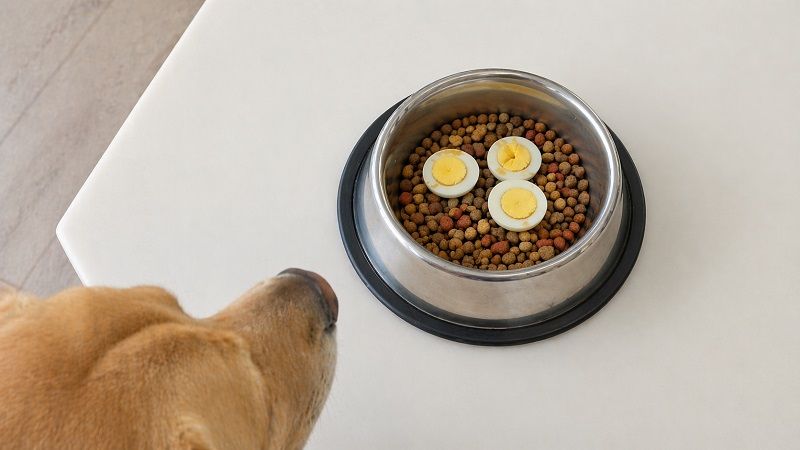
Few foods come with as much conflicting advice for dog owners as the egg: raw for a shiny coat, cooked for safety, shell on, shell off. So can dogs eat eggs? Yes. A plain, fully cooked egg is a safe, protein-rich treat for most healthy dogs. Raw eggs, eggshells, and anything fried in butter are where the trouble starts.
Here is how to cook them, how much to serve by size, and what the raw egg risks really are.
Are Eggs Safe for Dogs?
Fully cooked, plain eggs are safe for dogs. Boiled, poached, or scrambled without butter, oil, salt, or milk, an egg is an easily digested source of protein that suits most healthy dogs as an occasional treat. Raw eggs are not recommended because they can carry Salmonella. Treats, eggs included, should stay within 10 percent of a dog's daily calories.
Egg Yolk and Egg White for Dogs
Both parts are safe once cooked, but they are very different foods. The white of a large egg has about 17 calories and is almost pure protein. The yolk has about 55 calories and holds nearly all of the fat, along with most of the vitamins. For a dog that needs to keep fat low, cooked egg white is the gentler choice.
Dogs That Should Avoid Eggs
About 60 percent of the calories in a whole egg come from fat, so dogs with a history of pancreatitis should only have egg with a vet's approval. For dogs carrying extra weight, eggs use up the treat allowance fast, and a measured diet such as these dog foods for weight loss will do more good.
Egg is also a recognized food allergen in dogs, so it is off the menu during an elimination trial and for dogs already eating one of these dog foods for allergies.
Dogs on a prescription diet should skip extras, and a dog with a delicate tummy is better settled on one of these dog foods for a sensitive stomach before anything new is added.
Are Eggs Good for Dogs?
In small amounts, yes. A large egg has roughly 75 calories, about 6 grams of protein, and 5 grams of fat. Egg protein contains every essential amino acid, which is why this guide to choosing healthy dog food counts eggs among the most digestible proteins.
Egg Nutrition for Dogs
- Protein: complete and highly digestible, for muscle maintenance and repair.
- Fatty acids: including linoleic acid, an omega-6 fat that supports skin and coat.
- Vitamins: A, B12, riboflavin, and folate.
- Minerals and more: selenium, choline, and lutein.
A complete dog food already covers all of these, so eggs are a bonus, not a necessity. They are also richer than most treats, so it helps to rotate them with lighter options such as strawberries for dogs.
Do Eggs Help a Dog's Upset Stomach?
Not reliably. Scrambled egg is often suggested for a sick dog, but the fat in the yolk can make an unsettled stomach worse. Vets more often recommend a short spell of plain boiled chicken and rice or a veterinary gastrointestinal diet, and these home remedies for dog diarrhea cover the gentler options. Vomiting or diarrhea that lasts more than a day needs a vet.
Can Dogs Eat Raw Eggs?
Raw eggs are not recommended for dogs. An egg can carry Salmonella even when the shell is clean and uncracked, and the bacteria can sicken a dog or spread to the people it lives with. Raw egg white also contains avidin, a protein that blocks the absorption of biotin. Cooking the egg until the white and yolk are firm removes both problems.
Salmonella in Raw Eggs
Signs of Salmonella infection in dogs include vomiting, diarrhea that may be bloody, fever, loss of appetite, and low energy. Many infected dogs show no signs at all, yet still shed the bacteria in their stool and saliva. That makes raw eggs a household issue, especially where there are children under five, adults aged 65 and over, pregnant women, or anyone with a weakened immune system.
The AVMA and the CDC both advise against feeding raw animal products, eggs included, to pets. This guide to a raw food diet for dogs explains the hygiene steps for owners who choose to feed raw anyway.
Avidin, Biotin, and Raw Egg White
Avidin binds to biotin, a B vitamin dogs need for healthy skin, coat, and growth, and carries it out of the gut unabsorbed. Dogs fed raw egg white regularly over a long period can develop a biotin deficiency, which shows up as scaly skin, a dull coat, lethargy, and poor growth. It is rare, and an occasional raw egg will not cause it. Cooking destroys avidin, so a cooked egg supplies biotin instead of blocking it.
What to Do If Your Dog Ate a Raw Egg
A dog that licks up a dropped egg or raids the carton will usually be fine. Wipe the floor and wash your hands, then watch for vomiting, diarrhea, fever, or unusual tiredness over the next few days. Call your vet if any of these appear, or sooner for a puppy, a senior, or a dog with a health condition.
Are Eggshells Safe for Dogs?
Eggshells are not toxic, but most dogs should not eat them. A shell is mostly calcium carbonate, around 40 percent calcium by weight, which sounds helpful until it is added to a diet that is already balanced.
Eggshell Powder as a Calcium Supplement
A complete commercial dog food already contains the right amount of calcium, and adding more can upset the balance of calcium and phosphorus, a particular concern for growing large-breed puppies. Finely ground eggshell has a place in home-cooked diets designed by a veterinary nutritionist. Otherwise, leave it out.
Why Whole Eggshells Are Risky
Broken shell has sharp edges that can scratch the mouth, throat, or gut, and raw shells can carry the same Salmonella as the egg inside. Peel boiled eggs before serving, and put the shells in a lidded trash can.
How to Cook Eggs for Dogs
Plain and fully cooked is the whole recipe. Let the egg cool, then chop it to suit your dog's size.
Boiled and Poached Eggs
Hard-boiled eggs are the simplest option, since nothing is added and they keep in the fridge for a few days. Poached eggs are fine too, as long as the yolk is cooked through.
Scrambled Eggs for Dogs
Scramble the egg in a dry nonstick pan with no butter, oil, milk, cheese, or salt, and cook until no liquid egg remains.
Fried Eggs, Omelets, and Egg Dishes to Skip
Fried eggs soak up fat, and omelets and quiches usually carry cheese, ham, or vegetables from the allium family. Garlic, chives, and onions are toxic to dogs even in small amounts. Deviled eggs, egg salad, and pickled eggs add mayonnaise, mustard, salt, or vinegar, so none of them belong in a dog's bowl.
Easy Ways to Serve Eggs
- Food topper: chop a portion over regular dog food for a bit of variety.
- On its own: offer small pieces as a high-value training reward.
- Baked into treats: eggs bind the dough in many homemade dog treat recipes.
- Peanut butter cookies: these easy peanut butter dog cookies use two eggs per batch.
How Many Eggs Can a Dog Eat?
Treats of all kinds should stay under about 10 percent of a dog's daily calories. At roughly 75 calories, one egg is a big share of that allowance, and for a small dog it is far more than a day's worth. The amounts below are upper limits for a day when egg is the only treat, two or three times a week.
Egg Portions by Dog Size
| Dog size | Cooked egg per serving |
|---|---|
| Under 20 lb (9 kg) | Up to a quarter of an egg |
| 20 to 30 lb (9 to 14 kg) | Up to half an egg |
| 30 to 50 lb (14 to 23 kg) | Half to one egg |
| 50 to 90 lb (23 to 41 kg) | One egg |
| Over 90 lb (41 kg) | One to one and a half eggs |
Start with a teaspoon of cooked egg the first time and watch for any change over the next day.
When a Dog Eats Too Many Eggs
Too much egg usually means gas, loose stools, or vomiting. Offer water and skip treats for a day. Call your vet if the upset continues, or if your dog has repeated vomiting, a painful belly, or a history of pancreatitis.
Can Puppies Eat Eggs?
Yes, as long as the egg is fully cooked. A puppy's immune system is still developing, so raw egg is a firmer no than it is for adults. Puppy food should supply nearly all the calories, which leaves room for a teaspoon or two of plain cooked egg as a treat or training reward. Egg also works as a binder in baked treats such as these banana almond puppy treats.
Egg Allergy in Dogs
Eggs are a recognized food allergen in dogs, though not a common one. In a review of dogs with confirmed food allergies, egg was the trigger in about 4 percent of cases, well behind beef, dairy, and chicken.
Signs of an Egg Allergy
- Itchy skin, especially on the paws, ears, and belly
- Recurring ear infections
- Vomiting or diarrhea
- Hives or swelling of the face
Persistent itching deserves a vet visit, since home remedies for a dog's itchy skin only ease the symptom. Hives, facial swelling, or trouble breathing is an emergency.
FAQ
Frequently asked questions
1Can a dog eat eggs every day?
A large dog could fit a daily egg within the 10 percent treat allowance, but it would be the only treat that day, and the fat adds up. For small and medium dogs, a whole egg a day is too much. Two or three small servings a week give the benefits without crowding out balanced food.
2Do raw eggs give dogs a shiny coat?
The idea comes from the fatty acids and biotin in egg yolk, both of which survive cooking. A cooked egg offers the same nutrients without the Salmonella risk, and raw egg white works against coat health by blocking biotin. A glossy coat depends far more on a complete diet than on any single food.
3Is the cholesterol in eggs bad for dogs?
Not in the way it is for people. Dogs handle cholesterol differently and are resistant to the artery disease linked to it in humans. The real limits on eggs are calories and fat, which matter most for overweight dogs and those prone to pancreatitis. Dogs with diabetes or thyroid disease should follow their vet's advice.
4Can dogs eat duck or quail eggs?
Yes, when fully cooked and plain. A duck egg is larger and richer than a chicken egg, at roughly 130 calories, so the portion should be about half. A quail egg has only around 14 calories, which makes it a handy size for small dogs. The same rules apply: no raw eggs and no shells.
5Can dogs with pancreatitis eat eggs?
Whole eggs are a high-fat food, and fatty foods are a known trigger for pancreatitis flare-ups, so they are best avoided. Cooked egg white is almost fat-free and may be allowed in small amounts, but only if your vet agrees. Dogs on a prescription low-fat diet should not have extras without approval.
Feeding Eggs to Your Dog Safely
Cooked through, served plain, and kept to a few times a week, eggs are an easy treat to share. For more variety, this roundup of the best dog treats has options for every dog.
The FDA explains how Salmonella affects pets and their owners in more detail.
Related Reading


Share a thought, ask a question, or tell us about your own dog. We read every comment.