


A Day in the Life of a Dog Mom, Hour by Hour
 Pet Lifestyle

Most dog moms could not tell you what time they wake up, because the answer depends on someone else's bladder. The honest version of a day in the life of a dog mom runs on early light, measured scoops, and a loop of small checks nobody else in the house notices.
Dog Mom Daily Routine at a Glance
A dog mom's day is built around four fixed points: an early potty break and walk, a measured breakfast with a quick health check, a midday block of exercise or enrichment, and an evening wind-down covering grooming, dental care, and prep for the next morning. Hands-on care usually adds up to a couple of hours, spread across the day rather than taken in one block.
- Early morning: potty break, a twenty to thirty minute sniff walk, breakfast, and a head-to-tail once-over.
- Midday: another potty break or a walker visit, a short training moment, a puzzle feeder if you are heading out.
- Late afternoon: the main walk or play session, when most dogs hit their second energy peak.
- Evening: dinner, brushing or teeth cleaning, and calm time together.
- Before bed: a final potty break and ten minutes of prep for tomorrow.
The schedule is the easy part. The harder part is the running commentary in your head, where you are constantly reading what your dog is telling you through posture, pace, and appetite.
Morning Routine for a Dog Mom
Early Wake-Ups and the First Walk

Bladder capacity sets the schedule now and it does not negotiate. That first outing doubles as the day's most useful health check: whether bathroom habits look normal, whether stiffness is left from the night, and whether the mood matches the dog you know. Let the sniffing happen, since rushing it strips out most of the walk's value. A badly fitted harness turns the whole thing into a wrestle, and this guide to choosing a dog harness covers the fit points worth checking.
Mornings are also when leash manners quietly improve or fall apart, which is why these tips to stop leash pulling matter most on the walk you are least awake for.
Feeding and the Morning Health Check
Breakfast is not a scoop and a shrug. Portions get measured, often with a topper for coat condition, a probiotic, or a tablet hidden in something soft enough that nobody notices. The dog nutrition and diet section is a good place to sanity-check portions and which human foods are fine to share.
While your dog eats, run the quick scan: eyes clear, ears not sour, no new lumps under the collar line.
Dog Mom Duties Through the Middle of the Day
Balancing Work and Dog Care

Working from home means the world's least professional colleague is asleep under your desk, lobbying for attention the moment you look busy. An office means logistics: a camera you check too often, a walker booked for midday, or a lunch break spent driving home instead of eating.
The guilt is the part people underestimate, and this look at whether dogs get lonely separates real distress from a dog who sleeps six hours and wakes on time.
A dog left with nothing to do will invent something. A frozen stuffed toy, a snuffle mat, or one of these boredom busters for dogs turns your absence into a quiet afternoon.
Walks, Training, and Mental Stimulation


Mental work tires a dog faster than distance does. Ten minutes with a puzzle feeder settles a dog better than a second lap of the block, which is why this guide to choosing a dog toy is worth reading before buying another squeaky thing that lasts a week.

Photo by Ivan Babydov via Pexels.
Training rarely happens in a scheduled block. It happens in the seams of the day: a sit before the door opens, a stay while the groceries go away, a recall practiced during play when coming back is still the fun option. And a decompression walk on unfamiliar ground, loose leash and no destination, does more for a stressed dog than the same loop at speed.
The Emotional Side of Being a Dog Mom

You carry a running file on a creature who cannot describe a symptom. Is that lump new. Is the extra sleeping age, or something else. You plan weekends around dinner and potty times, and read labels you would never read for yourself. None of it is obligation dressed up as love. It is what advocacy looks like when the one you speak for communicates in posture and silence.
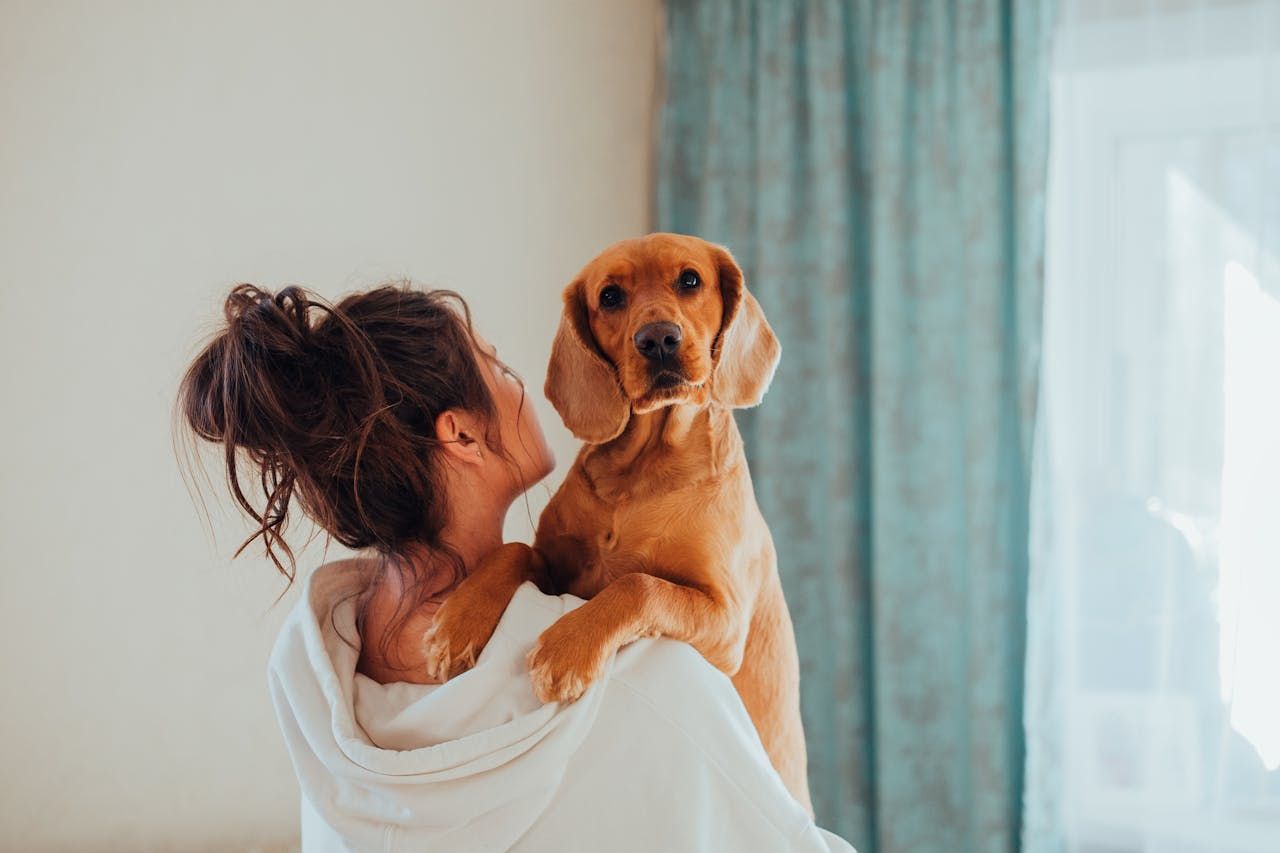
The return is a relationship with no performance element in it. On a bad day your dog does not ask what happened, they put a chin on your knee and stay there. Researchers have found that mutual eye contact raises oxytocin in both of you at once, which is why ten minutes on the floor resets your mood. These steps for bonding with a puppy are mostly about repetition rather than anything elaborate.
Evening Routine With a Dog

Dinner is served, a slow final potty walk happens, and the day softens. Evenings carry the jobs that never feel urgent until they are: a brush-through on the couch, teeth brushed or a dental chew, and unhurried time together. Dental care is the most commonly skipped task and the one with the most expensive consequences.
Ten minutes before bed removes most of tomorrow's friction: enough food for breakfast, muddy towels in the wash, a stuffed toy in the freezer, bedding shaken out. Sleep quality shapes the next morning more than most owners expect, and these dog bed picks for every sleeper cover the support differences worth knowing.
How a Dog's Daily Life Shifts With Age
The routine above is not fixed. A dog's daily life looks different at eight months, four years, and twelve years.
- Puppyhood: broken sleep, constant supervision, and potty breaks at intervals that feel absurd until they stop. This guide to puppy proofing your home removes a good share of the daily panic.
- Adulthood: the predictable stretch, where energy peaks are reliable enough to plan a day around.
- Senior years: shorter and more frequent walks, fixed medication timing, warmer bedding. This senior dog essentials checklist covers the gear changes that come up first.
Breed and build matter alongside age. A working-line dog at four still needs a job, while a flat-faced breed may need the main walk moved to the coolest hours. Treat the schedule as a draft your dog keeps editing.
How to Be a Good Dog Mom

Being a good dog mom is a question of consistency, not equipment. The dogs who do best are not the ones with the most expensive beds. They are the ones who know what happens next.
- Consistency: a predictable rhythm, so your dog is not guessing.
- Education: learning body language, and knowing which foods are genuinely unsafe.
- Advocacy: protecting your dog's space, never forcing a greeting they back away from.
- Prevention: vaccinations, parasite control, and dental care kept current.
- Presence: phone down, on the floor, properly paying attention.
A dog's life is shorter than yours by a painful margin, which is the only argument anyone needs for making the ordinary days good ones.
FAQ
Frequently asked questions
1How many hours a day does a dog actually need?
Most adult dogs do well on roughly two hours of combined attention: about an hour of walking split across the day, plus training, feeding, grooming, and real downtime together. Puppies and working breeds need more. Senior dogs need the same amount in shorter, gentler pieces.
2Is being a full time dog mom realistic with a job?
Yes, with support built in. The usual combination is an early walk before work, a midday visit from a walker, sitter, or neighbor, and a proper session afterward. Puppies and dogs with separation distress are the exceptions, since both need company more often than a workday allows.
3How do dog mom duties change between a puppy and a senior dog?
Puppies need frequency: potty breaks, short training bursts, and supervision through the day. Seniors need adaptation instead. Walks get shorter but more regular, medication timing becomes fixed, bedding needs more support, and the daily health check matters more because changes arrive faster and far more quietly.
4What is the hardest part of being a dog mom?
The cost and the logistics, usually before the mess. Unplanned vet bills arrive at the worst moment, and saying no to spontaneous plans gets old. Behavior problems like barking or separation distress feel personal but are usually management issues, solvable with time rather than money.
5Why does the bond with a dog feel so intense?
Because it is measurable. Research published in Science on the oxytocin-gaze loop between dogs and their owners found that mutual eye contact raises oxytocin in both dog and human, mirroring the feedback seen between parents and infants. The attachment runs on real chemistry, not projection.
Related Reading


Share a thought, ask a question, or tell us about your own dog. We read every comment.