
RV Camping With Dogs: Tips for Safe, Calm Travel
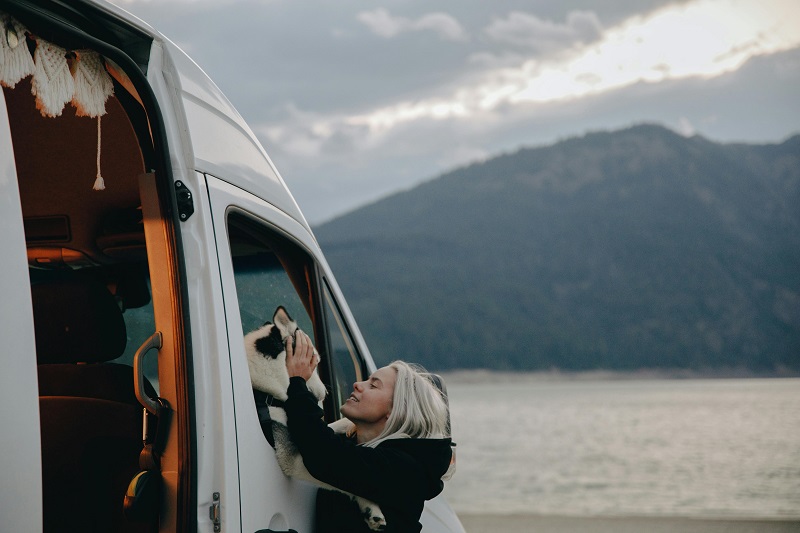
Road trip roommate rules apply, especially when one of you eats socks.
There’s a special kind of freedom that comes with RV camping with dogs, especially when your pup gets to come along for the ride. You can wake up somewhere new, explore scenic trails, and enjoy the comfort of having your own little home on wheels.
But RV travel can feel different for dogs. New smells, unfamiliar sounds, changing routines, and small spaces may be exciting at first, but they can also become stressful without the right preparation.

Training Tips Before Your RV Trip
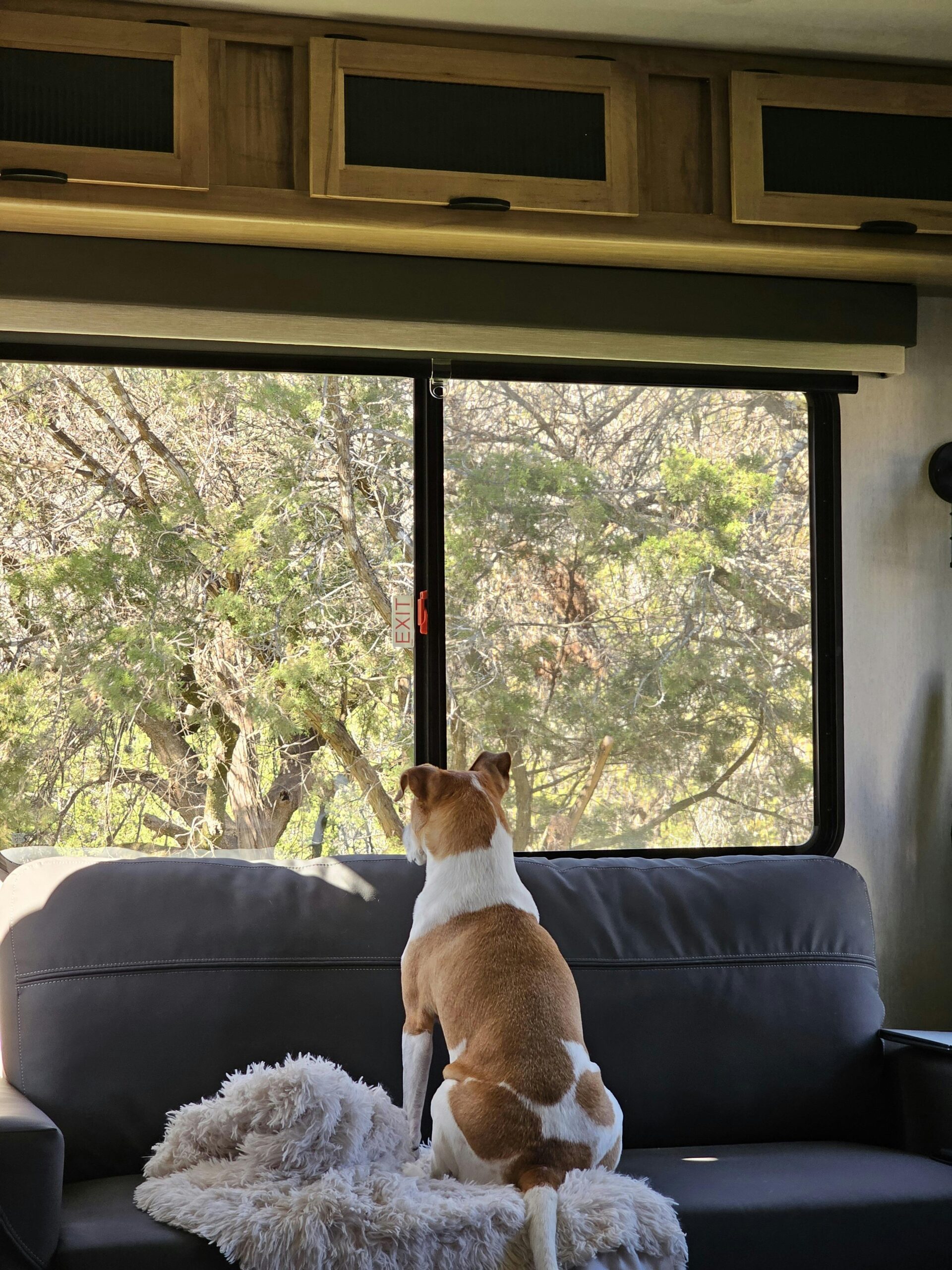
Photo by Viktoria B. from Pexels
Helping your dog get used to RV life before you leave can make the first few travel days much easier. The goal is to make the RV feel familiar before it starts moving.
Start by letting your dog explore the RV while it is parked and quiet. Allow them to sniff around, climb into their sleeping area, and find a spot where they feel comfortable. Add their favorite blanket, bed, or toy so the space smells like home.
Once your dog seems relaxed inside, try short drives around the neighborhood. Keep things calm and positive. Use gentle praise and small treats when your dog settles, lies down, or stays calm during the ride.
Doorway Manners When RVing With Dogs
Campgrounds can be busy places. There may be other dogs, children, bikes, wildlife, golf carts, and plenty of tempting smells. That makes basic commands especially important.
A strong “come” cue is one of the most important skills for any dog-friendly RV trip. Practice it at home first, then around mild distractions, and later in more active outdoor spaces.
Doorway manners are just as important. Before opening the RV door, ask your dog to “wait.” This helps prevent them from jumping out before you are ready. Reward calm waiting with praise or a treat.
Teach Your Dog to Settle
RV parks and campgrounds are full of sounds. Your dog may hear footsteps, voices, vehicles, barking, and campfire chatter throughout the day.
Teaching a “settle” cue can help your dog relax instead of reacting to every little noise. Set up a mat, blanket, or bed inside the RV and reward your dog for lying calmly on it. Short daily practice sessions can make this behavior easier to use once you are at camp.
Safety Habits for RV Travel With Dogs
Before leaving, make sure your dog’s ID tag is current and includes your phone number. A microchip with updated contact information is also a smart backup.
Keep a leash near the RV door so it is always ready at rest stops and campsites. Inside the RV, secure loose items before driving so nothing shifts or falls onto your dog while the vehicle is moving.
Feeding Tips for RV Camping With Dogs
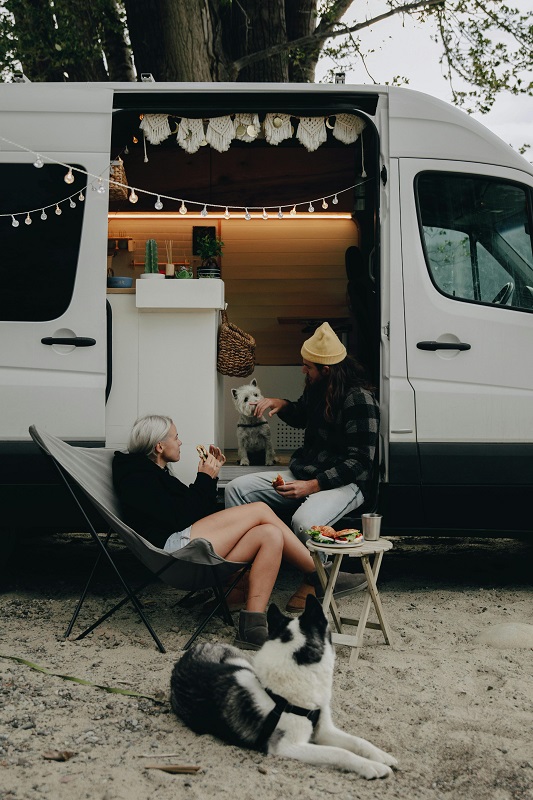
Photo by PNW Production from Pexels
Mealtime on the road should feel as familiar as possible. Dogs usually do best when their food, feeding times, and water routine stay close to normal.
Bring Your Dog’s Usual Food
Avoid switching your dog’s food during a trip unless your vet has recommended it. Sudden diet changes can cause stomach upset, which is the last thing you want while sharing a small RV space.
Pack enough of your dog’s regular food for the full trip, plus a little extra in case your plans change. Store it in sealed containers to keep it fresh and to avoid attracting ants, raccoons, or other curious visitors.
Keep a Familiar Feeding Routine
Dogs feel more secure when they know what to expect. Try to feed your dog at the same times you would at home.
It is also a good idea to feed your dog at least an hour before driving. This gives them time to digest and may help reduce the chance of motion sickness.
Water and Treat Tips for the Road
Always keep clean water available, especially in warm, dry, or high-altitude areas. Collapsible bowls are useful for rest stops, hikes, and quick campsite breaks.
If your dog has a sensitive stomach, bottled or filtered water may be a better choice until you know how they handle local water sources.
Treats are useful for reinforcing good behavior during travel. Use them for recall practice, calm moments, leash manners, and settling inside the RV. Just watch the portions, since travel days can sometimes mean less exercise than usual.
RV camping with your dog is one of those experiences that feels both freeing and grounding at the same time. But since you’re sharing campgrounds with others, a few thoughtful habits go a long way toward keeping everyone happy — including your pup.
Campground Etiquette for Dog Owners
Camping with your dog is much easier when you are considerate of the people and pets around you. A few simple habits can help keep campgrounds welcoming for dog owners.
Follow Campground Pet Rules
Every campground has its own pet policies. Some have dog-friendly trails or off-leash areas, while others require dogs to be leashed at all times.
Check the rules when you arrive. Even if your dog is well trained, keep them close until you know the area. New smells, wildlife, children, and other pets can be distracting, even for calm dogs.
Manage Barking and Excitement
Many campers come to enjoy peace and quiet, especially in the evenings. If your dog tends to bark at outside sounds, prepare before the trip.
You can practice at home by playing campground-style noises, such as people talking, dogs barking, or vehicles passing, while rewarding calm behavior.
At the campsite, give your dog something to do when activity picks up outside. A chew, puzzle toy, or stuffed treat toy can help redirect their attention. If your dog barks at movement outside the windows, keep shades or curtains partly closed.
Clean Up After Your Dog
Carry waste bags every time you leave the RV with your dog. Pick up after them right away, even in remote areas.
Dispose of bags in proper bins. If there are no bins nearby, take the bag with you until you find one. This is one of the easiest ways to keep campgrounds clean and dog-friendly.
Give Other Campers and Dogs Space
Not everyone wants to meet your dog, and not every dog is comfortable with greetings. Keep some distance when walking near other campsites, picnic areas, or RV doors.
Always ask before allowing your dog to approach another dog or person. Even friendly dogs can feel protective around their RV or campsite.
Leaving Your Dog Alone in the RV
Sometimes you may need to step away for a short time. Before leaving your dog inside the RV, make sure the temperature is safe and comfortable.
Leave fresh water, a cozy resting spot, and proper ventilation if the weather allows. RV interiors can heat up or cool down faster than expected, so never assume the temperature will stay comfortable for long.
A pet camera or temperature monitor can help you check on your dog while you are away, but it should not replace careful planning.
Best Gear for RV Camping With Dogs
Packing for your dog takes a little thought, but the right gear can make RV travel safer and more comfortable.
Start with the basics: collapsible food and water bowls, a sturdy leash, a secure harness, and a comfortable bed or blanket. These items help your dog eat, walk, rest, and settle more easily wherever you park.
A dog first aid kit is also worth bringing. Include bandages, tweezers, antiseptic wipes, any medications your dog needs, and your vet’s contact information.
For warm weather, consider cooling mats, cooling vests, and extra shade. For cold nights, bring an insulated bed or soft blanket. Dogs can be sensitive to temperature changes, especially in an RV.
For relaxing outside, a foldable playpen or secure tether can give your dog a safe spot near you. Pack a few towels too. They are useful for muddy paws, rainy walks, lake swims, and quick cleanups before your dog climbs back inside.
Pretty Fluffy is the ultimate lifestyle destination for dog lovers. Discover the best designer dog brands and emerging small pet businesses, the latest dog accessories, healthy dog treat recipes, dog training tips and more. Thank you for being part of our dog-loving community!

Fluffy Editorial is our in-house team of writers and dog nerds. We research every topic carefully, talk to professionals when needed, and focus on sharing honest advice we’d follow with our own dogs.




-
 DOG By Dr Lisa Dog Brush
lovely everyday brush for dog parents who want something gentle and easy to use.

-
DOG By Dr Lisa Dog Brush
lovely everyday brush for dog parents who want something gentle and easy to use.