


Why Does My Dog Lick Me So Much?
 Dog Behavior
Written by
Kosar KoohiUpdated 9 August 2026 · 12 Min Read
Kosar is the editor of Pretty Fluffy, a lifelong dog lover, and the proud mom of Yuki, a Maltese who has very high standards. So does Kosar. She researches everything obsessively before it ever makes it onto the page.
Why does my dog lick me so much? I have asked myself this at roughly six in the morning more times than I can count, usually while Yuki stands on my chest and works her way methodically across my chin before I have managed to open my eyes.
For a long time I assumed it was just affection and left it there. Then I noticed the licking was not always the same. Some of it was soft and sleepy. Some of it started the moment I picked up my laptop. Some of it happened when I came home stressed and sat down without saying much. So I went digging, the way I do with everything, and what I found is that licking is one of the richest signals in a dog's vocabulary. A relaxed dog washing your hand during a movie is telling you something completely different from a dog who licks and licks and cannot seem to stop. Here is how to tell the two apart.
8 Reasons Dogs Lick Their Owners
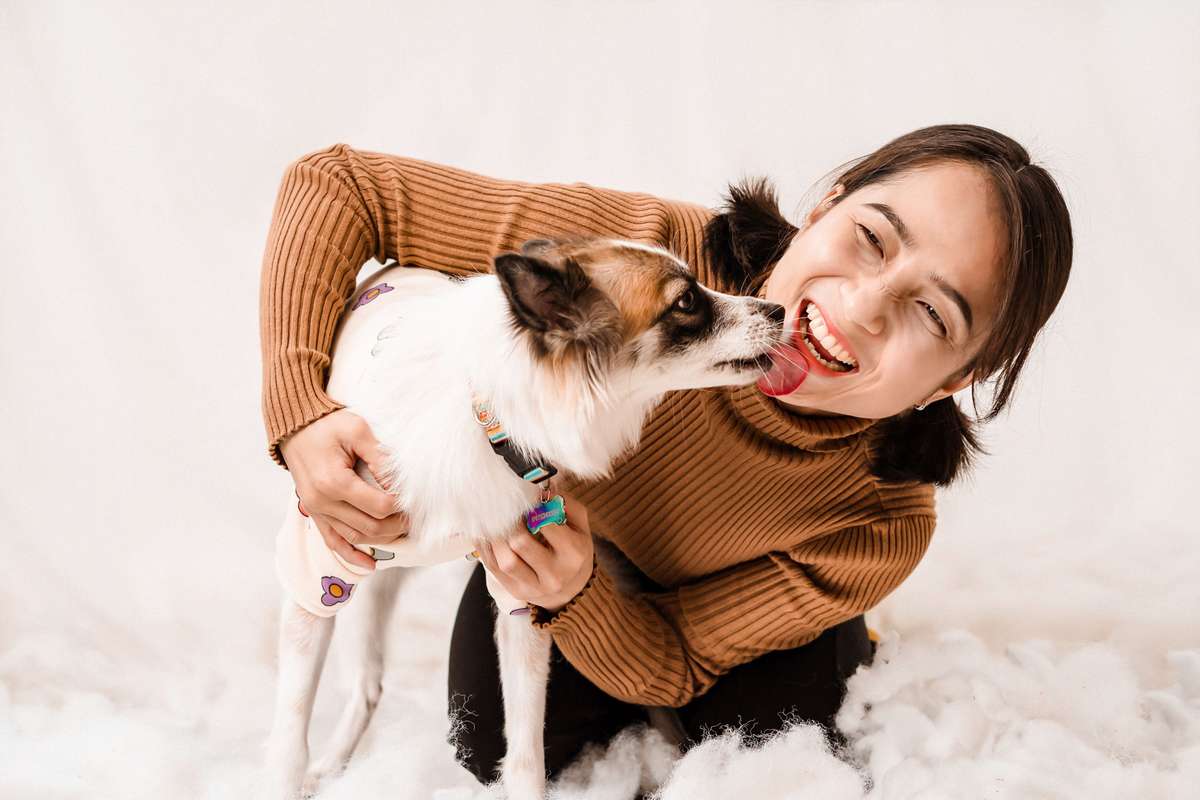
Dogs lick their owners because licking is a natural social behavior that begins in puppyhood, when a mother licks her puppies to clean and comfort them. Most adult dogs lick people to show affection, ask for attention, groom, or taste the salt on your skin, and the act itself releases feel-good chemicals that help them feel calm.
Some dogs also lick to soothe themselves when they feel anxious, bored, or unwell. Licking becomes a concern when it is sudden, constant, difficult to interrupt, or paired with skin damage or other changes in your dog.
Affection and Bonding
The sweetest explanation is also the most common one. Licking is how dogs greet, groom, and connect with the individuals they love, and it traces straight back to the comfort of being cleaned by their mother as a puppy.
According to VCA Animal Hospitals, licking triggers a release of endorphins and dopamine, which is why a licking dog often looks so blissfully settled while doing it. If you have ever wondered whether your dog is fond of you, a soft, unhurried lick during a cuddle is about as clear an answer as you will get. It is one of the simplest ways dogs build a bond with their people.
Asking for Your Attention
Licking works, and dogs know it. When your dog licks your hand and you look up, speak to them, or reach out to pet them, you have just rewarded the behavior. Even a mild "stop that" counts as attention from your dog's point of view. This is the reason licking so often intensifies at exactly the moments you are least available, such as when you are on a call or focused on a laptop.
You Taste Interesting
Sometimes there is no emotional message at all. Human skin carries salt, sweat, and traces of whatever we last touched or ate, and to a nose that sensitive, a forearm after a walk is genuinely appealing. Hand cream, sunscreen, and body lotion attract the same interest.
One practical caution: some topical medications, including psoriasis and hormone creams, are toxic to dogs, so never let your dog lick skin where you have applied them.
Grooming Instinct
Dogs groom the members of their social group, and most of them include us in that group without asking. Mutual grooming is a bonding behavior, and licking your arm while you scratch their chest is your dog participating in an exchange rather than making a request.
You may see the same instinct pointed at another dog in the house, or at a blanket, and it often overlaps with gentle nibbling with the front teeth.
Appeasement and Politeness
Licking can also be a social smoothing gesture. A dog who feels slightly unsure, or who wants to signal that they mean no trouble, may lick a hand or a face while keeping their body low and their movements soft. This version is worth recognizing, because it is a request for reassurance rather than an expression of joy.
Reading it correctly means watching the whole dog, which is where a working knowledge of dog body language earns its keep.
Comfort When You Are Upset
Many owners notice that their dog appears at the exact moment they start crying, and research on canine behavior supports the observation. In controlled studies, dogs approached and licked or nuzzled people who were crying more often than people who were humming or talking normally. Whether that reflects genuine empathy or a learned response to a familiar signal is still debated, but the practical effect is the same. Your dog notices when you are not yourself, and licking is one of the few tools they have to respond.
Hunger and Food Requests
Puppies lick around an adult dog's mouth to request food, a behavior inherited from wild canids returning from a hunt. Plenty of domestic dogs keep a version of it into adulthood. If the licking is concentrated around your face and mouth, arrives reliably at five o'clock, and comes with pacing or staring at the cupboard, you are being asked for dinner rather than adored.
Stress, Boredom, and Self-Soothing
Because licking releases those calming chemicals, it doubles as a coping mechanism. A dog who is under-exercised, under-stimulated, or unsettled by a change at home may lick you, themselves, or the furniture simply because it helps them feel better. Storms, house moves, a new baby, a change in your work hours, and a new pet in the home are all common triggers. This is the category most worth paying attention to, because self-soothing licking tends to grow rather than fade.

Is It Normal for a Dog to Lick You Constantly?
Some licking is entirely normal, and expecting a dog to stop altogether is a bit like being asked never to pat them again. What matters is not whether your dog licks, but whether their licking has changed.
Normal licking is occasional, gentle, and easy to interrupt. It happens in specific contexts, such as greetings, cuddles, or right after you have eaten, and your dog moves on happily when you redirect them. Their body stays loose, their eyes stay soft, and nothing about it looks driven.
Licking worth investigating tends to be new, frequent, and hard to stop. If a dog who never licked much has suddenly become a devoted licker, that shift is information. The same goes for licking that continues long after you have moved away, or that seems to happen on autopilot rather than in response to anything.
What It Means When Your Dog Licks Your Face, Hands or Feet
Where your dog licks tells you almost as much as how often.
Your Face
Face licking is usually greeting behavior mixed with food interest. Your mouth carries the strongest scent traces of your last meal, and it is also the part of you a dog most naturally targets when saying hello, since that is where they would greet another dog. Supervise this closely around children, and avoid encouraging face contact with dogs who are uncertain or overexcited.

Your Hands

Hands are the busiest part of a human, and they smell like it. Cooking, gardening, a session at the gym, and hand cream all leave something worth investigating. Hand licking is also the most common form of attention-seeking, because your hands are where all the good things come from.
Your Feet
Feet are salty, and that is genuinely most of the answer. Foot licking also tends to be self-reinforcing, because the reaction it gets, whether laughter or a yelp, is unfailingly entertaining from a dog's perspective. If you would rather they stopped, put socks on and stop reacting.
After a Shower
Post-shower licking is scent investigation. Your soap, shampoo, and moisturizer have changed how you smell, and your dog is updating their file on you. Some dogs also seem to treat it as helping you finish the job.
Should You Let Your Dog Lick Your Face?
This one is a personal decision rather than a rule, and reasonable dog people land on both sides of it.
The case for allowing it is that face licking is a genuine social gesture, and for many dogs it is one of the main ways they express connection. The case against is hygiene. A dog's mouth carries bacteria and can carry parasites, particularly in dogs who eat things they should not, and dogs with untreated dental disease carry a heavier bacterial load. Contact with your mouth, eyes, nose, or an open cut is where the small risk actually sits.
A sensible middle path: allow hand and arm licking freely, keep face licking off limits around babies, young children, and anyone immunocompromised, wash afterwards if you do allow it, and stay on top of your dog's dental care. If your dog is a committed scavenger, skip face licking altogether.
When Excessive Licking Is a Sign to Call Your Vet
Most licking is social. A small proportion is medical, and that proportion is worth taking seriously, because dogs cannot tell us when something hurts.
Book a vet appointment if you notice any of the following:
- Licking that has appeared suddenly or increased sharply with no obvious trigger
- Licking you cannot interrupt, or that resumes the moment you look away
- Repetitive licking of one spot on their own body, especially a paw or lower leg
- Red, raw, thinning, or rust-stained fur where they have been licking
- Persistent licking of floors, walls, furniture, or the air
- Excessive lip licking, drooling, or reluctance to eat, which can point to nausea or dental pain
- Licking alongside limping, restlessness, appetite changes, or a shift in temperament
Repetitive licking that a dog cannot stop can develop into a compulsive disorder, which VCA Animal Hospitals describes as a behavior repeated often enough to disrupt normal daily life, sometimes beginning as self-soothing and progressing until the dog struggles to break the cycle. It can also cause real physical damage over time, so early veterinary input genuinely helps.
Self-directed licking has its own set of causes worth ruling out. If your dog is focused on their own body rather than on you, our guide to a dog who will not stop licking their pawswalks through the likely culprits, and itchy skin and hot spots are two of the most common. In older dogs, a new licking habit deserves particular attention, since it can accompany pain or cognitive change, and it is worth reviewing alongside the rest of your senior dog care routine.
How to Stop Your Dog Licking You Too Much
If the licking is healthy but simply more than you want, you can reduce it without making your dog feel rejected. The approach that works is boringly consistent rather than clever.
Remove the reward. When your dog starts licking, quietly move the hand or arm away. No eye contact, no talking, no gentle push, because all three read as attention. This was the one I got wrong for months with Yuki, since every time I said "not now" I was still answering her. If they persist, stand up and leave the room. Dogs learn quickly that licking makes the fun person disappear.
Reward the alternative. Catch your dog settling next to you without licking and praise them for it. Behavior that gets attention gets repeated, so make sure the behavior you want is the one collecting the rewards.
Give the mouth a better job. Licking is a need as much as a habit. A frozen lick mat or long-lasting frozen treat satisfies the same urge, and a well-chosen chew toy works for dogs who lick out of boredom.
Teach an incompatible cue. A dog cannot lick your face while holding a sit or offering a paw. Ask for the alternative behavior before the licking starts, not after, and reward it generously.
Meet the underlying need. More physical exercise, more sniffing time, and more mental work reduce the restless energy that drives a great deal of licking. If your dog is licking because they are anxious rather than bored, that is a different problem and needs a different plan.
Be consistent across the household. If licking is allowed by one person and corrected by another, your dog will keep trying, because from their perspective the rules are unclear. The same principle applies to puppy jumping and mouthing.
Punishment has no place here. Licking is normal communication, and correcting it harshly tends to produce a more anxious dog who licks more, not less.

Does Breed or Personality Change How Much a Dog Licks?
Individual personality matters more than breed, but breed is not irrelevant. Sociable, people-focused types such as retrievers and many spaniels tend to lick more freely, while more independent or reserved dogs may rarely lick at all. Neither is better, and a dog who does not lick is not less attached to you.
Early life plays a part too. Dogs who were handled gently and often as puppies tend to be more comfortable initiating contact. Anxious dogs, by contrast, may lick a great deal without it meaning affection, because for them the behavior is regulating rather than social. That distinction is worth holding onto, because the same behavior in two different dogs can call for completely different responses.
Most of the time, a licking dog is a happy dog telling you that you belong to them. Read the context, watch the rest of the body, and notice patterns rather than single moments. Gentle, occasional, easily interrupted licking needs nothing from you but tolerance and possibly a towel. Licking that is sudden, relentless, or aimed at your dog's own body is worth a conversation with your vet.
If your dog's licking sits alongside broader signs of stress, such as pacing, barking, or difficulty settling around other dogs and people, our behaviorist guide to training a reactive dog a good next step.
FAQ
Frequently asked questions
01Why does my dog lick me in the morning?
Morning licking is usually a greeting. Your dog has been separated from you for several hours and is genuinely pleased to see you again. There is also a practical element, since we sweat and produce skin oils overnight, so you taste more interesting at seven in the morning than you did at bedtime.
02Why does my dog lick me when I cry?
Dogs are sensitive to changes in our voices, faces, and behavior, and studies have found they approach and lick people who are crying more often than people who are calm. Your dog has registered that something is different and is offering the comfort they know how to give. The salt in tears may add to the appeal.
03Why does my dog lick me more than anyone else?
Usually because you are their person. Licking tends to concentrate on whoever provides the most care, contact, and food. It can also simply be that you respond most, which reinforces the habit in your direction.
04Why does my dog lick me when I pet them?
This is mutual grooming. You are grooming your dog with your hands, and they are returning the gesture the only way they can. A dog who licks while being petted, with a loose body and soft eyes, is thoroughly content.
05Why does my dog lick me before bed?
Bedtime licking is usually a settling ritual. The repetitive motion is calming, and many dogs use it to wind down in the same way they might circle a bed or nibble a blanket before sleeping. As long as your dog relaxes afterwards rather than escalating, it is nothing to worry about.
06Should I be worried if my dog suddenly stops licking me?
A dog who abruptly stops a long-standing habit is worth noticing, particularly if it comes with withdrawal, reduced appetite, or reluctance to be touched. Behavior that disappears can signal discomfort just as clearly as behavior that increases. Mention it to your vet if anything else has changed.
Related Reading


Share a thought, ask a question, or tell us about your own dog. We read every comment.