
Mushroom Supplements for Dogs: What They Are, How They Work, and Why Dog Owners Love Them

You’re browsing the supplement aisle for your dog (or, more likely, scrolling through an endless list of options online) and suddenly mushroom supplements are everywhere. Turkey tail. Reishi. Birch polypore. Lion’s mane. Every pet wellness brand seems to have a mushroom product now, and the labels are full of words like “beta-glucans” and “polysaccharides” that sound important but don’t mean much at first glance. So what are mushroom supplements for dogs actually doing? And should you be adding one to your pup’s routine?
This guide breaks it all down: what these supplements are, how they work inside your dog’s body, which mushroom types are most popular (and why), and how to pick a quality product without getting lost in marketing hype. Whether you’ve been curious about mushroom supplements for dogs for a while or just heard about them last week, this is everything you need to make a confident, informed decision.
How Mushroom Supplements for Dogs Actually Work
Most supplements target one thing. Joint supplements focus on cartilage. Probiotics focus on gut bacteria. Mushroom supplements work differently because they operate at the level of the immune system itself.

The active compounds in medicinal mushrooms are called beta-glucans and polysaccharides. Beta-glucans are large sugar molecules found in the cell walls of fungi, and they interact directly with immune cells in your dog’s gut. Rather than simply “boosting” immune function (a phrase that gets thrown around loosely), beta-glucans help modulate the immune system. That means they help it respond more accurately: ramping up when there’s a genuine concern and dialing back when the response is excessive. Think of it less like pressing the gas pedal and more like recalibrating the entire engine.
This is what sets mushroom supplements apart from most other options in the pet wellness space. Instead of targeting one specific symptom or system, they work on the foundational layer that influences everything else. A well-functioning immune system supports digestion, skin health, energy levels, and your dog’s overall resilience. The mushrooms used in supplements aren’t the button mushrooms you’d toss in a stir-fry, either. They’re concentrated extracts from specific species that have been used in traditional medicine for thousands of years, and modern veterinary research increasingly backs up what practitioners have long observed.
The Most Popular Mushroom Types for Dogs
Not all mushroom species do the same thing. Here’s a look at the ones you’ll see most often in dog supplements, what each one brings to the table, and which dogs tend to benefit most.
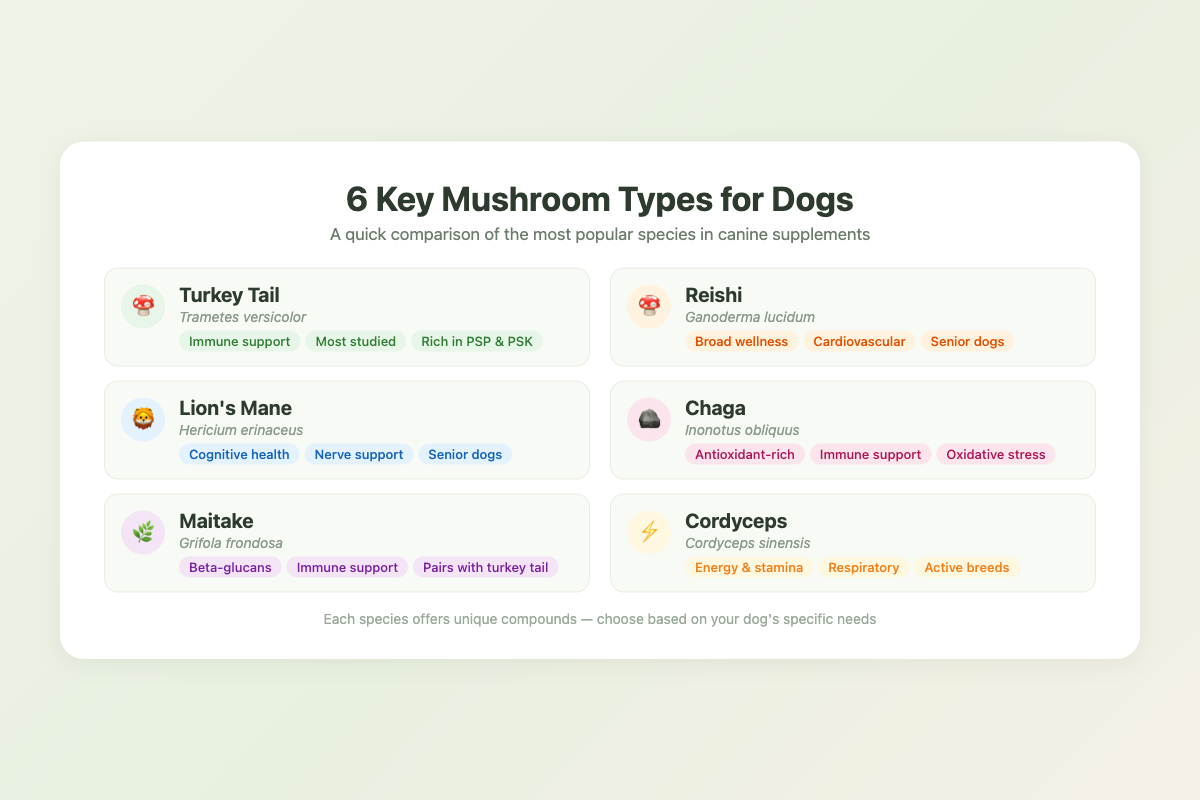
Turkey Tail (Trametes versicolor)
Turkey tail is the most researched mushroom in veterinary science, and it’s the one that put mushroom supplements for dogs on the map. It’s rich in two polysaccharide compounds, PSP and PSK, that have been studied extensively for their immune-modulating properties.
The study that changed the conversation: researchers at the University of Pennsylvania School of Veterinary Medicine gave a turkey tail mushroom compound to dogs with hemangiosarcoma (an aggressive, often fatal cancer of the blood vessels). Dogs receiving the highest dose of the turkey tail compound had the longest survival times ever reported for that condition, with a median survival of 199 days compared to the typical 86 days with standard care alone. The study, published in 2012 in the journal Evidence-Based Complementary and Alternative Medicine, is still one of the most cited pieces of veterinary mushroom research in existence. It’s a big reason why veterinary oncologists now routinely discuss turkey tail mushroom supplements for dogs alongside conventional care plans.
Reishi (Ganoderma lucidum)
Known as the “mushroom of immortality” in traditional Chinese medicine (a dramatic name, but it’s been used for over 2,000 years), reishi contains compounds called triterpenoids that support immune health and cardiovascular function. Dog owners often turn to reishi mushroom for dogs when they’re looking for broad-spectrum wellness support, particularly for older dogs. It’s one of the most versatile species in the mushroom supplement world.
Lion’s Mane (Hericium erinaceus)
Lion’s mane for dogs is growing fast in popularity, especially among owners of senior dogs. Research suggests that lion’s mane promotes the production of nerve growth factor (NGF), a protein that supports the health and function of nerve cells. For aging dogs showing signs of cognitive decline (confusion, disorientation, changes in sleep patterns), lion’s mane is one of the more interesting natural options available. A 2023 study published in the Journal of Neurochemistry confirmed that compounds in lion’s mane do cross the blood-brain barrier and stimulate neuron growth in laboratory models.
Chaga (Inonotus obliquus)
Chaga mushroom for dogs is prized for its exceptionally high antioxidant content. In fact, chaga scores higher on the ORAC (Oxygen Radical Absorbance Capacity) scale than blueberries, acai, and most other “superfoods” people talk about. Dog owners use chaga for general immune support and to help manage oxidative stress, particularly in dogs dealing with environmental toxins or the natural aging process.
Maitake (Grifola frondosa)
Maitake is another beta-glucan powerhouse, often studied alongside turkey tail for its immune-supporting properties. It’s a solid complement to turkey tail in multi-mushroom formulas, and some veterinary practitioners recommend it as part of a broader immune wellness protocol.
Cordyceps (Cordyceps sinensis)
Cordyceps has a long history in traditional Chinese medicine as an energy and stamina enhancer. For dogs, it’s commonly used to support respiratory function and endurance, making it a popular pick for active or working breeds. It’s less studied than turkey tail or reishi in veterinary contexts, but early veterinary studies are encouraging.
Birch Polypore (Fomitopsis betulina)
One lesser-known species gaining attention is birch polypore (Fomitopsis betulina). Research published in the National Library of Medicine has documented this mushroom’s interesting properties, including immune-supporting potential. Zumalka’s PiptoPet is one example of a supplement built around this single mushroom species, chosen for its immune-supporting properties. It’s a good illustration of the single-species approach (more on that below).
What to Look for When Choosing a Mushroom Supplement
This is where most articles on medicinal mushrooms for dogs leave you hanging. They’ll list six mushroom types and their benefits, then end with “talk to your vet.” Helpful, sure, but not enough if you’re standing in front of 30 options trying to figure out which one is actually worth your money. Here’s what to look for when you’re shopping for the best mushroom supplements for dogs.
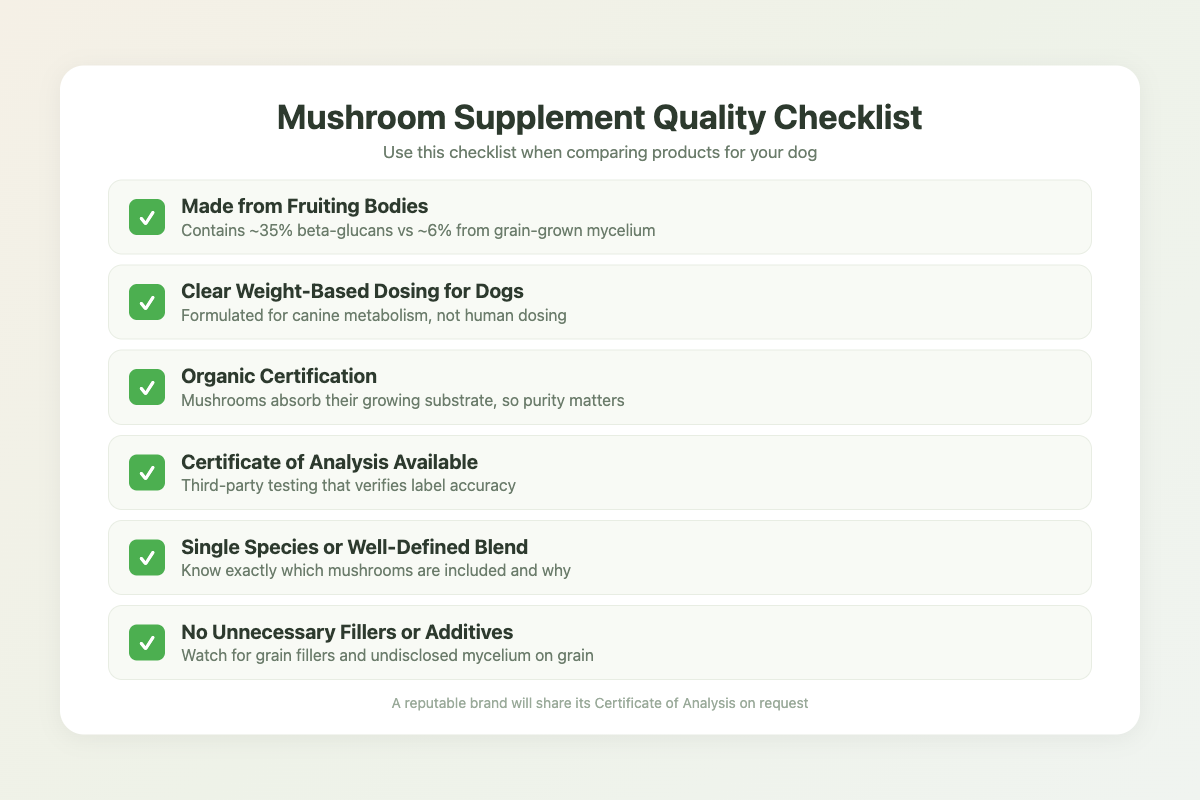
Fruiting body vs. mycelium.
This is the single biggest quality differentiator. The fruiting body is the actual mushroom (the part that grows above ground). Mycelium is the root-like network that grows underground, often cultivated on grain. According to the American Kennel Club, fruiting bodies contain roughly 35% beta-glucans, while grain-grown mycelium products may contain as little as 6%. That’s a massive difference. Look for “fruiting body” on the label.
Single species vs. blends.
Single-species products are targeted: you know exactly what you’re getting and why. Blends offer broader coverage across multiple immune pathways. Neither approach is inherently better. The right choice depends on what you’re looking for. If your dog has a specific wellness goal, a single-species product may make more sense. For general immune support, a well-formulated blend can work beautifully.
Third-party testing.
Ask the brand for their Certificate of Analysis (CoA). A reputable company will have one available and won’t hesitate to share it. This verifies that the product contains what the label says it contains, and nothing it shouldn’t.
Dog-specific dosing.
Choose products formulated specifically for dogs with clear, weight-based dosing instructions. Human mushroom supplements aren’t designed for canine metabolism, and guessing on dosage isn’t ideal.
Organic certification.
Mushrooms are bioaccumulators, meaning they absorb whatever is in their growing environment. If the substrate contains pesticides, heavy metals, or other contaminants, the mushroom will concentrate them. Organic certification matters more here than with many other supplements.
Red flags to watch for.
Filler ingredients, grain-based mycelium listed without disclosure, no dosage guidance for pets, and human-only products being marketed for dogs without reformulation.
Some natural pet health brands like Zumalka specialize in mushroom-based formulas made from whole fruiting bodies, which is worth looking into if you want a product backed by a team that really knows this space.
How to Start Your Dog on a Mushroom Supplement
Once you’ve picked a product, the next question is practical: how do you actually introduce it into your dog’s life?

Talk to your vet first.
This is especially important if your dog takes medication. Mushroom supplements can interact with NSAIDs, blood pressure medications, and immunosuppressants, and some may also interfere with chemotherapy drugs. Additionally, some dogs can be allergic to mushrooms, so it’s important to watch for any side effects when starting them. Your vet can flag any potential concerns specific to your dog’s situation.
Start low and go slow.
Begin with half the recommended dose for the first week or two, then gradually increase to the full amount. This gives your dog’s digestive system time to adjust.
Pick a format that works for both of you.
Mushroom supplements come as powders (easy to mix into wet food), capsules (can be opened and sprinkled), liquid extracts (sprayed or added to water), and chews. Powders tend to be the easiest for most dog owners since they blend right into mealtime.
Give it time.
Mushroom supplements aren’t overnight fixes. Most veterinary practitioners recommend allowing 4 to 8 weeks of consistent daily use before evaluating results. The immune system recalibrates gradually.
Watch for digestive sensitivity.
Mild digestive upset is uncommon but possible, particularly in dogs with sensitive stomachs. If you notice loose stools in the first few days, scale back the dose and reintroduce more slowly.
Compatible with conventional care.
Mushroom supplements can be used alongside your dog’s existing veterinary care plan. Many vets now actively recommend them as a complement to conventional approaches.
Frequently Asked Questions
Are mushroom supplements good for dogs?
Yes, when you choose a quality product made from whole fruiting bodies. The active compounds (beta-glucans) support immune function and overall wellness. Mushroom supplements for dogs aren’t a replacement for veterinary care, but many vets now recommend them as a complement to conventional approaches. Always consult your veterinarian before starting any new supplement.
What are the best mushroom supplements for dogs with cancer?
Turkey tail mushrooms have the strongest research backing in this area. The University of Pennsylvania hemangiosarcoma study is the most widely cited, showing significantly extended survival times in dogs receiving turkey tail compounds. Reishi and maitake are also commonly used alongside conventional care. Look for products with high beta-glucan content from fruiting bodies, and always work closely with your veterinarian on any wellness plan.
Can I give my dog human mushroom supplements?
You can, but it’s not ideal. Human products are dosed for a 150-pound person and often contain additives that aren’t formulated with dogs in mind. Products made specifically for dogs provide clearer weight-based dosing and pet-appropriate formulations. If you do use a human product in a pinch, adjust the dose by your dog’s weight and check with your vet first.
Bringing It All Together
Mushroom supplements are one of the most research-backed natural supplements available for dogs right now. The University of Pennsylvania turkey tail study alone shifted how many veterinarians think about complementary wellness options, and peer-reviewed research from institutions like the National Library of Medicine gives these products more scientific credibility than most natural pet supplements on the market.
Whether you’re exploring turkey tail for immune support or lion’s mane for cognitive health in your senior dog, the key is choosing a quality product (fruiting body, third-party tested, dog-specific dosing) and giving it the time to work. Start with one mushroom type that matches your dog’s specific needs, talk to your vet, and be patient. If you want to learn more about mushroom-based pet supplements, Zumalka’s team can help point you in the right direction.





-
 WOOF Party Pupsicle
Long-Lasting Interactive Dog Toys for Boredom


-
WOOF Party Pupsicle
Long-Lasting Interactive Dog Toys for Boredom