


Do Dogs Dream? What Is Really Happening When Your Dog Twitches in Their Sleep
 Health & Wellbeing
Written by
Kosar KoohiUpdated 27 July 2026 · 11 Min Read
Kosar is the editor of Pretty Fluffy, a lifelong dog lover, and the proud mom of Yuki, a Maltese who has very high standards. So does Kosar. She researches everything obsessively before it ever makes it onto the page.
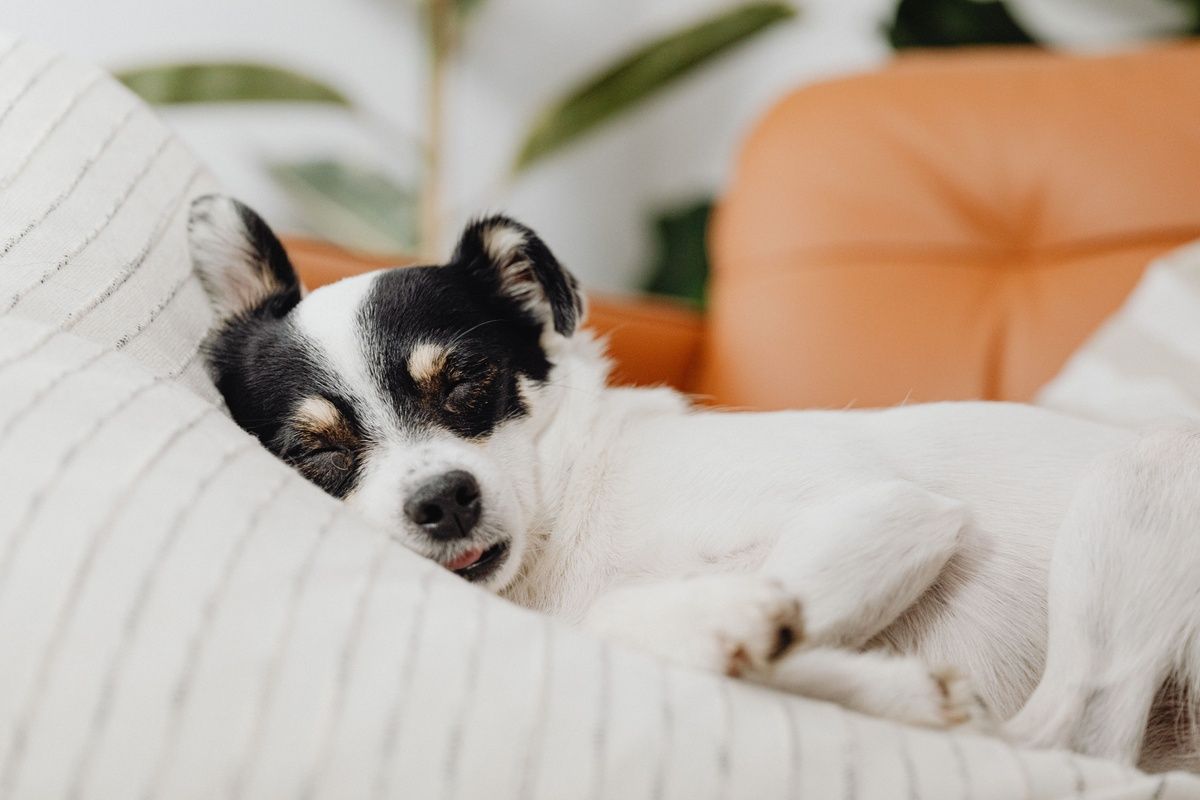
You know the moment. Your dog is curled up in a warm little crescent, dead to the world, and then the paws start paddling. There is a muffled woof, a twitch in the eyebrow, a tail thump against nothing at all. It is one of the most endearing things a dog does, and it raises an obvious question for anyone who has ever sat and watched it happen.
Do dogs dream? Yes, and the science behind it is genuinely lovely. Here is what is happening inside your dog's head while they sleep, what they are most likely dreaming about, and how to tell the difference between a happy dream and something that needs a vet.
Quick answer: Dogs do dream. They cycle through the same sleep stages people do, including REM sleep, and their brain activity during REM closely mirrors ours. Dreams usually begin around 20 minutes after a dog falls asleep and show up as twitching, paddling legs, soft barks, and eyes moving beneath closed lids. Most dogs are simply replaying their day.
Dog Sleep Cycles and REM Sleep Explained
Your dog does not sleep the way you do, even though the ingredients are the same. Adult dogs sleep roughly 12 to 14 hours across a 24 hour period, but they take it in pieces rather than one long overnight block. Their cycles are also much shorter than ours, which is why a dog can drop into a dream during a mid-afternoon nap on the couch.
A typical cycle looks like this:
- Drowsiness. The half-awake stage where your dog's eyes are closing but one ear is still tracking the kitchen.
- Non-REM sleep. Slow brain waves, relaxed muscles, steady breathing. This is the physically restorative stage.
- REM sleep. Fast, irregular brain activity, rapid eye movement beneath the lids, and almost total muscle relaxation. This is where dreaming happens.
Dogs spend around 10 percent of their total sleep in REM, compared to roughly 20 to 25 percent in humans. Because their overall sleep is broken into shorter bouts, they need more total hours to get enough of it. This is one of the reasons a dog who is constantly interrupted, or who sleeps somewhere they cannot fully settle, can seem irritable and unfocused the next day.
The evidence that dogs dream
The proof is strong enough that veterinary science treats it as settled. Researchers using non-invasive polysomnography have identified wakefulness, drowsiness, non-REM sleep, and REM sleep in family dogs, the same architecture we see in humans. Because we know humans dream in REM, and because the sleeping canine brain shows comparable electrical patterns, VCA Animal Hospitals notes it is safe to conclude that dogs dream too.
What makes this research so charming is that it is done on ordinary pet dogs. Studies out of the canine cognition labs in Budapest have recorded dozens of family dogs napping in a room with their owners nearby, wearing soft electrodes, snoozing exactly as they would at home. No lab kennels, no invasive procedures. Just dogs doing what dogs do best, with scientists quietly measuring their eye movements.
What Do Dogs Dream About?

Almost certainly you, and the day they just had.
The best available evidence suggests dreams are built from waking experience. The landmark work here came from MIT, where researchers recorded the brain activity of rats running a maze and then recorded them again while they slept. The sleeping patterns were so close to the waking ones that the team could identify which part of the maze the rat was replaying. Dogs have a more complex brain than rats, so it is reasonable to assume their dream content is at least as rich.
Which means your dog is not dreaming about abstract dog philosophy. They are dreaming about the smell of the park, the sound of your car in the driveway, the neighbor's cat, the moment the treat jar lid came off. The dogs in your life dream about the life you have built with them, which is a rather nice thing to sit with while you watch them sleep.
There is also evidence that daily activity shapes sleep quality. Dogs who have had an active, engaging day spend less time in drowsiness and more time in genuine non-REM and REM sleep. More REM means more dreaming, so a well-exercised, mentally satisfied dog is very likely a dog with a busier dream life. If your pup spends a lot of the day understimulated, these simple ways to mentally stimulate your dog are worth working into the routine.
Signs Your Dog Is Dreaming
Dreams usually start about 20 minutes into sleep. Once your dog hits REM, the signs are fairly consistent:
- Eyes darting beneath closed or partly open lids
- Twitching whiskers, eyebrows, ears, or lips
- Paddling or running motions with the legs
- Soft barks, whimpers, growls, sighs, or little muffled woofs
- Shallow, irregular, or noticeably faster breathing
- Tail flicks and body jerks
That last one about breathing catches a lot of new dog parents off guard, especially with young dogs. Breathing rate can spike dramatically during a dream cycle and then settle right back down. If this is something you have been quietly worrying about, our guide to why your puppy breathes so fast while sleeping walks through what is normal and how to count a resting respiratory rate at home.
Why your dog doesn't act out their dreams
The answer is a small structure in the brainstem called the pons. During REM sleep, the pons switches off the large muscle groups so the body cannot physically carry out what the brain is imagining. It works the same way in dogs as it does in us. The twitching you see is what leaks through, small movements that escape the paralysis while the big ones stay locked down.
Very young puppies and older dogs have a less efficient pons, which is exactly why they tend to be the twitchiest sleepers in the house.
Do Dogs Have Nightmares?
Most likely, yes. If dogs dream from lived experience, it follows that unpleasant experiences can surface too. Whimpering, crying, snarling, sharp barking, and restless thrashing can all point to a bad dream rather than a happy one.
Dogs are not conjuring up imaginary monsters. A dog having a nightmare is far more likely to be revisiting something real, which is why rescue dogs and dogs with a rough history sometimes seem to have more unsettled nights than others. It usually eases as they build a long stretch of safe, predictable days on top of the old ones.
If your dog's distressed sleep is frequent rather than occasional, look at the daytime picture first. Ongoing anxiety, pain, or a sleeping setup that never lets them fully relax will all show up at night. A dog who cannot get comfortable will wake constantly and never bank enough REM.
Dreaming or Seizure? How to Tell the Difference
This is the part worth reading carefully, because a vigorous dream and a seizure can look alarmingly similar from across the room. The distinction matters, and it comes down to a handful of clear differences.
| What you see | Dreaming | Seizure |
|---|---|---|
| Movement quality | Soft, loose, intermittent twitching and paddling | Stiff, rigid, violent, rhythmic jerking |
| Duration | Seconds to a minute or two, then settles | Often continues past a minute without stopping |
| Response to your voice | Wakes up if gently called, may look confused briefly | Unresponsive, cannot be roused |
| Eyes | Closed or mostly closed, moving beneath lids | Wide open, glassy, fixed, or rolled back |
| Body functions | Normal | Drooling, urinating, or defecating during the episode |
| Afterwards | Goes straight back to sleep or wakes up normally | Disoriented, wobbly, pacing, bumping into things, sometimes temporarily blind |

The two most reliable tells are responsiveness and recovery. A dreaming dog can be gently woken and will come back to themselves within seconds. A seizing dog cannot be roused, and afterwards there is usually a visible period of confusion.
If you think your dog is having a seizure, contact your vet promptly. Do not put your hands near their mouth. Time the episode if you can and film it on your phone, because a short video is one of the most useful things you can hand a vet. Any first-time seizure, any seizure lasting more than a few minutes, or seizures in a cluster should be treated as urgent.
When to talk to your vet
Twitching, paddling, and sleep-barking are all normal. Book a vet visit if you notice:
- Episodes that look stiff or violent rather than loose and twitchy
- Your dog cannot be woken during an episode
- Confusion, wobbliness, or disorientation afterwards
- Urinating, defecating, or heavy drooling during the event
- Any first-time suspected seizure, at any age
- A sudden, significant change in how much or when your dog sleeps
- Loud snoring with pauses in breathing, or waking up gasping
- Night restlessness or pacing in a senior dog
- Repeated aggression or panic on waking
Trust your instincts here. You know your dog's normal better than anyone, and a change in that baseline is always worth a phone call.
Should You Wake a Dreaming Dog?
The old saying about letting sleeping dogs lie exists for good reason. Generally, leave them be. Interrupting REM sleep robs your dog of the stage they need most, and a dog jolted out of a deep dream can wake up genuinely disoriented.

There is also a safety angle that does not get talked about enough. A startled dog who does not yet know where they are may snap purely on reflex, with no intent behind it at all. Research published in the Journal of Veterinary Behavior found that around 6 percent of dog bites occurred while the dog was sleeping or resting. That is not a reason to be fearful of your own dog. It is a reason to wake them the right way.
If a dream looks distressing enough that you want to end it:
- Use your voice, softly, from a little distance. Say their name gently and repeat it.
- Do not shake, grab, or touch their face, and keep your hands away from their mouth.
- Never lean your face over a sleeping dog to check on them.
- Give them a moment to orient before you offer a cuddle.
- Keep children away from a dog who is twitching or vocalizing in their sleep.
Do Puppies and Senior Dogs Dream More?
Puppies dream a lot, and they dream loudly. Young dogs spend proportionally more time in REM sleep than adults, and research tracking sleep development in family dogs has found REM time decreasing measurably between two and six months of age. A puppy has an enormous amount of new information to file every single day, and REM sleep is where that consolidation happens. All that squeaking and paddling is a brain building itself.
Senior dogs sit at the other end and often twitch just as much, though for different reasons. Aging brings more fragmented night sleep and more daytime napping, and muscle inhibition during REM becomes less reliable with age.
Worth knowing: if an older dog's sleep pattern shifts dramatically, with night pacing, restlessness after dark, or barking through the small hours, that is worth mentioning to your vet. Disrupted sleep is one of the earlier changes seen in canine cognitive dysfunction. Our guide to the signs of dog dementia in senior dogs covers what to watch for.
How to Help Your Dog Sleep Better
Good dreams start with good sleep, and good sleep is mostly about the setup.
Give them a bed that actually fits
A bed that is too small forces a dog into positions they cannot hold, so they shift and wake all night. Too large can feel exposed for a small dog who likes to feel contained. Sizing, support, and sleeping style all matter here, and our dog bed buying guide breaks down how to match a bed to how your dog actually sleeps. If you want something that supports your dog properly and still looks right in your living room, the best luxury dog beds round-up is a good place to start.
Protect the location
Dogs sleep more deeply where they feel safe. A spot out of the main traffic path, away from the door, with a consistent temperature, will get you far more REM than a bed in a busy hallway. Where your dog sleeps affects their sleep quality just as much as what they sleep on.
Add warmth if they are a burrower

Some dogs simply cannot settle without something over them. A soft, breathable cover helps them relax faster and stay asleep longer, and choosing the right weight and material makes a real difference. Our guide on how to choose a dog blanket covers the safe options by season and age. If your dog is a dedicated burrower, you might also enjoy reading why dogs sleep under the covers and how to keep them safe doing it.
Keep the day interesting
Physical exercise and mental engagement both increase deep sleep. A dog who has used their nose, solved something, and moved their body will sleep harder and dream more than one who spent the day waiting by the window.
Keep bedtime predictable
Dogs are creatures of rhythm. A consistent wind-down, the same routine, the same time, helps their body clock settle into a reliable pattern.
FAQ
Frequently asked questions
01Do dogs dream about their owners?
Almost certainly. Dream content appears to be built from waking experience, and you are the center of your dog's waking life. Most dogs are likely replaying familiar things such as walks, play, food, and time with the people they love.
02Why does my dog bark in his sleep?
Sleep barking happens during REM, when the brain is highly active but the muscles are mostly switched off. Small sounds escape that inhibition, so you get muffled woofs, whimpers, or growls instead of a full bark. It is normal and does not need waking.
03How long do dog dreams last?
Individual dreams typically last a few seconds up to a couple of minutes. Small dogs tend to dream more frequently but in shorter bursts, while large breeds dream less often for longer stretches. Dreaming usually starts around 20 minutes after falling asleep.
04Is it bad to wake a dog from a nightmare?
It is better to let it pass. Waking a dog mid-dream interrupts restorative REM sleep and can leave them disoriented. If you must intervene, use your voice softly from a distance rather than touching them, and keep your hands away from their mouth.
05Do puppies dream more than adult dogs?
Yes. Puppies spend proportionally more time in REM sleep, which is where dreaming occurs, and their muscle inhibition is less developed. That combination means more visible twitching, paddling, and squeaking. It is a normal part of how their brains process everything they are learning.
Your dog dreams, and there is every reason to believe those dreams are full of you. The twitching paws and sleepy little woofs are a brain doing exactly what it should, sorting through a day of smells and sounds and small joys. Give them a comfortable place to do it, keep their days interesting, and know the difference between a normal night and something that needs attention. Then let them get on with chasing whatever it is they are chasing.
Related Reading

