


Puppy Breathing Fast While Sleeping
 Health & Wellbeing
Written by
Kosar KoohiUpdated 23 August 2026 · 9 Min Read
Kosar is the editor of Pretty Fluffy, a lifelong dog lover, and the proud mom of Yuki, a Maltese who has very high standards. So does Kosar. She researches everything obsessively before it ever makes it onto the page.
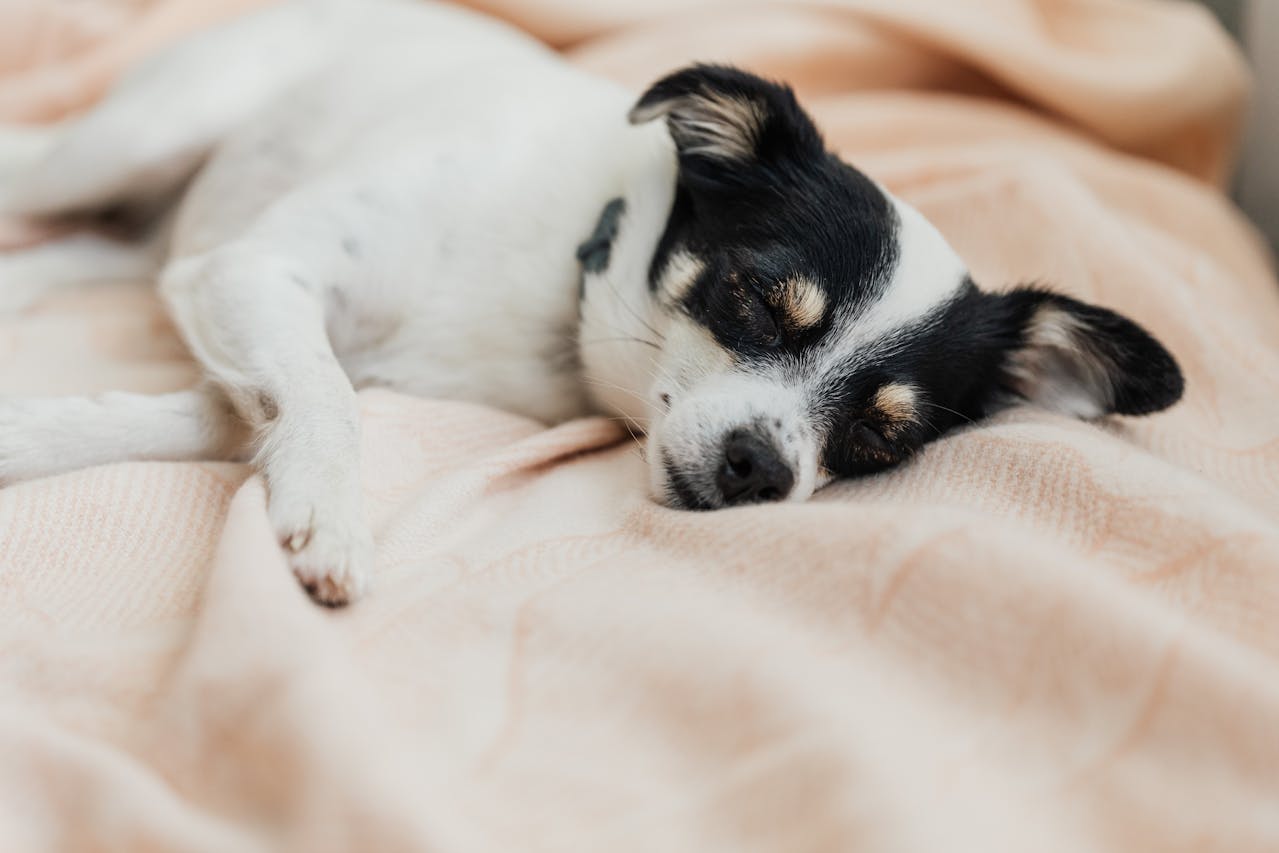
Yuki was eight weeks old and roughly the size of a bread roll when I first sat on the floor next to her bed and counted her breaths.
She had been flat out asleep for maybe twenty minutes, and her whole rib cage was going like a hummingbird. I had read every puppy book on the shelf and not one of them had prepared me for that.
If you have found yourself watching your puppy breathing fast while sleeping and quietly working out how late the emergency clinic stays open, you are in extremely good company.
Why Puppies Breathe So Fast
Puppies breathe faster than adult dogs because they have smaller lungs, a higher metabolic rate, and a great deal of growing to do, all of which demand more oxygen.
A normal resting rate for a sleeping puppy is roughly 15 to 40 breaths per minute, and it can spike well above that for a few minutes at a time during dream sleep before settling again. Rapid breathing that comes and goes while your puppy is otherwise happy, eating, and playing is almost always normal.
Breathing that stays fast for more than 10 to 15 minutes of settled sleep, or that comes with pale gums, effortful belly movement, or unusual noises, needs a vet.
Dreaming and REM Sleep

Your puppy spends a lot of time in REM sleep, which is where vivid dreaming happens. During those stretches the brain is highly active, the heart rate climbs, and the breathing rate climbs with it. You will often see the other tells at the same time: twitching paws, flickering eyelids, a muffled squeak, feet paddling at nothing. It looks dramatic and it is entirely harmless. These bursts typically last a few minutes and then the rhythm drops back down on its own.
If the twitching and paddling is the part that unsettles you, our guide to what dogs dream about goes into what is happening in that little brain and how to tell an ordinary dream from something that needs attention.
Growth Spurts and a High Metabolism
Puppies burn through an enormous amount of energy simply existing. Building bone and muscle at that speed requires oxygen, and small lungs can only move so much air per breath, so the rate goes up to compensate. This is also why the number drops steadily as your puppy grows. The rate you count at eight weeks will be noticeably slower by four months, and slower again by the time they are a year old.
A hard play session before a nap has the same effect for a shorter window. If your puppy crashed out straight after a wrestling match with the sofa cushions, expect fast breathing for the first 10 or 15 minutes of sleep, then a gradual slow down. Puppies who get proper physical and mental exercise tend to sleep more deeply overall, and these easy ways to mentally stimulate your dog are worth building into the day.
Body Heat and a Warm Sleep Space
Dogs do not sweat the way we do. They shed heat through their airways, so a puppy who is even slightly too warm will breathe faster to cool down. This is one of the most common and most fixable causes.
Slide your hand under their belly. If they feel hot rather than pleasantly warm, adjust the setup. Pull heavy blankets to one side of the crate so your puppy can choose where to lie, keep the bed out of direct sun, and leave at least one side of any crate cover open for airflow. Self-warming beds trap a lot of heat, which is lovely in winter and less so in August, so match the bed to your puppy and swap the blanket weight with the seasons.
Dehydration compounds the problem, and a dehydrated puppy will breathe faster too. Puppies need considerably more water per pound of body weight than adult dogs, so keep it fresh and available around the clock. Our guide to how much water a dog should drink has the numbers.
A New Home and New Nerves
A puppy in a brand new house has just lost their mother, their littermates, and every familiar smell they have ever known, all in one afternoon. Stress raises cortisol, cortisol raises heart rate, and breathing follows. You tend to see this in the first week or two, and mostly in light sleep rather than deep sleep.
It settles as the world becomes predictable. A consistent routine, a quiet sleeping spot away from foot traffic, and plenty of low-key time together do more than anything else. Our new puppy checklist covers the first-fortnight essentials, and bonding with your puppy is the other half of it.
Flat Faced Breeds and Narrow Airways
Pugs, French Bulldogs, Boston Terriers, and other short-nosed breeds have compressed airways and elongated soft palates. They work harder to move air even at rest, and they are far more vulnerable to heat.
Noisier, faster, more effortful sleep breathing is more common in these breeds, but it is not something to simply accept as normal for the type.
Ask your vet to assess your puppy's airway specifically, and be strict about keeping them cool.

Normal Respiratory Rate for Puppies
Knowing your puppy's baseline turns a vague worry into a number you can act on. Vets treat resting and sleeping respiratory rate as a genuine clinical vital sign, and it is easy to track at home.
| State | Breaths per minute | What it means |
|---|---|---|
| Puppy, settled sleep | 15 to 40 | Normal and healthy. |
| Puppy, active dream cycle | 40 to 60 plus, briefly | Normal. Settles within a few minutes. |
| Puppy, sustained above 40 | Over 40 for 15 minutes or more | Worth a call to your vet. |
| Adult dog, settled sleep | 10 to 30 | Normal. Lower than a puppy's. |
How to Count Breaths at Home
Wait until your puppy is genuinely asleep rather than just lying down, and pick a quiet moment at least 15 minutes after any play. Do not touch them or say their name. Watch the chest and count one rise and one fall as a single breath. Set a timer for 60 seconds, or count for 30 seconds and double it.
Write the number down. Do it once a week at roughly the same time and you will build a picture of what normal looks like for your particular dog, plus you will see the rate drop as they grow. VCA Animal Hospitals publishes a resting respiratory rate diary you can print if you would rather not keep it on your phone. If you ever do end up at the vet, that log is worth more than any description you could give them.
What to Expect at Eight Weeks Old
Eight weeks is when most puppies come home, and it is when this worry peaks for almost everyone. At that age you are looking at the upper end of the normal range, often in the high twenties to high thirties during settled sleep, with frequent dream spikes on top. Very young puppies also have less developed muscle inhibition during REM, which is why they twitch, squeak, and paddle far more visibly than an adult dog would.
Expect it to be loud, fast, and worse-looking than it is. What you are checking is not the number alone but whether it comes back down, and whether your puppy is bright and busy when awake.
Panting in Sleep vs Rapid Breathing

These are two different things, and the distinction matters. Check the mouth. Open mouth with the tongue out is panting. Closed mouth with the chest moving quickly is fast breathing. Fast closed-mouth breathing during sleep is the common, usually benign version. Puppies panting in their sleep is less usual, and it points more strongly toward heat, pain, or stress than a dream does.
Occasional sleep panting on a warm evening is not an emergency. Sustained panting through the night, panting in a cool room, or panting alongside restlessness and an inability to settle is worth raising with your vet.
Do Adult Dogs Breathe Fast in Their Sleep Too?
Yes, though less dramatically. Adult dogs cycle through REM the same way puppies do, and their breathing speeds up during those stretches before returning to a slower baseline of roughly 10 to 30 breaths per minute at rest.
The reason this matters is that the threshold for concern is lower in a grown dog. A sustained sleeping rate above 30 breaths per minute in an adult, particularly one that has crept up over weeks rather than appearing suddenly, is one of the earliest signs vets look for in heart disease. In a puppy, a fast night is usually a busy day catching up. In an adult dog, a persistent change in sleeping respiratory rate deserves a proper look. Count it, log it, and take the numbers to your vet.

When Rapid Breathing Becomes an Emergency
Most of the time you are watching a perfectly healthy puppy dream about squirrels. Occasionally you are not, and the difference is usually visible in something other than the breathing rate itself.
Warning Signs That Need a Vet
- Gum color. Healthy gums are bright pink. Pale, white, blue, or gray gums mean oxygen is not getting where it needs to go. This is an emergency, not a wait-and-see.
- Effortful belly breathing. If the abdomen is heaving to pull air in, your puppy is working to breathe rather than simply breathing quickly.
- Noise. Wheezing, crackling, honking, or grunting on each breath.
- Posture. Head and neck stretched forward, elbows held away from the body, or a refusal to lie down.
- It does not settle. A rate above 40 that holds steady through 15 minutes or more of quiet sleep.
- Anything else is off. Coughing, nasal discharge, lethargy, weakness, vomiting, diarrhea, or a puppy who has gone off their food. Illness moves quickly in young dogs, and a puppy who is not eating needs attention sooner than an adult would. Our guide on how long a dog can go without eating explains why the window is so much shorter for puppies.
Cornell's Riney Canine Health Center lists rapid open-mouthed breathing, bluish gums, abdominal effort, an extended head and neck, and audible airway noise as signs of respiratory distress that warrant getting to an emergency clinic straight away. Call ahead if you can so the team is ready when you arrive.
Film it before you go. Thirty seconds of video is one of the most useful things you can hand a vet, because breathing has an unhelpful habit of normalizing the moment you reach the clinic door.
Yuki still breathes faster than I expect when she is deep in a dream. The difference now is that I know her numbers, so I glance over, register that this is simply what she does, and go back to my book.
Count your puppy's breaths on a few ordinary evenings while nothing is wrong, and you will have given yourself the one piece of information that turns a 2am panic into a shrug. And when your instinct says something is genuinely off, call your vet. They would far rather reassure you over the phone than see you a day too late.
FAQ
Frequently asked questions
01How fast should a puppy breathe?
A settled, sleeping puppy typically takes 15 to 40 breaths per minute. Adult dogs sit lower, around 10 to 30. The rate climbs temporarily during dream sleep and after play, then drops back. Count one rise and fall of the chest as a single breath over 60 seconds.
02Is rapid breathing normal for an 8 week old puppy?
Usually, yes. Eight-week-old puppies sit at the higher end of the normal range and have frequent, visible dream cycles with twitching and squeaking. What matters is whether the rate comes back down within a few minutes and whether your puppy is bright, hungry, and playful when awake.
03Should I wake my puppy if the breathing looks too fast?
Generally leave them be, since interrupting REM sleep is disruptive and a startled puppy may snap on reflex. If you need to check, use your voice softly from a short distance rather than touching them. Breathing that settles once they rouse was almost certainly a dream.
04What breathing rate is too high for a puppy?
Sustained rates above 40 breaths per minute through 15 minutes or more of quiet, settled sleep are worth a call to your vet. Brief spikes above that during dreaming are normal. Gum color and breathing effort matter more than the number alone.
05Can fast breathing mean my puppy is in pain?
It can. Pain raises heart rate and breathing rate, and puppies injure themselves easily given their size and clumsiness. Look for limping, stiffness, squinting, trembling, hiding, or reluctance to be touched in one spot. Any of these alongside fast breathing warrants a vet visit.
Related Reading

