
How Old Is My Dog in Human Years?
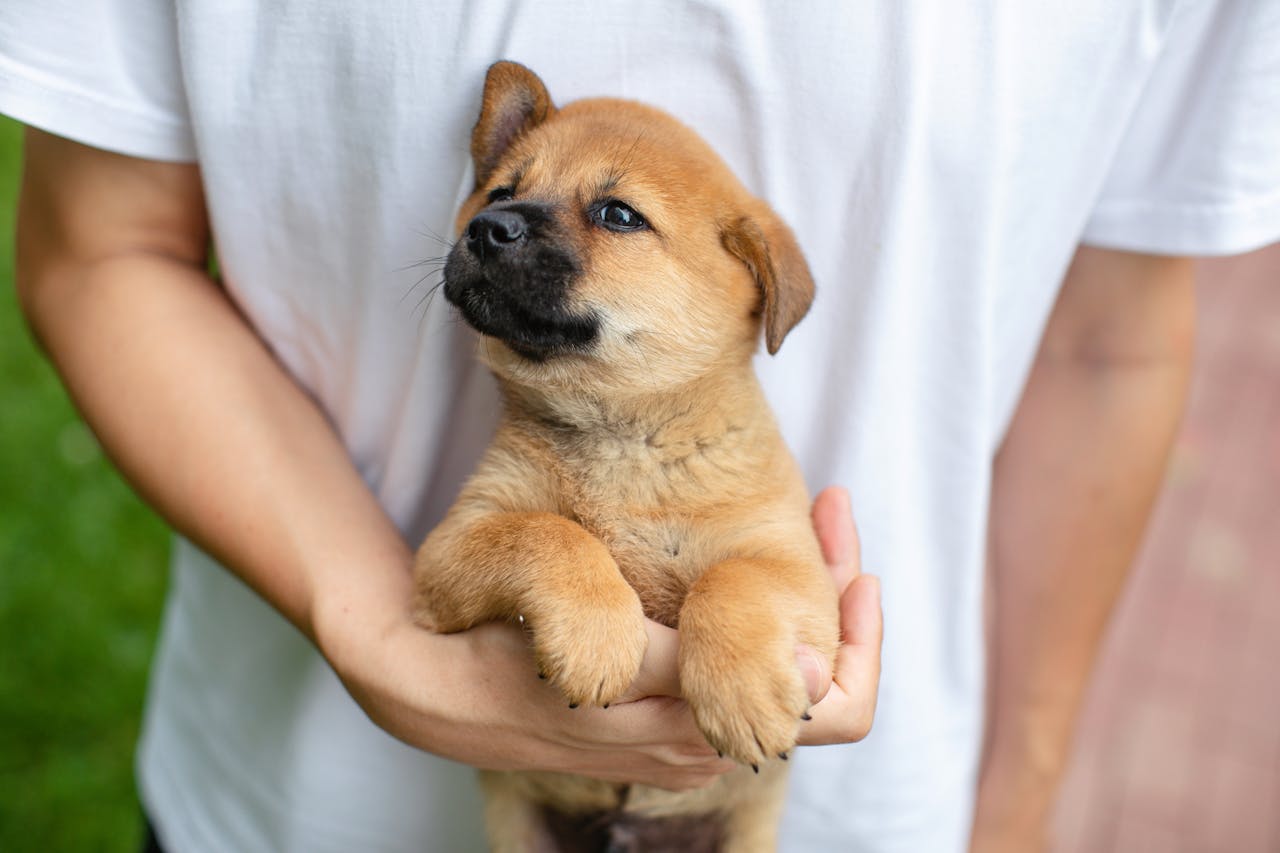
That “multiply by 7” thing? Your dog would like a word.
Photography: qiana zhang
Because “she’s seven, so she’s 49 in dog years” is probably not the whole story.
There is something almost universal about the way dog owners think about their dog’s age.
We do the quick mental maths, multiply by seven, and picture our four-year-old Labrador as a lively 28-year-old. It feels right. It makes sense. And it is, unfortunately, not very accurate.

The good news is that the real science behind how dogs age is actually far more interesting than a simple multiplication. It tells us something meaningful about our dogs’ health, their life stages, and how to care for them properly at every age.
So whether you have a bouncy puppy you are trying to put in context, a middle-aged dog you are starting to worry about, or a senior girl who is greying around the muzzle, this guide has everything you need.
The 7-to-1 Rule: Where Did It Come From?
The idea that one dog year equals seven human years has been around for decades. And at first glance, the logic holds up. The average human lives to around 77 years old. The average dog lives to around 11. Divide one by the other and you get roughly seven.
Simple. Memorable. And neatly wrong.
The problem is that the 7-to-1 rule assumes dogs age at a perfectly consistent rate, year after year, in the same linear way that humans do. But that is not how biology works, for dogs or for people.
A one-year-old dog is not the equivalent of a seven-year-old child. She is sexually mature, fully grown in many cases, and closer in biological terms to a 15-year-old teenager.
The rule was also likely popularised in the mid-20th century as a rough tool to remind pet owners to bring their dogs to the vet regularly, on the basis that if each dog year counted as seven human years, annual check-ups would feel a lot more urgent.
Whatever its origins, modern veterinary science has moved well beyond it.
How Dogs Actually Age: The Science Explained
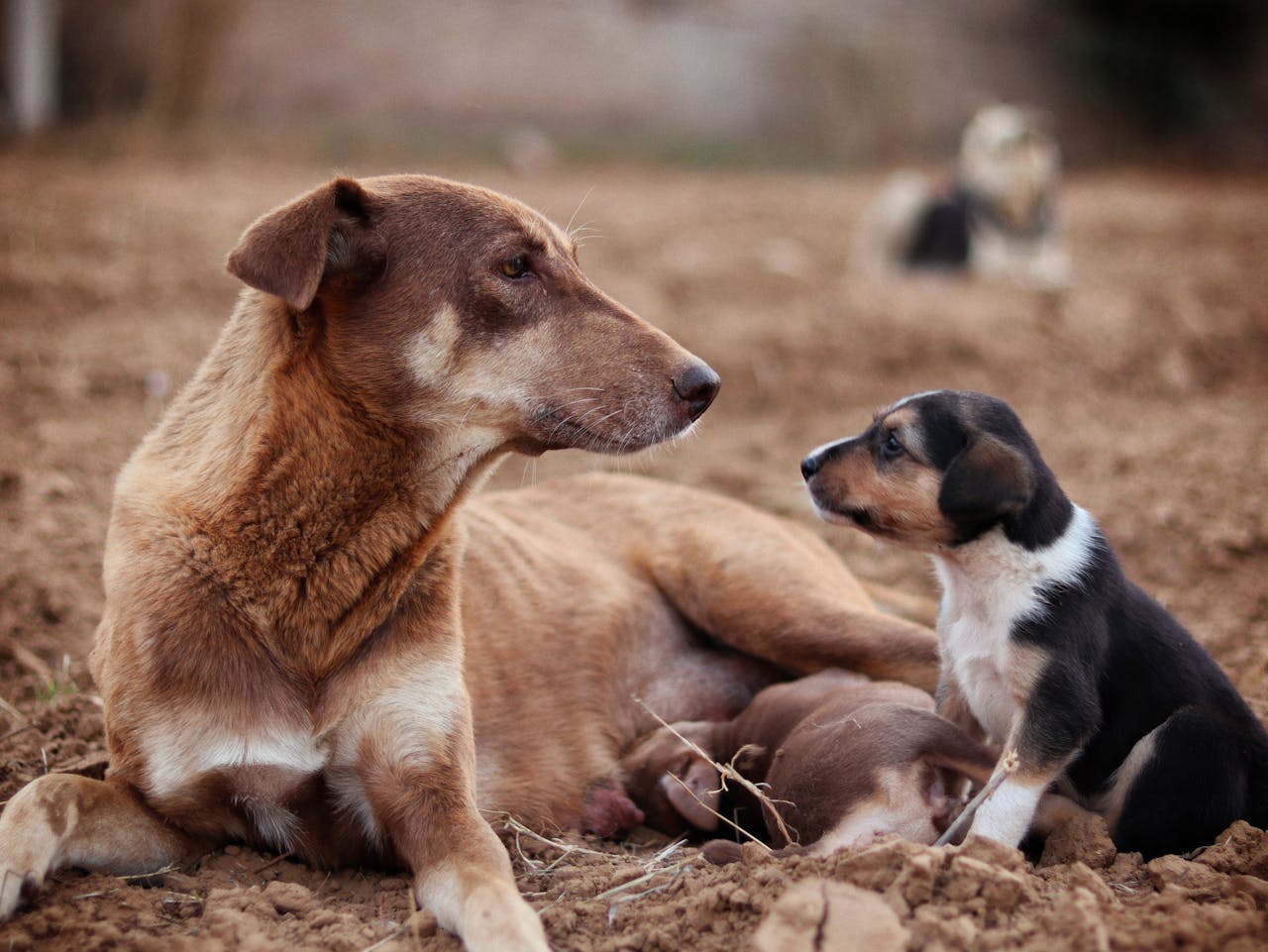
Photo by Sudhir Sangwan
In 2019, researchers at the University of California San Diego published a study that looked at DNA methylation patterns in 104 Labrador Retrievers and compared them to methylation patterns in humans. Methylation is a chemical process that happens to DNA over time, and it is one of the best biological clocks we have.
What they found was striking. Dogs age very rapidly in their early years, then slow down considerably as they get older. A one-year-old dog is biologically closer to a 30-year-old human than a seven-year-old. By the time a dog reaches eight years old, the aging rate has slowed significantly.
The American Veterinary Medical Association (AVMA) has built on this research and now uses a three-phase model as the basis for dog age conversion:
- Year one of a dog’s life equals approximately 15 human years
- Year two adds roughly 9 more human years (bringing the total to around 24)
- Each year after that adds approximately 4 to 6 human years, depending on the dog’s size
This is a much more accurate picture of how dogs actually develop and age. But there is still one more layer to add, and it is an important one.
Why Breed Size Changes Everything
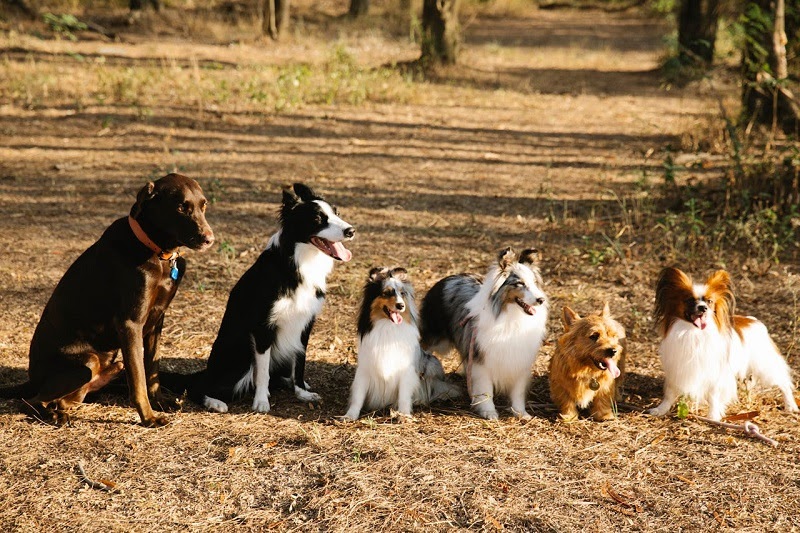
Photo by Blue Bird
Here is something that surprises a lot of dog owners: small dogs and large dogs do not age at the same rate after puppyhood.
After those first two years, a Great Dane accumulates human-equivalent years far faster than a Chihuahua.
A ten-year-old Chihuahua is roughly equivalent to a 56-year-old human.
A ten-year-old German Shepherd is closer to 66. A ten-year-old Great Dane, if you are lucky enough to have one still with you, is equivalent to a person well into their seventies.
This is also why giant breeds are considered seniors so much earlier than small breeds, and why their average lifespan is so much shorter.
Research suggests that larger dogs age faster at a cellular level, possibly because their accelerated growth rate puts more strain on the body over time. They also have higher rates of age-related conditions like cancer and joint disease.
As a general guide:
- Small breeds (under 10kg): live approximately 12 to 16 years, become seniors around age 10 to 11
- Medium breeds (10 to 25kg): live approximately 10 to 13 years, become seniors around age 8 to 9
- Large breeds (25 to 45kg): live approximately 8 to 12 years, become seniors around age 6 to 7
- Giant breeds (over 45kg): live approximately 6 to 10 years, become seniors as early as age 5 to 6
Dog Years to Human Years Chart
Use the table below to find your dog’s approximate human age equivalent. Because size matters so much after year two, the chart is split by breed size.
| Dog’s Age | Small Breed | Medium Breed | Large Breed | Giant Breed |
|---|---|---|---|---|
| 1 year | 15 | 15 | 15 | 15 |
| 2 years | 24 | 24 | 24 | 24 |
| 3 years | 28 | 28 | 28 | 31 |
| 4 years | 32 | 32 | 34 | 38 |
| 5 years | 36 | 37 | 40 | 45 |
| 6 years | 40 | 42 | 45 | 52 |
| 7 years | 44 | 47 | 50 | 59 |
| 8 years | 48 | 51 | 55 | 66 |
| 9 years | 52 | 56 | 61 | 73 |
| 10 years | 56 | 60 | 66 | 80 |
| 11 years | 60 | 65 | 72 | — |
| 12 years | 64 | 69 | 77 | — |
| 13 years | 68 | 74 | 82 | — |
| 14 years | 72 | 78 | — | — |
| 15 years | 76 | 83 | — | — |
Based on AVMA guidelines and veterinary life-stage research. Dashes indicate ages that are exceptionally rare for that size category.
A few things stand out when you look at this table:
- All dogs start at the same place. The first two years are broadly comparable across sizes because early developmental milestones happen at roughly the same pace.
- After year two, the lines diverge quickly. A five-year-old small breed is still a youthful 36 in human terms, while a five-year-old giant breed is already 45.
- The numbers at the higher end are a real reminder of just how much care and attention older dogs need. A 12-year-old medium breed is the equivalent of a 69-year-old human. That puts their needs in a very different light.
The Life Stages of a Dog
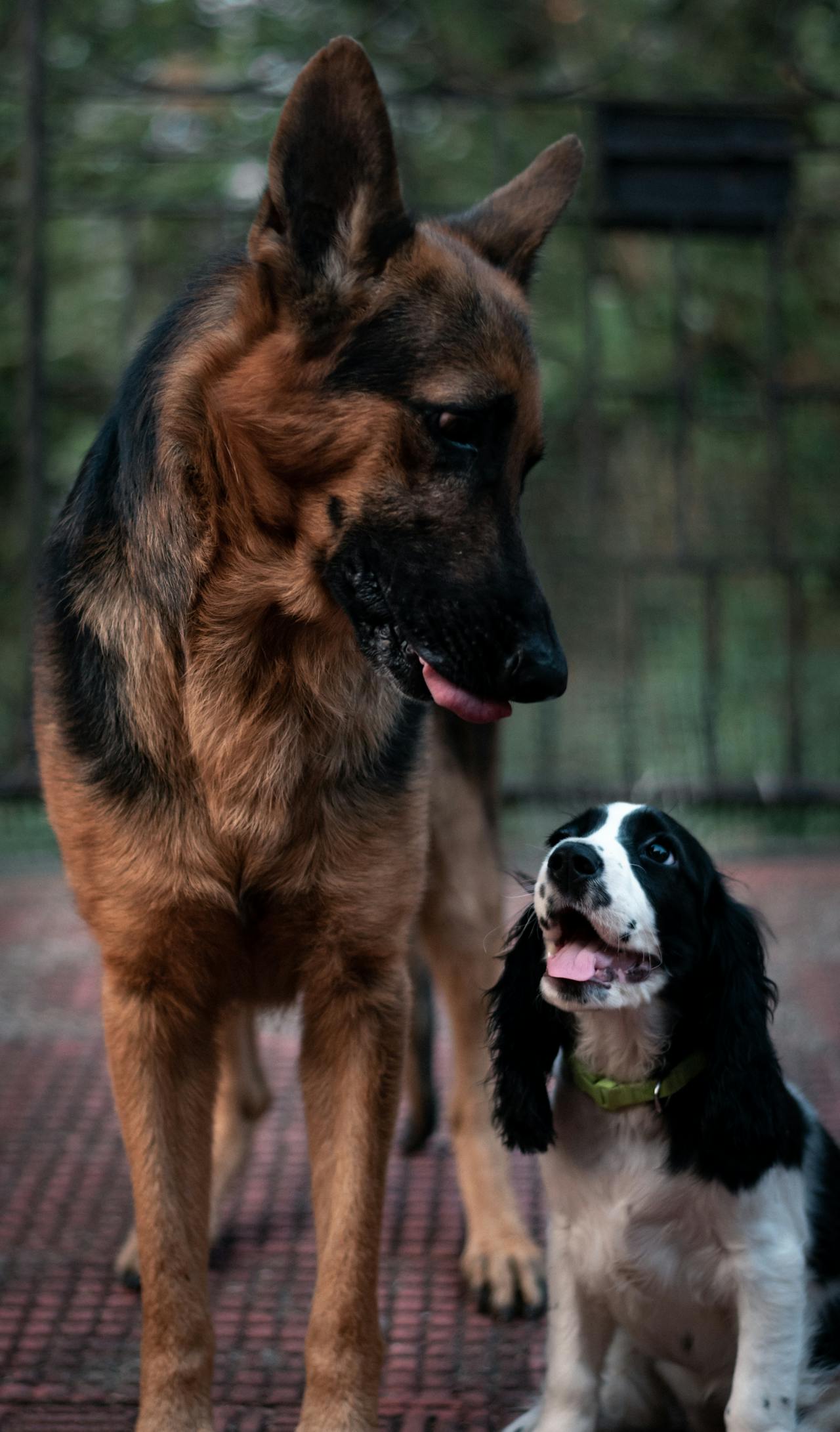
Photo by Velroy Fernandes
Understanding dog age in human years becomes even more useful when you map it to your dog’s actual life stage. Here is how veterinarians typically think about it:
Puppy (Birth to 6 Months)
This is the fastest period of aging a dog will ever experience. In the first six months alone, a puppy goes through changes that would take a human child several years. It is a period of rapid physical development, sensory development, and social learning.
The socialisation window, which is critical for shaping a dog’s temperament, closes around 12 to 16 weeks.
Adolescent (6 Months to 2 Years)
The teenage phase. Your dog is approaching or has reached sexual maturity, has most of their adult size, and has absolutely none of their adult sense.
Adolescent dogs are frequently a handful, and this is the stage when a lot of pet owners find training challenging.
Understanding that your one-year-old dog is biologically equivalent to a 15-year-old human can make this phase feel a little more relatable.
Adult (2 to 7 Years, Depending on Size)
This is the prime of life for most dogs. Energy levels are high, health is generally good, and your dog is fully themselves.
It is also the stage during which maintaining good habits, regular vet check-ups, a healthy diet, and consistent exercise pays the biggest dividends in terms of longevity.
Mature Adult (Around 5 to 8 Years)
This is the transitional phase, and it varies significantly by size. A large breed dog at six is already starting to move into this territory.
A small breed at six is still firmly in their prime. This is a good time to talk to your vet about any adjustments to diet, exercise, or health monitoring.
Senior (7 to 10 Years Onward, Depending on Size)
Slowing down, sleeping more, possibly showing some greying around the face.
Senior dogs need adjusted nutrition, more regular veterinary check-ups, and often some changes to how they exercise. But they also tend to be the most wonderful companions, calm and deeply bonded.
Geriatric (Last 25% of Expected Lifespan)
Geriatric dogs need the most attentive care of all. Joint support, dental care, cognitive health, and comfort all become priorities. The goal at this stage is quality of life above everything else.
When Is a Dog Considered a Senior?
This is one of the most common questions vets get asked, and the answer depends almost entirely on size.
- Small breeds (under 10kg): Senior from around 10 to 11 years
- Medium breeds (10 to 25kg): Senior from around 8 to 9 years
- Large breeds (25 to 45kg): Senior from around 6 to 7 years
- Giant breeds (over 45kg): Senior from around 5 to 6 years
It is worth noting that these are starting points, not finish lines. A healthy eight-year-old Border Collie who runs every day might be biologically younger than a sedentary eight-year-old dog of the same breed.
Lifestyle, diet, genetics, and veterinary care all influence how a dog ages, just as they do for humans.
What Your Dog’s Human Age Means for Their Health Care
Knowing your dog’s equivalent human age is not just an interesting conversation starter. It has real, practical implications for how you care for them.
Puppies and Adolescents
- Vaccinations and parasite prevention on schedule
- Nutrition formulated for growth
- Neutering timing discussions with your vet
- Consistent socialisation and training
Adult Dogs
- Annual vet check-ups
- Dental care (this is more important than most owners realise)
- Weight management through appropriate diet and exercise
- Heartworm, flea, and tick prevention year-round
Senior Dogs
- Twice-yearly vet visits rather than annual
- Blood panels and urine testing to catch age-related conditions early
- Possible dietary adjustments for joint health, kidney function, or weight
- Pain assessment, since dogs are very good at hiding discomfort
- Mental stimulation to support cognitive health
Geriatric Dogs
- All of the above, more frequently
- Comfort-focused care and pain management
- Mobility aids if needed (ramps, orthopaedic beds, non-slip mats)
- Honest conversations with your vet about quality of life
The shift from adult to senior care is something a lot of owners miss simply because they do not realise how old their dog actually is in human terms. If your large breed dog is seven and you are still treating them like they were at three, the chart above is worth bookmarking.
How to Calculate Your Dog’s Age in Human Years
Photo by Anna Tarazevich
If you want a quick way to estimate your dog’s human age without a full chart lookup, here is the method recommended by the AVMA:
- Count the first dog year as 15 human years
- Add 9 human years for the second dog year
- For every year after that, add 4 to 6 human years depending on size (closer to 4 for small breeds, closer to 6 for large and giant breeds)
Example: A 5-year-old medium-sized dog
Year 1: 15 human years
Year 2: +9 = 24 human years
Years 3, 4, 5: +5 each = 24 + 15 = 39 human years
It is not perfectly precise, because no formula can fully account for individual variation in genetics and health. But it is a much more useful guide than multiplying by seven.
FAQ
1. Is the 7-year rule completely wrong?
It is an oversimplification rather than a flat-out invention. The average dog does live roughly one seventh of the average human lifespan, so the ratio has a rough logic to it. But it fails to account for the fact that dogs age at very different rates at different points in their lives, and that size plays a huge role.
2. Do small dogs really live longer than large dogs?
Yes, and it is one of the more counterintuitive facts in biology. In most of the animal kingdom, larger animals tend to live longer. But within a single species, the opposite seems to be true for dogs. The exact reasons are still being studied, but factors include cellular aging rates, oxidative stress, and the physical strain that rapid growth puts on large-breed bodies.
3. My dog is 15. What does that mean in human years?
It depends on size. A 15-year-old small breed dog is roughly equivalent to a 76-year-old human. A 15-year-old medium breed is in the low-to-mid eighties in human terms. For large and giant breeds, reaching 15 is exceptionally rare.
4. At what age is a dog fully grown?
Small breeds typically reach full size by around 10 to 12 months. Medium breeds by 12 to 15 months. Large breeds can take up to 18 months. Giant breeds like Great Danes and Mastiffs may not reach full size until 18 to 24 months.
5. Should I change my dog’s diet when they become a senior?
This is worth discussing with your vet, because it depends on your individual dog’s health. Many vets do recommend transitioning to a senior-formulated food at the appropriate life stage, as these are often designed with joint support, lower calorie density, and adjusted protein levels in mind. But there is no one-size-fits-all answer.
6. Can I use a dog age calculator online?
Yes, and they can be handy for a quick estimate. Look for one that asks for breed size rather than just using a flat multiplier, as size-adjusted calculators give a much more accurate picture.
Pretty Fluffy is the ultimate lifestyle destination for dog lovers. Discover the best designer & emerging dog brands, the latest dog accessories, pet lifestyle inspiration, healthy dog treat recipes, dog training tips and much more. Thank you for being part of our dog-loving community!

Fluffy Editorial is our in-house team of writers and dog nerds. We research every topic carefully, talk to professionals when needed, and focus on sharing honest advice we’d follow with our own dogs.
Photography: qiana zhang




-
 DOG By Dr Lisa Dog Brush
lovely everyday brush for dog parents who want something gentle and easy to use.


-
DOG By Dr Lisa Dog Brush
lovely everyday brush for dog parents who want something gentle and easy to use.