


Best Dog Ramps
 Dog Products Shopping Guide
There is a particular ache in watching your dog gather themselves at the foot of the bed, think about the jump, and decide against it. Sometimes it happens gradually with age. Sometimes it arrives overnight after a surgery or a bad landing. Either way, the fix is usually simpler than you expect.
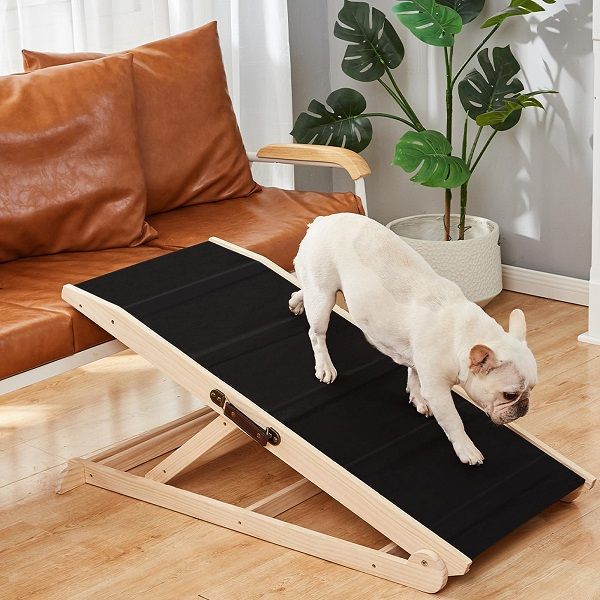
A good ramp gives your dog back the parts of the house they had quietly started giving up on, and it spares their joints the repeated impact of jumping down from height. We compared 14 of the best dog ramps for cars, beds, couches, and big dogs who need something sturdier than the average model can offer.
Quick answer: The best dog ramps share three things: a genuinely non-slip surface, an adjustable height that matches your furniture or vehicle, and a weight capacity comfortably above your dog's weight. For cars and SUVs, a telescoping aluminum ramp such as the PetSafe Happy Ride travels best. For beds and couches, a folding wooden ramp with a rubber or ridged tread gives nervous dogs the most confidence.
RELATED: 8 Best Dog Stairs & Steps
Benefits of a Dog Ramp for Joints and Backs
A ramp is often filed under nice-to-have, alongside the raised bowls and the seasonal bandanas. It belongs in a different category. For a lot of dogs, it is the single cheapest piece of preventive care you can put in the house.
Protecting Aging Joints
Jumping down from a bed or a car loads a dog's front legs and shoulders with several times their body weight, and they do it multiple times a day for years. That repetition is what wears cartilage thin. A ramp removes the impact entirely, which matters most for dogs already managing arthritis or stiffness. If you are building out a wider comfort plan, our guide to caring for a senior dog covers what else changes as they age.
Reducing Spinal Strain in Long-Backed Breeds
Some dogs are built in a way that makes jumping a genuine risk rather than a wear-and-tear issue. Dachshunds, French Bulldogs, Beagles, Pekingese and Corgis all carry a higher predisposition to intervertebral disc disease, according to VCA Animal Hospitals. Cornell's Riney Canine Health Center notes that while spinal injuries cannot be entirely prevented, you can reduce the odds of one happening. Limiting repeated jumping is one of the levers you actually control. If your dog is one of the long and low breeds, a ramp is worth installing before there is a problem, not after.
Restoring Confidence and Independence
Vision dims and hind-end strength fades, and dogs respond by simply not trying anymore. It reads as aloofness or tiredness. Often it is caution. A stable surface with good grip gives them a route they can trust, and most dogs start using it far more than you expected. If you have noticed hesitation combined with wobbling or dragging paws, read up on hind leg weakness in dogs and speak to your vet, because a ramp addresses access but not the underlying cause.
How to Choose a Dog Ramp
Four things separate a ramp your dog uses daily from one that ends up leaning against the garage wall.
Grip is the whole game. If a dog slips once, they may refuse the ramp for weeks. Rubber treads and ridged carpet both work well. Smooth carpet and bare wood do not, especially for dogs with long nails or the soft pads of a small breed.
Slope matters more than length. Measure your bed, sofa seat or tailgate before you shop, then check the ramp reaches that height without maxing out. A ramp that technically fits at its steepest setting is a ramp your dog will refuse.
Overshoot the weight capacity. Dogs do not walk up ramps politely. They bound, they stop halfway, they turn around. Pick a limit well above your dog's actual weight so the frame stays rigid under a sudden shift.
Think about where it lives. Indoor ramps sit in your bedroom permanently. Folding models that collapse to a few inches slide under a bed or behind a door, which is the difference between keeping it and resenting it.
Ramp Length by Height
As a rule of thumb, allow at least 2.5 inches of ramp length for every inch of height you need to cover. For seniors, dogs with arthritis, or dogs recovering from surgery, stretch that to 3 inches for a gentler climb.
| What you are reaching | Typical height | Comfortable ramp length |
|---|---|---|
| Sofa or couch seat | 16 to 20 in | 40 to 50 in |
| Car seat or sedan trunk | 20 to 24 in | 50 to 60 in |
| Standard bed | 24 to 28 in | 60 to 70 in |
| SUV cargo area | 28 to 32 in | 70 to 80 in |
| Pillow-top or platform bed | 30 to 34 in | 75 to 85 in |
| Truck tailgate | 32 to 36 in | 80 to 90 in |
Dog Ramps for Cars and SUVs
Vehicle ramps have a harder job than indoor ones. They need to span more height, survive weather and grit, and fold down small enough to live in a boot alongside everything else. Both picks below handle 300 lbs, which covers even the largest breeds with room to spare, and both suit truck tailgates as well as SUV cargo areas.
1
PetSafe Happy Ride Telescoping Dog Ramp

The telescoping design is what earns this one its place. It slides out to meet whatever you are loading into and collapses back down for storage, so a single ramp covers a low sedan and a high SUV without compromise. The surface is high-traction, a safety latch holds the extension in place under load, and the whole thing stays light enough to carry one-handed while managing a leash. It supports up to 300 lbs. For active families, this is the best dog ramp for travel, and it pairs naturally with the rest of our dog travel accessories lineup.
2
WeatherTech Non-Slip Portable Dog Ramp

Made in the USA from heavy-duty resin, this is the ramp for muddy trailheads and wet car parks. The textured surface holds paws even when wet, rubber feet stop the base creeping on tarmac, and resin cleans up with a hose rather than staining like carpet. It folds in half and weighs 16 lbs, also carrying a 300 lb capacity. If road trips are a regular thing, our complete guide to traveling with dogs is worth a read before you set off.
Dog Ramps for Car Side Doors
Loading through a side door is a different problem from loading through a tailgate, and most guides skip it entirely. It deserves its own thinking.
A tailgate gives you a wide, open, square opening and unlimited room to run the ramp out behind the vehicle. A side door gives you none of that. The opening is narrower, the door itself swings into your working space, and there is usually a kerb, a gutter or a parked car limiting how far back the ramp can extend. That combination pushes people into setting the ramp too steep, which is exactly what makes a dog refuse it.
Three things matter when you are choosing a ramp for side door access:
Width under 17 inches. A ramp wider than the door aperture will not seat properly against the sill. Measure the narrowest point of your door opening, not the seat.
A lip that grips the sill. Side door sills are narrow and often slightly rolled. You want a top lip that hooks over the sill rather than resting on it, so the ramp cannot slide sideways when your dog shifts their weight mid-climb.

Adjustable length, not fixed. Because you rarely control how much room you have behind the door, a telescoping ramp lets you shorten the run in a tight car park and lengthen it when you have space. This is where the PetSafe Happy Ride above earns its keep, and it is the pick we would point most side door users toward. A fixed-length ramp forces one angle on you regardless of the kerb.
One practical note. With side door loading, park so the passenger side faces a kerb or grass verge where possible. The extra few inches of elevation on the kerb side reduces the effective slope more than any ramp feature will. Our dog travel checklist covers the rest of the packing side of things.
Dog Ramps for Beds
Bed ramps live in your bedroom permanently, so they need to look reasonable as well as work well. Height range is the specification to check first, since bed heights vary enormously once you add a mattress topper.
3
Woohoo Dog Ramp for Bed

This is our first recommendation for a dog who has already had a bad experience with a ramp. It swaps the usual carpet for a rubber tread, which gives noticeably more purchase, and the extra width means a hesitant dog does not have to walk a tightrope. It adjusts from 13 to 24 inches, supports 250 lbs, arrives fully assembled, and the wood finish sits comfortably next to real furniture.
4
PawGiant Dog Ramp for Bed

The value pick, and a genuinely capable one. Four height settings cover most standard beds, the anti-slip carpet is ridged rather than smooth so paws have something to catch on, and the solid wood frame holds 200 lbs. It folds flat to four inches, which means it disappears under the bed between uses.
5
Tsukiko Dog Ramp for Bed

If you have a tall bed, this is the one to look at. At 64 inches long it keeps the gradient reasonable even at full height, where shorter ramps turn into a climb. A landing platform closes the last gap to the mattress so there is no final hop, and the heavy-duty carpet uses raised strips for traction. Rated to 220 lbs.
6
YaFiti Dog Ramp for Bed

Seven height settings up to 26.6 inches make this the most adaptable ramp here, which is useful if you are moving it between a bed and a sofa or expect to change beds. The pine structure supports 200 lbs, the surface is a high-traction fabric, and it folds to a slim four inches with a carry handle built in.
7
Treasea Dog Ramp for Bed

Soft plush wraps the frame, which softens the look of what is otherwise an obviously functional object, while the walking surface itself uses rubber for grip where it counts. Four height options and a 200 lb capacity. A good fit if your bedroom leans soft and layered rather than minimal, in the same vein as our luxury dog beds picks.
8
Tucker Murphy Pet Folding Dog Ramp

Side rails are the feature to notice here. They guide a dog who tends to drift off the edge, which is common in dogs with reduced vision or hind-end weakness. The beige finish is understated, the non-skid base stays put on hard floors, and it holds a substantial 250 lbs.
9
COZIWOW Wooden Folding Dog Ramp

Straightforward and reliable rather than clever. Durable pine handles daily use, the carpet surface gives secure footing, and the height adjusts to suit your furniture. It folds flat when you have guests. Rated to 132 lbs, so check that against your dog before committing.
10
PawHut Pet Ramp

The top platform is the smart part. It gives your dog somewhere to pause and reset before stepping onto the bed, which suits dogs who rush the last section. Strong pine and cushioned carpet, with an easy gradient. The 77 lb limit makes this a small and medium breed option only.
Dog Ramps for Couches and Sofas
Couch ramps are the ones most people underestimate. The height is lower, so it feels like less of a problem, but the sofa is where your dog goes up and down all evening. That repetition adds up faster than the once-a-night trip to bed. A shorter ramp also means you can prioritize how it looks, because it is sitting in your living room.
11
Easyego Foldable Dog Ramp for Bed and Couch

Extending to 67 inches, this creates one of the gentlest slopes here when used at couch height, which is exactly what a stiff senior needs. Side rails keep them tracking straight and a top platform provides a pause point before the final step. The pine structure supports 200 lbs and works equally well at the bed if you want one ramp doing both jobs.
12
Pawaboo Dog Ramp for Couch

Built for small rooms. Wide-set legs give it a stable footprint without a bulky frame, four height settings cover most sofa seats and low beds, and the striped carpet provides traction. It folds down compactly and is light enough to move between rooms, which is useful if your dog follows you around the house.
13
Ziluce Dog Ramp for Couch and Bed

The answer for anyone who does not want a ramp on display. Closed, it reads as a stylish ottoman and works as a footrest. Open, it is a solid wood ramp sized for small dogs. If the reason you have been putting off buying one is that they all look like mobility equipment, this solves that.
Dog Ramps for Large Dogs
Big dogs need three things the standard models do not always deliver: a high weight ceiling, a wide walking surface, and a frame that does not flex when 80 lbs of Labrador changes direction halfway up. Weight capacity is the number to check first, and it is worth choosing something rated well above your dog rather than just above.
14
ZENTAVO Adjustable Dog Ramp

A birchwood frame rated to 250 lbs, built with the proportions large breeds actually need. Safety rails run the length of the ramp, the EVA mat surface wipes clean rather than trapping hair, and glow-in-the-dark strips mark the edges for night trips, which is a genuinely thoughtful touch for dogs who get up at 3am.
Beyond this pick, the Woohoo, Tucker Murphy and both vehicle ramps all suit larger dogs, with the two car ramps rated highest at 300 lbs. Skip the PawHut and COZIWOW models, which cap at 77 lbs and 132 lbs respectively.
Dog Ramp Comparison Chart
| Brand | Best for | Material | Weight limit |
|---|---|---|---|
| PetSafe | Cars, SUVs and side doors | Aluminum | 300 lbs |
| WeatherTech | Cars and outdoors | Resin | 300 lbs |
| Woohoo | Maximum grip | Wood and rubber | 250 lbs |
| PawGiant | Value | Wood | 200 lbs |
| Tsukiko | Tall beds | Wood | 220 lbs |
| YaFiti | Adjustability | Pine wood | 200 lbs |
| Treasea | Soft styling | Wood and plush | 200 lbs |
| Tucker Murphy | Side rails | Manufactured wood | 250 lbs |
| COZIWOW | Everyday use | Pine wood | 132 lbs |
| PawHut | Platform design | Pine wood | 77 lbs |
| Easyego | Gentlest slope | Wood | 200 lbs |
| Pawaboo | Small spaces | Wood | Not stated |
| Ziluce | Doubles as furniture | Wood | Not stated |
| ZENTAVO | Large dogs | Birchwood | 250 lbs |
How to Train Your Dog to Use a Ramp
Buying the ramp is the easy half. Plenty of them get returned because the dog took one look and walked away, when the issue was introduction rather than the ramp itself.
Start flat. Lay the ramp on the floor with no incline at all and let your dog walk across it for treats until the surface itself is boring. This is the step people skip, and it is the one that matters most, because a dog who has never felt that texture underfoot is being asked to trust two new things at once.
Then raise it gradually. Prop it to the lowest setting, reward them for going up and, importantly, for coming down. Descending is the harder direction and the one where most dogs lose their nerve. Stay alongside them with a hand near their chest for the first few attempts.
Expect this to take a week rather than an afternoon, especially with an anxious dog or one who has already slipped somewhere. Keep sessions short and end them while your dog is still succeeding. The same patience works for crate introduction, and for much the same reason.
FAQ
Frequently asked questions
01Are dog ramps better than dog stairs?
For dogs with back problems, arthritis, or short legs, ramps are generally better because they avoid the repeated flexing that steps require. Stairs take up less floor space and suit confident small dogs, but ramps are the safer option for spinal and joint conditions.
02How long should a dog ramp be for a car?
Allow roughly 2.5 inches of ramp per inch of height. A sedan boot at 22 inches needs about 55 inches of ramp, while an SUV cargo area at 30 inches needs closer to 75 inches. Add length for seniors.
03Will my dog actually use a ramp?
Most dogs will, but very few use one immediately. Introduce it flat on the floor first with treats, then raise the incline gradually over about a week. Rushing the introduction is the most common reason a ramp goes unused.
04What weight capacity does my dog ramp need?
Choose a limit comfortably above your dog's weight rather than just above it. Dogs shift weight suddenly, stop midway and turn around, which loads the frame unevenly. For a 60 lb dog, look for 150 lbs or more.
05Can a ramp help a dog with arthritis or IVDD?
A ramp removes the impact of jumping, which supports dogs managing arthritis or disc disease, but it is a management tool rather than a treatment. If your dog is showing pain, stiffness, or hind leg weakness, see your vet promptly for a diagnosis.
This article is general information and not a substitute for veterinary advice. Sudden weakness, yelping when lifted, or a reluctance to move should be treated as urgent and assessed by your vet.
Setting Your Dog Up for Comfort
A ramp is one part of keeping an older or long-backed dog comfortable at home. Pairing it with a supportive sleeping setup makes a real difference, so it is worth reading our guide to choosing the right dog bed alongside this one. From there, our senior dog checklist covers the rest of the essentials, and our roundup of superfoods for senior dogs looks at what to add to their bowl as they age.
Your dog is not being dramatic when they pause at the bottom of the bed. They are telling you something has changed. A ramp is a small, unglamorous purchase that gives them the run of the house again, and most pet parents only regret not buying one sooner.
Related Reading


Share a thought, ask a question, or tell us about your own dog. We read every comment.