


Texas Heeler Dog Breed Guide
 Dog Breeds

Ask ten owners what a Texas Heeler is and the answers rarely line up, because this dog came out of ranch country rather than a registry office. The cross behind the name is an Australian Cattle Dog bred to an Australian Shepherd: two of the hardest working herding breeds in one medium sized body. Clever, watchful, never quite finished with the day.
No kennel club recognizes the cross, so nothing sets its size, coat or tail, and littermates can grow up looking like different dogs. This explainer on mixed breed and designer dogs covers what that unpredictability means once a puppy is home.
What Is a Texas Heeler?
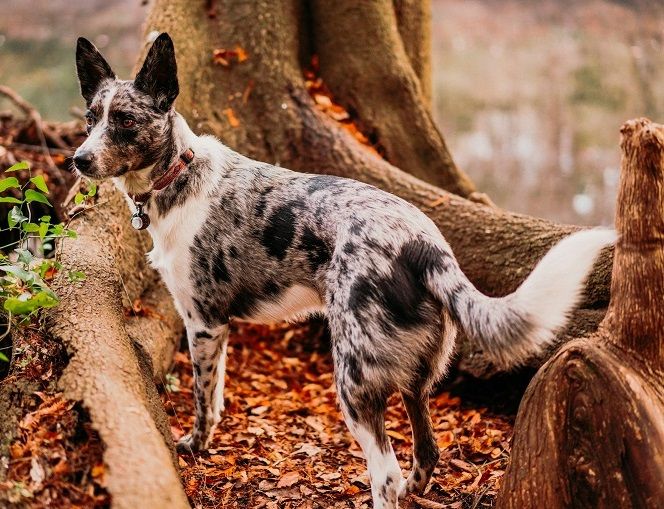
A Texas Heeler is a mixed breed dog with one Australian Cattle Dog parent and one Australian Shepherd parent. Most adults stand 17 to 22 inches at the shoulder, weigh 25 to 50 pounds, and live 12 to 15 years. The coat is a short to medium double coat that sheds, often blue or red with speckling, merle patches or tan and white trim. No major kennel club recognizes the cross, so size, coat and tail length vary from puppy to puppy.
- Parent breeds: Australian Cattle Dog and Australian Shepherd
- Height: 17 to 22 inches at the shoulder
- Weight: 25 to 50 pounds, occasionally closer to 60
- Lifespan: 12 to 15 years
- Coat: short to medium double coat, two heavy sheds a year
- Exercise: one to two hours a day, plus something to think about
Australian Cattle Dog and Australian Shepherd Parents
The cattle dog was built for distance and heat, standing 17 to 20 inches and weighing 33 to 49 pounds, and it bonds hard to one person. Blue Heeler, Red Heeler and Queensland Heeler all mean this same breed, still one of the most popular dog breeds in Australia.
Despite the name, the Australian Shepherd was developed in the western United States. It runs taller and lighter at 18 to 23 inches and 35 to 70 pounds, with more coat and a softer way of working. Both parents sit high on rankings of the smartest dog breeds, which sounds better than it feels at four in the afternoon with a bored dog in the kitchen.
How a Ranch Cross Got Its Texas Name
Ranchers wanted cattle dog grit with more range and less edge, and the shepherd cross gave them that. Breed records date the first registered litter to the early 1970s, in Texas, which is where the name stuck. Heeler is the older, more literal half: cattle dogs move stock by nipping at the heels.
Sellers also call it a Texas Cattle Dog, an Aussie Heeler or an Australian Shepherd cattle dog mix. Swap the shepherd for a Pembroke and you get the cowboy corgi, which keeps the drive and loses most of the leg.
How Big Does a Texas Heeler Get?
Somewhere between its parents, with cattle dog muscle on a taller frame. Published figures disagree wildly, since nobody is measuring to a standard, so meeting both parents tells you more than any chart. A 70 pound shepherd bred to a heavy cattle dog will not produce a 30 pound puppy.
Full Grown Height and Weight
Expect 17 to 22 inches at the shoulder and 25 to 50 pounds, females at the lighter end. Height settles by about a year old, while chest and shoulders keep filling out for months after, so a lean looking adolescent is not a finished dog.
Mini Texas Heeler and the Miniature Aussie Parent
Swap the shepherd parent for a Miniature American Shepherd, the smaller breed once called the miniature Australian Shepherd, and the result is sold as a mini Texas Heeler, usually 25 to 40 pounds. The energy does not scale down with the body, and the drug sensitivity covered below runs just as high in miniature lines.
Coat Colors, Merle Markings and Shedding
Puppies in one litter can look almost unrelated. The cattle dog brings dense speckling in blue or red, the shepherd brings merle patches, solid black or solid red, and white and tan markings land wherever they please. Coat length settles between the parents, short to medium with feathering on the legs.
Blue, Red and Speckled Coats
Blue is the common one: black hair with white hairs ticked through it, reading as steel gray from a distance, often with a dark mask or a patch over one eye. Red does the same in rust and cream. Puppies are born pale and darken over a few weeks, so the dog that comes home at eight weeks is not the shade it keeps. Owners name them for the coat anyway, and western dog names runs a whole block of them, Bluey to Roan.
Merle Coats and the Double Merle Risk
Merle only arrives from one direction here. The cattle dog's mottled look comes from a ticking gene, not merle, so a merle Texas Heeler got it from the shepherd side. That matters, because merle is the gene behind the deafness and eye defects that show up when a puppy inherits two copies.
Two copies are not possible in a first cross off a non merle cattle dog, which makes this one of the safer merle crosses going. The risk returns when two Texas Heelers are bred together and both are merle, or when a breeder pairs merle to merle to chase the pattern. Ask about both parents, the question worth asking across blue eyed dog breeds, and walk away from a merle to merle litter.
Bobbed Tails and the Gene Behind Them
Plenty of these dogs are born with a stump instead of a tail, and both parent breeds carry the variant behind it. One copy makes a bobtail. Two copies are not survivable, so puppies inheriting one from each parent are lost early in the pregnancy, and the UC Davis Veterinary Genetics Laboratory expects litters from two bobtailed parents to run about a quarter smaller. A short tail can also mean docking, so ask which it was.
How Much Does a Texas Heeler Shed?
Steadily, then dramatically twice a year. Both parents carry a double coat, neither is hypoallergenic, and the undercoat comes out in clumps each spring and fall. Brushing once or twice a week keeps most of it off the sofa, daily while the coat is blowing. An undercoat rake does work a slicker cannot, and this roundup of the best dog brushes sorts them by coat type.
Temperament and Herding Instinct
Bright, intensely loyal, busy from the moment the kettle goes on. Most are devoted to one or two people and politely unbothered by everyone else. The shepherd side softens the cattle dog's suspicion a little, though a puppy who never meets strangers still grows up wary of them.
Herding is not optional. With no stock to move it gets aimed at whatever is available: joggers, the vacuum, other dogs at the park, children running across a yard.
Living With Children, Cats and Other Dogs
Good with children it grew up beside, and easier with older ones than toddlers, since a running toddler sets off the herding reflex. Teach children not to shriek and bolt near the dog, give the dog a bed nobody disturbs, and supervise. Families wanting a gentler starting point can weigh it against the best dog breeds for kids. Cats are usually fine if the dog was raised with them, while small animals running loose are another matter.
Nipping, Barking and Wariness With Strangers
Heel nipping shows up early, often around four months, and it is herding rather than aggression. Redirect it onto a tug toy every single time instead of pushing the dog away, which only improves the game. Most are moderate barkers. Bored ones bark at nothing much, and dig.
Exercise and Training Needs
This is the part people underestimate. A tired Texas Heeler is a pleasant housemate. An under exercised one is a renovation project.
How Much Exercise a Day
Plan on one to two hours of real activity, split across the day, plus a job for the brain. A long walk alone stops being enough by the time the dog turns two. Herding classes, agility, flyball, scent work and a proper weekend hike all beat distance for its own sake. When the weather wins, these ways to mentally stimulate a dog stand in for the walk.
Training a Dog That Outthinks the Routine
Training is easy and relentless at once. These dogs pick up a cue in a handful of repetitions, then spend a month testing whether it still applies at the park, in the rain, with a cat watching. Keep sessions short and skip harsh corrections, which a sensitive herding dog shuts down under rather than learns from.
Settle work matters as much as recall, because a dog who never learns to switch off stays switched on. A rotation of puzzle dog toys buys the quiet half hour that makes the evening work.
Health Problems and Lifespan
Crossbred dogs inherit from both sides, so the useful question is not whether the cross is healthy but which tests the parents had. Most live 12 to 15 years, and keeping one lean does more for those years than anything else below.
Hips, Elbows and Joints
Hip and elbow dysplasia appear in both parent breeds, and osteochondritis dissecans, where cartilage fails to bond to the bone beneath it, turns up in fast growing young dogs. Ask to see hip and elbow scores for both parents, and keep a puppy off long runs on hard ground until the growth plates close, around twelve to eighteen months.
Eye Conditions Worth Testing For
Eyes are the weak point in this cross. Progressive retinal atrophy, hereditary cataracts, collie eye anomaly, iris coloboma and distichiasis, where extra lashes grow inward against the eye, are all reported in the parent breeds. Several are testable before breeding and an exam by a veterinary ophthalmologist catches the rest. Night vision that seems to slip is worth a same week appointment.
MDR1 Drug Sensitivity
Here is the one most new owners have never heard of. A variant in the MDR1 gene leaves the brain unprotected against certain common drugs, and reactions run from tremors and disorientation to death. Breed prevalence work from Washington State University, where the mutation was identified, puts it at roughly half of Australian Shepherds and around 10 percent of herding breed crosses.
None of the drugs are exotic. Ivermectin at mange doses, loperamide in over the counter anti diarrheals, several chemotherapy agents and acepromazine all carry risk. One cheek swab settles it for life, and a single normal copy is not a free pass, since those dogs still need dose reductions. Tell every vet who treats the dog.
Congenital Deafness
Deafness runs in both parent breeds and is tied to pigment, which is why it clusters in dogs with a lot of white on the head or two copies of merle. BAER testing picks up hearing loss in one ear that nobody would spot at home, and good breeders test litters before they leave. Deaf dogs live full lives on hand signals, but traffic changes forever.
Difference Between a Texas Heeler and a Blue Heeler
Blue Heeler is just another name for the purebred Australian Cattle Dog. The Texas Heeler is that dog crossed with an Australian Shepherd, which makes everything about it less predictable.
In practice the cross stands taller and lighter, carries more coat, comes in a wider spread of colors including merle, and is often friendlier outside the family. The cattle dog keeps the edge on toughness. Both will herd, both bond hard, and neither thrives in a house that sits empty all day. Anyone weighing up other herding crosses can compare it against the Border Collie mixes, several of which share that cattle dog parent.
Bringing Home a Texas Heeler Puppy
Litters turn up mainly through ranch and working lines, breed specific rescue, and shelters, where cattle dog crosses are common because people take them on without understanding the drive. An adult from rescue has one real advantage: the size, coat and temperament are already there to see.
What to Ask a Breeder
- Hip and elbow scores for both parents
- An eye examination by a veterinary ophthalmologist within the last year
- MDR1 results for both parents, or for the puppy
- BAER hearing results, particularly for puppies with a lot of white on the head
- Whether either parent is merle, and whether either carries a natural bobtail
- How the litter is raised, and how much handling the puppies have had
Anyone who cannot answer those is selling puppies rather than breeding them. The merle and bobtail answers matter most, since both affect whether the litter should have been bred at all.
FAQ
Frequently asked questions
1Are Texas Heelers good family dogs?
In an active family, yes. They are loyal, playful and strongly attached to their people, and they suit school aged children who know how to behave around a dog. The herding instinct makes them a harder fit for homes with toddlers.
2Are Texas Heelers hypoallergenic?
No. Both parent breeds have a double coat that sheds year round, with two heavy seasonal sheds on top, and neither suits allergy sufferers. Regular brushing cuts the hair in the house without changing what the dog produces.
3Are Texas Heelers rare?
Uncommon outside the United States, and most often found in Texas and the surrounding ranching states. No kennel club recognizes the cross, so no registration figures exist to measure it by. Cattle dog crosses turn up regularly in shelters, which is often the quickest route to one.
Is a Texas Heeler Right for Your Home?
Yes, if the day already holds long walks, a yard with a real fence, and someone who enjoys training. This is a dog that repays structure and gets destructive without it. Give it a job and a person to do it with, and it will still want one more round of fetch at twelve years old.
Sources: UC Davis Veterinary Genetics Laboratory (natural bobtail); Washington State University Veterinary Clinical Pharmacology Laboratory (MDR1).
Related Reading


Share a thought, ask a question, or tell us about your own dog. We read every comment.