


Can Dogs Eat Potatoes?
 Dog Nutrition & Diet
Yuki once watched me peel a whole bag of potatoes with the intensity of someone witnessing a crime. She got a small piece of the boiled one, plain, and has considered potato night a personal event ever since. What I had to look up first was which version was actually safe, because with potato the preparation matters far more than the potato.
Dogs can eat potatoes when the potato is plain and fully cooked. Boiled, baked or steamed potato with no salt, butter, oil, garlic or onion is safe for most healthy dogs in small amounts. Raw potato is not safe: it contains solanine, a compound found in the nightshade family that cooking largely breaks down, and it is more concentrated in green patches, sprouts and skins. Potato is also high in carbohydrates, so it belongs in the 10 percent of daily calories reserved for treats rather than in the bowl as a regular addition. Fries, chips, hash browns and loaded or seasoned potato dishes should be skipped entirely.
Can Dogs Eat Cooked Potatoes?
Yes, and cooked is the only version worth offering. Cooking softens the starch, makes potato far easier to digest, and reduces the solanine that makes raw potato a problem. What people get wrong is everything that happens after the cooking. A potato prepared for your dog should be aggressively boring: peeled, cooked in plain water or dry-baked, cooled, cut small. No salt, butter, oil, cream, cheese, gravy, onion or garlic, which damage red blood cells in dogs and can cause anemia days after the meal.
Boiled and Baked Potato
Boiled is simplest. Peel it, boil it unsalted, cool it fully, cut it into pieces sized to your dog. Baked works just as well if you scoop out the soft inside and leave the skin behind. A baked potato that has met butter, sour cream, cheese, bacon or chives is no longer dog food.
Mashed Potato
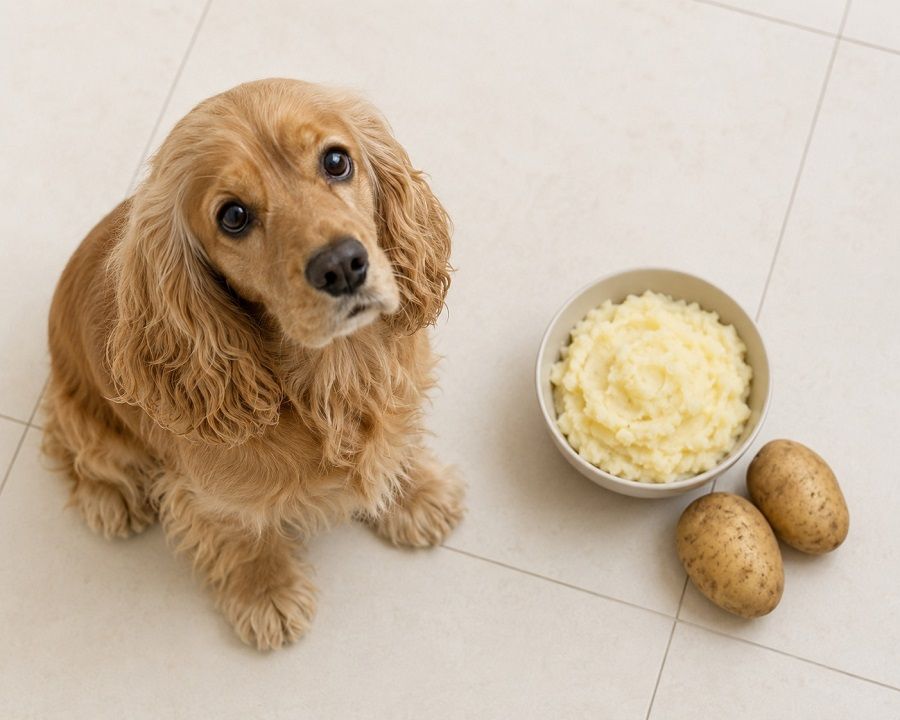
Plain mashed potato is fine in a small spoonful. Mashed potato made for people usually is not, because the recipe is mostly the additions: butter, cream, milk, salt, and very often garlic or onion powder. Set aside a spoonful before anything goes in, loosen it with warm water rather than dairy, and keep it to a taste.
Can Dogs Eat Raw Potatoes?
No. Raw potato is hard to digest, and it carries more solanine than cooked potato. Solanine can cause vomiting, diarrhea, drooling, weakness, lethargy and stomach pain, and in large amounts it affects the nervous system. Large chunks of hard raw potato are also a choking and blockage risk.
Green patches and sprouts are the serious version of this. Solanine concentrates there, which is why a green or sprouting potato should never be offered cooked or raw, and why peelings and potato plants are worth keeping out of reach. If your dog eats a large amount of raw potato, any green potato, or a sprouted one, call your vet rather than waiting for symptoms.
Can Dogs Eat Potato Skins?
Skip them. Potato skin is harder to digest than the flesh, it holds more solanine than the inside, and on a green potato it holds considerably more. Peel before cooking, and do not leave the peelings where a bin-raiding dog can find them.

Are Potatoes Good for Dogs?
Potato is not junk food. Plain cooked potato brings vitamin C, vitamin B6, potassium, a little iron and some fiber, and vets sometimes use plain potato or rice in a bland diet for a dog recovering from stomach upset, which is also why so many foods built for sensitive stomachs lean on gentle starches. That is a real use.
What potato is not is a nutritional upgrade. A dog on a complete and balanced food already has those nutrients covered, and potato arrives with a large carbohydrate load attached. A crunchy, low-calorie vegetable does the same begging-at-the-counter job for a fraction of the calories, which is why green beans and carrots are the better default.
How Much Potato Can a Dog Eat?
Treats of all kinds should stay under roughly 10 percent of a dog's daily calories, and potato counts against that budget more heavily than most vegetables. A few small pieces as an occasional thing is the right frame. It should never replace part of a meal.
| Dog size | Starting portion |
|---|---|
| Under 20 lb (9 kg) | 1 to 2 bite-sized pieces |
| 20 to 50 lb (9 to 23 kg) | 2 to 4 bite-sized pieces |
| Over 50 lb (23 kg) | 4 to 6 bite-sized pieces |
Some dogs should skip potato altogether. Check with your vet first if your dog has diabetes or blood sugar concerns, since potato can raise blood glucose sharply. The same goes for a dog on a calorie-controlled plan, where the starch is working against you and a weight management food is doing the actual work, and for any dog on a prescription diet or with a genuinely sensitive stomach.
Potato Dishes to Skip
Almost every way people enjoy potato is a problem for a dog. Fries, chips, tater tots and hash browns are fried, which means fat and salt, and a high-fat snack can trigger pancreatitis in a dog prone to it, the same problem that makes salami and other cured meats such a poor idea. Potato salad, gratin, soup and loaded baked potatoes bring dairy, and usually onion or garlic on top. One dropped fry is unlikely to be a disaster, but none of these should be handed over on purpose. The rule holds across the category: plain and cooked is safe, everything humans do to make potato taste good is not.
Is Sweet Potato Better for Dogs?
Generally, yes. Sweet potato carries more fiber and beta-carotene, which the body converts to vitamin A, and it has a gentler effect on blood sugar than white potato. It earns its place on our list of superfoods for dogs for exactly those reasons, and it is why so many commercial treats are built around it. The rules do not change: cook it plain, peel it, no seasoning, small portions. If you want to do something more interesting with it than boiling cubes, our sweet potato pretzel dog treats have been the most-made recipe on this site for a decade.
Potato has stayed on the list at our house, in its most boring possible form, which Yuki has never once objected to. If you want something you can hand over more freely without doing the calorie math, cucumber is the easiest place to start, and our homemade dog treat recipes put you in charge of exactly what goes in.
FAQ
Frequently asked questions
1Can dogs have potatoes every day?
No, potato works better as an occasional treat. It is high in carbohydrates and adds calories your dog does not need, and daily servings crowd out the balanced food doing the real work. A few small pieces now and then is the right frequency.
2What should I do if my dog ate raw potato?
Watch for vomiting, diarrhea, drooling, weakness, lethargy or stomach pain over the next day. A small piece of plain raw potato usually passes without incident. Call your vet if your dog ate a large amount, ate any green or sprouted potato, or seems unwell.
3Can puppies eat potato?
A tiny amount of plain cooked potato will not hurt a puppy, but there is no reason to offer it. Puppy stomachs are more easily upset, and their nutrition needs to come from a complete food built for growth. If you share, keep it to one small cooled piece.
4Are potatoes bad for dogs with diabetes?
Potato is high in carbohydrates and can raise blood sugar sharply, so it is generally not recommended for diabetic dogs unless your vet approves it. Dogs managing blood sugar are usually on carefully calculated diets where even a small addition is worth clearing first.
5Can dogs eat potato chips or fries?
No. Both are fried, salty and often seasoned with garlic or onion powder, which is toxic to dogs. The fat alone can upset a dog's stomach and, in larger amounts, contribute to pancreatitis. A stolen chip is not an emergency, but neither should be offered deliberately.
Related Reading


Share a thought, ask a question, or tell us about your own dog. We read every comment.