


Unhealthy Dog Nails (What to Do About It?)
 Health & Wellbeing
Unhealthy dog nails are easy to overlook until your dog is limping, clicking loudly across the floor, or worrying at one paw more than the rest. Nails sit low on most owners' radar, yet they say a lot about how comfortable your dog is and, sometimes, about their broader health.
The reassuring part is that most nail trouble is visible once you know what you are looking at, and the majority comes down to length rather than disease. This guide covers what a healthy nail looks like, the warning signs worth acting on, what causes them, and when a problem needs a vet rather than a trim.
What Healthy Dog Nails Look Like
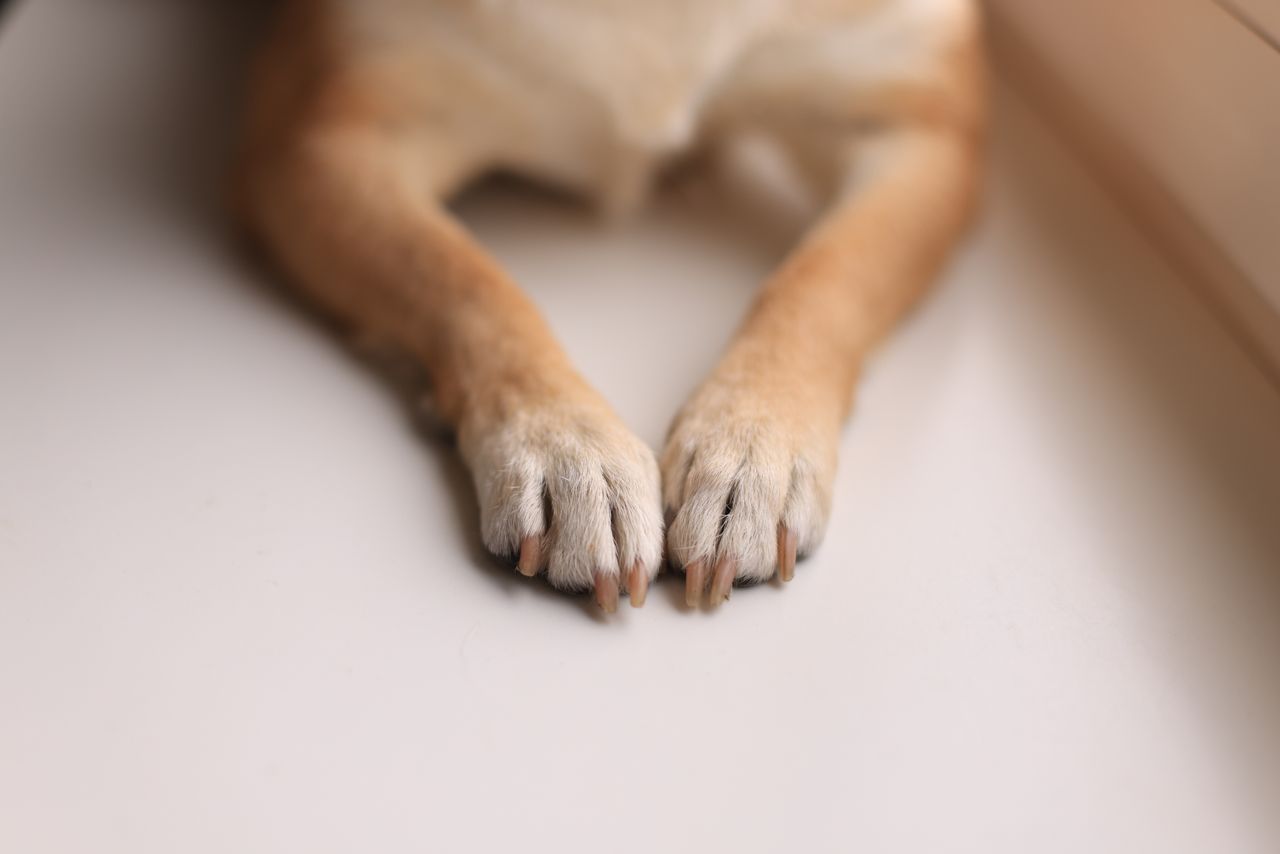
It is easier to spot a problem once you know the healthy baseline. A healthy nail is smooth, fairly hard, and slightly glossy, curving gently down toward the point rather than growing long and straight.
On pale nails you can usually see the quick, the pink core of blood vessels and nerve that keeps the nail alive.
On dark nails the quick is hidden, which is why dark-nailed dogs are harder to trim and why many owners prefer to take off small amounts at a time with a nail grinder.
Healthy vs Problem Nails at a Glance

This is the quick version to check your own dog against.
| Healthy nail | Warning sign | What it can point to |
|---|---|---|
| Smooth, slightly glossy | Rough, flaking, or crumbling | Poor nutrition, infection, or an autoimmune issue |
| Gentle curve, clears the floor | Long enough to click or curl into the pad | Overdue for a trim, with pressure on toes and joints |
| Consistent color for your dog | Yellowing, dark streaks, or new spots | Fungal or bacterial infection, or old trauma |
| Firm and intact | Cracked, split, or peeling | Dryness, brittleness, or a catch injury |
| Clean, dry nail base | Red, swollen, weeping, or smelly | Infection of the nail bed |
| Dog ignores its feet | Licking, chewing, or limping | Pain, itch, or irritation in the paw |
Signs of Unhealthy Dog Nails
Unhealthy dog nails are nails that have grown too long, cracked, discolored, or become infected, and they usually show themselves in a few clear ways. The most common signs are nails that click or curl against the floor, cracks or brittleness, yellow or dark streaks, swelling or discharge at the nail base, and a dog that licks, chews, or limps on the paw.
One mild sign on its own often just means a trim is overdue. Several signs together, or one that appears suddenly, point to a problem that needs a vet.
Overgrown Nails
Overgrowth is the most common problem by far. Nails that click on hard floors, splay the toes, or curl toward the pad change how your dog carries their weight and, over time, strain the joints higher up the leg. Left long enough, a nail can curl into the pad itself and cause an ingrown, infected wound. If yours have reached that point, our guide to trimming overgrown dog nails covers doing it safely.
Cracked or Brittle Nails
Cracks and splits mean the nail itself is not in good shape. An occasional chip is normal, but nails that repeatedly break, crumble, or shatter during a trim point to dryness, poor nutrition, or something underlying.
Discolored or Dark-Streaked Nails
Discoloration matters most when it changes. Yellowing, brown or black streaks, or new spots on a nail that used to be clear can flag a fungal or bacterial infection, or old trauma.
Swollen or Infected Nail Beds
Swelling, discharge, or odor at the base is the clearest sign of infection. A red, puffy, or weeping nail bed, especially with a sour or musty smell, needs veterinary treatment rather than home care.
Licking, Chewing, or Limping
A dog that fixates on one foot, favors a leg, or flinches when you touch a toe is telling you a paw hurts, and the nail is a prime suspect. Persistent paw licking has its own set of causes worth ruling out.
What Causes Dog Nail Problems

Most trouble traces back to a handful of causes.
Skipped trims are the simplest and most common. Nails that are not worn down or clipped keep growing, and the quick lengthens with them, which makes each trim harder and more likely to bleed. Dogs who walk mainly on grass, and dogs who slow down with age, wear their nails less and need more help.
Trauma covers the snapped and torn nails that come from catching a claw on carpet, a crate, or a tree root. Long nails and loose dew claws are the usual casualties.
Infections, usually fungal or bacterial, tend to move in after a crack or injury gives them an opening. Yeast is a common culprit, often with a musty, corn-chip smell.
Poor nutrition shows up as weak, brittle nails. A balanced diet is the fix, though it can take a couple of months for healthier nails to grow through.
Underlying conditions are the least common but the most important to catch. Hypothyroidism can weaken nails, and an autoimmune disorder called symmetrical lupoid onychodystrophy makes the body attack its own claws, so several nails turn brittle, misshapen, or drop away. More than one nail affected on more than one paw is a reason to see your vet rather than wait.
Broken Nails and When to Call the Vet
A broken nail is a common paw emergency, and it bleeds and hurts far more than its size suggests. If your dog cracks a nail into the quick, keep them calm, wrap the foot in gauze or a clean cloth, and hold gentle, steady pressure. A dab of styptic powder stops the bleeding, and plain cornstarch or flour works in a pinch. A loosely hanging fragment usually needs removing, but that is often best left to your vet, especially if the break is high or your dog is in real pain.
As VCA Animal Hospitals notes, because the nail bed attaches to bone, a bad break carries a genuine infection risk and often needs professional care.
Call your vet promptly if bleeding does not stop after ten minutes of pressure, a nail is growing into the pad, you see pus, swelling, or a foul smell, your dog is very painful or limping, or several nails are affected at once.
A single small chip with no bleeding can usually wait for a routine appointment, and any medication should come from your vet, not a human product at home.
How to Keep Your Dog's Nails Healthy

Keeping nails healthy is mostly about staying ahead of them. Trim little and often, every three to four weeks for most dogs, so the nails stay short and the quick stays back. Frequent small trims are far kinder to a nervous dog than the occasional big one, and the right tool makes a real difference. Our roundup of dog nail clippers covers options for different sizes and nail types, and introducing that tool slowly, paired with treats, turns nail day from a wrestling match into a routine.
Diet and activity do more for nails than most owners expect. A claw is built mostly from protein, so a complete, balanced diet keeps nails strong, and nutrients like biotin, zinc, and omega-3 fatty acids all support healthy growth.
Regular walking on pavement or other hard surfaces wears nails down naturally between trims, which is why dogs who mostly cross grass and carpet tend to need more help from a clipper or grinder. If nails stay weak or brittle despite good food, ask your vet whether a supplement is worth adding rather than guessing at one yourself.
Then just keep an eye on things. Check the paws over about once a week while you brush or wipe muddy feet, so anything new gets caught early. Keep the fur between the pads tidy and fold nail care into your grooming routine rather than treating it as a special event.
A few steady everyday care habits keep the whole paw in better shape, and a standing appointment with a groomer or vet keeps trims from ever getting out of hand. Treat swelling, discharge, or limping as a reason to call the vet promptly, since infections rarely clear on their own.
Final Thoughts
Nails are one of the easiest parts of your dog to neglect, and one of the easiest to stay on top of. Keep them short, glance at them often, and treat sudden changes, bad smells, or a painful paw as your cue to call the vet. Do that, and most nail trouble never gets the chance to start.
FAQ
Frequently asked questions
1How can I tell if my dog's nails are unhealthy?
Compare them to the healthy baseline: smooth, firm, and short enough to clear the floor. Warning signs are clicking or curling length, cracks or brittleness, yellowing or dark streaks, swelling or discharge at the base, and licking or limping. One mild sign usually means a trim is due; several together point to a problem worth a vet visit.
2Why does my dog keep cracking or splitting nails?
Repeated cracks and splits usually mean the nails are too long and catching on things, or that the nail itself is weak. Dryness, poor nutrition, and age all make nails brittle. If your dog breaks nails often, or several at once, ask your vet to check for an underlying cause such as an infection or an autoimmune condition.
3What does a dog nail infection look like?
An infected nail or nail bed is usually red, swollen, and tender, and may weep pus or blood. There is often a sour or musty odor, and your dog may lick the paw or limp. Infections rarely clear on their own and need antifungal or antibiotic treatment from your vet.
4How do I know if my dog's nails are too long?
The simplest test is sound and contact. If you can hear nails tapping the floor as your dog walks, or see them touch the ground when your dog stands square, they are too long. On a well-trimmed dog, a sliver of daylight shows under the nail. Shorten long nails gradually over several sessions.
5Can I treat an overgrown dog nail at home?
Often yes, if the nail is long but otherwise healthy. Take off small amounts every few days so the quick recedes, rather than cutting it all at once and risking a bleed. Use proper dog clippers or a grinder and stop before the quick. If a nail has curled into the pad or looks infected, see the vet instead.
Related Reading


Share a thought, ask a question, or tell us about your own dog. We read every comment.