


Dogs and Kids: Getting Along Safely
 Pets & Kids

A dog can be gentle with every adult on the street and still stiffen the moment a small child runs at them, arms out and squealing. So can dogs and kids get along? Usually, yes. Most tense moments come from a dog who never learned that kids are safe, or a child never shown how dogs like to be greeted, and both can change.
Can Children and Dogs Live Together Safely?
Most dogs and children can live and play together safely, but the relationship is built, not assumed. It rests on a dog who has learned that kids are pleasant, children who ask first and approach calmly, and an adult who supervises every interaction and steps in at the first sign of stress. A dog who merely tolerates children is not the same as one who enjoys them.
Dogs speak through ears, eyes, tail and posture long before they growl, so learning to read your dog's body language is the most useful skill a family can build.
Still choosing a dog? These dog breeds known for patience with kids make a sensible shortlist, though the individual dog matters more than the breed.
Why Some Dogs Don't Like Kids
Puppy Socialization That Skipped Children
Puppies have a sensitive window, roughly 3 to 14 weeks of age, when new people and sounds get filed away as normal. A puppy who met calm adults but never a child may find small, fast humans threatening.
Expecting? Start preparing your dog for a baby months ahead, so new sounds and smells feel ordinary.
Fast Hands, High Voices and Faces at Eye Level
Children run, shriek, wave their arms and lean in for hugs. A toddler's face sits at a small dog's eye level, and tiny, fluffy dogs attract the most unwanted cuddles because they look so huggable.
Holidays turn the volume up, and these Halloween safety tips for dogs cover the open door and a parade of costumed trick-or-treaters.
Pain and Resource Guarding Around Kids
A dog with sore joints or ears may snap when touched in the wrong spot. A dog who protects food, toys or a favorite bed can see a curious child as a threat, and this guide to resource guarding in dogs explains how to help.
Signs a Dog Is Uncomfortable Around Children
Dogs nearly always say no quietly before they say it loudly:
- Turning the head away or walking off as a child approaches
- Lip licking, yawning or panting when not hot or tired
- Whale eye, where the whites of the eyes show
- Ears pinned back, tail tucked, body lowered or suddenly frozen
- Growling, a lifted lip or an air snap
Never punish a growl. It is a warning, and a dog punished for growling may skip straight to a bite.
Helping a Dog Who Is Scared of Kids
Distance and Management Around Children
Start with space. Stop children from rushing up, stand between your dog and an approaching child, and walk at quieter times. A dog who is never cornered has less reason to defend themselves.
Counterconditioning a Dog Afraid of Children
Next, change how your dog feels. From a distance where your dog can watch children calmly, offer a tiny, high-value treat each time a child appears, and stop when the child leaves. Never hold your dog so a child can pet them, since forced closeness deepens fear. This guide to training a reactive dog covers the method in depth.
Calm Cues for Family Visits
A solid sit, settle and recall make little visitors easier to manage. These skills to teach your dog around children offer positive ways to redirect.
The Yellow Ribbon on a Collar or Leash

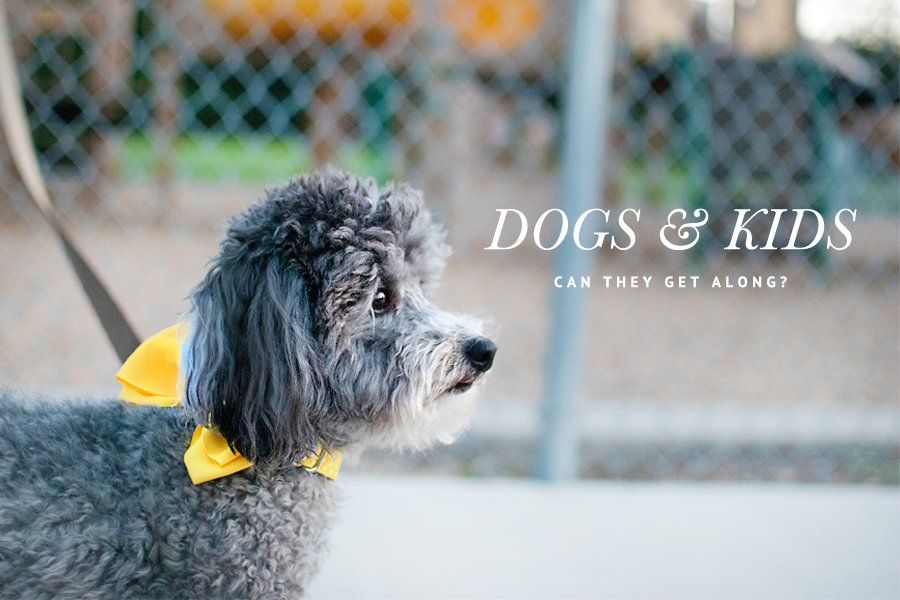
The Yellow Dog Project, an international movement, uses a yellow ribbon on a collar or leash to say a dog needs space, perhaps from fear, training, illness or age. It does not mark a dog as aggressive. Most children do not know the signal, and a bow can even draw admirers closer, so pair it with a leash sleeve reading "I need space" and a friendly word to parents.
How Kids Should Approach a Dog
Children learn dog manners best through a few simple rules, repeated often. These illustrated guides by veterinary behaviorist Dr. Sophia Yin make the lessons easy to picture.


Illustrations: Dr. Sophia Yin, DVM, MS
Dog Safety Rules for Children
- Ask the owner first, and accept a no without fuss
- Never approach a dog who is alone, tied up or behind a fence
- Let the dog come over, and stop if they walk away
- Pet the chest or side gently, not the top of the head
- Skip hugs and kisses, even with the family dog
- Leave dogs alone while they eat, sleep or chew
What Kids Should Do if a Dog Runs Up
Teach children to "be a tree": stand still, fold their arms in, look at their feet and stay quiet until the dog loses interest. Running and screaming can set off a chase, while stillness is boring to most dogs.
Supervising a Dog and Child at Home
Even the most patient dog should never be left alone with a young child. Supervision means being close enough to step in. Give your dog a bed or crate the kids know is off limits, a retreat for when play gets loud.
When to Call a Dog Trainer or Your Vet
Ask for help if your dog growls, snaps or lunges at children, or if reactions are growing. Book a vet check to rule out pain, then find a force-free trainer or veterinary behaviorist who works with families.
With patience on both sides, most dogs and kids learn to share a home happily. For dog-mad little ones, these children's books about dogs are a lovely way to practice kindness.
The American Veterinary Medical Association's guide to preventing dog bites notes that about half of bite victims are children, so supervise every visit, however well behaved both seem.
Related Reading


Share a thought, ask a question, or tell us about your own dog. We read every comment.
While I’m pretty chilled with kids, it continually surprises me the people and parents we come across that show no respect for dogs space. Please… Just teach the kids to respect us dogs. Ask permission and don’t rush up to our faces.
To answer your question, I think kids and dogs can get along really good. I’ve recently read about a study which says that pets can help develop cleverness and sense for responsibilities… So we are raising our two kids with Ben, a lovely Beagle and the only problem we have with other kids/people is that he is so cute that they just stop by next to our fence and feed him what is actually not really ok for me because at first, he would eat (unfortunately) all and we can’t control when is that happening and with what, but mainly because it’s dangerous to just come and feed an unknown dog… Like last week, an older lady came with a small girl and when I asked them what are they doing, their answer was that they came to give some food to him. I kindly asked them to stop feeding him but I just cannot control everyone… Besides that, he has really no problem with kids, I just feel like strangers just shouldn’t act like this…
What a fabulous article!
Growing up in an adult only household, Soda really only ever spent time with adults – who unless they’d had a few cocktails – generally knew how to approach her respectfully and knew when she wanted space.
As Soda is a working dog breed, little toddlers to her seem to resemble sheep and if I let her in that situation she would round them up! As a result I’m very careful about Soda being with children.
The funny thing is so many parents just let their kids run up to dogs like Soda because they seem fluffy and cute. Education in key, and this article is a great step in that direction – thanks Rachael!
My dog can be reactive towards other dogs, so I recently took her to see a dog trainer. The trainer told me about the Yellow Dog Project and recommended I place a yellow ribbon on her leash; my initial reaction was, “Well, that’s a good idea, but no one is going to know what it means.” She said, “Then tell them. The Yellow Dog Project won’t get the attention it needs unless we help spread the word.”
I do agree with her response, and I have been able to inform a few people about the purpose of the yellow ribbon. However, the vests and leash sleeves are easier to understand immediately. Until the yellow ribbon becomes a bigger deal, I may have to switch to a leash sleeve.
I totally agree with you. Parents must teach they kids! My three dogs are rescues and especially one of them doesn’t like kids at all. He tries to chase them, he’s a schnauzer, maybe the breed has something to do with it, or the fact he’s a rescue. I do the same thing Hanna above does: “pet this one instead”.
My dog, Zoe, has always had issues with kids and unfamiliar dogs due to our lack of socializing her early plus her nervous nature. Recently, Zoe was diagnosed with lymphoma and has not been doing well at all. As to not cause her any more stress I decided to find a way to keep strangers away. There are a few shops on Etsy that sell a type of sleeve that can go on the dogs leash in many colors and with many sayings. I got an obnoxiously bright yellow one that reads “I NEED SPACE” and so far it is doing the job. I love the idea of the yellow ribbon project but until it is well known I had to find something more glaringly obvious. Thank you for bringing more attention to this!
While our pooch doesn’t have any serious issues with people, mostly dogs, we have had issues similar to this. After a couple minor incidents (no injuries!), we’ve realized WE need to speak for Edi. WE need to make sure that WE intervene on his behalf and make sure WE’RE setting him up for success!
We got a “Please Give Me Space” vest for Edison to wear while we’re out and about and it’s helped (a bit – he’s got such a smooshable face!). Here: https://www.etsy.com/listing/167352345/jacket-vest-for-dogs-working-on-issues?ref=shop_home_active_8
We also are lucky to have a rockstar dog who is great with everything – so we often use her as a buffer for Ed: “here, small child, pet this one instead!”