


Sheepadoodle Coat and Care
 Dog Breeds

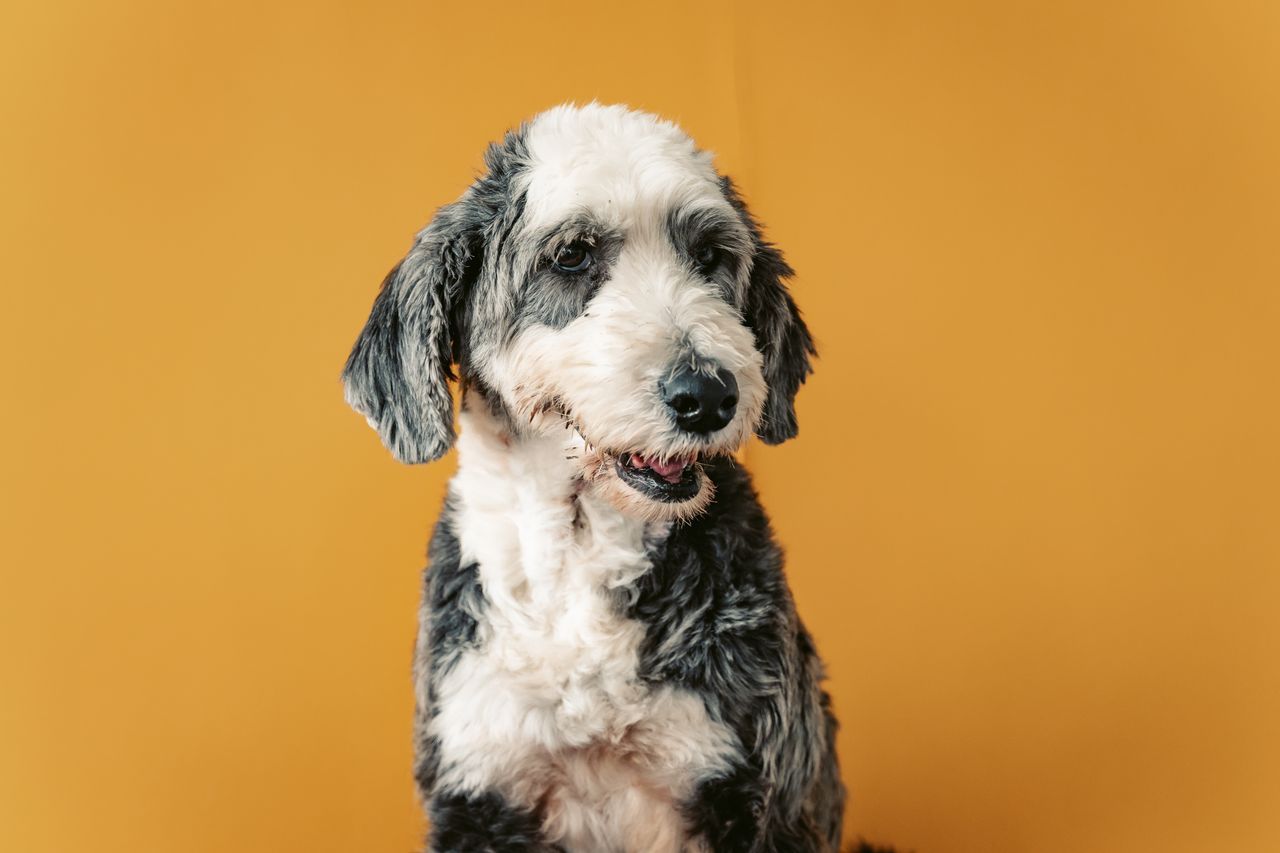
The puppy in the litter photo is black and white. The dog who turns up at eighteen months is often gray and white, and most families are never told that is coming.
It is the most common surprise about this cross. A sheepadoodle is a big, clever dog with a herding brain and a coat that asks for real work every week. Plenty of people fall for the shaggy face without asking what the grooming costs in time, and demand has run well ahead of careful breeding, much as it did with the oodles on the list of the most popular dog breeds in Australia.
What Is a Sheepadoodle?
A sheepadoodle is a cross between an Old English Sheepdog and a Poodle. A standard usually stands about 16 to 22 inches at the shoulder and weighs roughly 65 to 85 pounds, with miniatures around 25 to 45 pounds. The coat is thick and wavy to curly, sheds lightly, and mats quickly without brushing. Most are born black and white and fade toward gray as they mature, and lifespan runs about 10 to 15 years.
Old English Sheepdog and Poodle, Side by Side
Both parents worked for a living, which explains this dog better than its name does. The Old English Sheepdog drove cattle to market, built heavy and shaggy for English weather, and usually lives 10 to 12 years. A full grown standard cross lands squarely among big dog breeds.
The Poodle side was a water retriever, bringing the curl, the lighter shedding and most of the brainpower. It sits near the top of the smartest dog breeds, which cuts both ways: a bored sheepadoodle teaches itself things you did not want it to know.
No registry recognizes the cross, so there is no standard to measure a puppy against. This guide to mixed breed and designer dogs explains where it sits.
How It Compares With a Bernedoodle
Families weighing a big doodle usually look at both. A Bernedoodle swaps the Old English Sheepdog for a Bernese Mountain Dog and tends to be calmer, while the sheepadoodle is busier and far more likely to herd. Coat upkeep is heavy either way. If the real choice is between the retriever doodles, this comparison of the Labradoodle and the Goldendoodle covers that pair.
Neither is a beginner dog, whatever a breeder says, and a first-time owner is better served by this list of beginner-friendly breeds.
How Big Do Sheepadoodles Get, Mini to Standard
Size follows the Poodle parent, not the Sheepdog, so one cross name covers dogs that differ by 50 pounds.
Mini, Micro and Standard Weights
- Standard, from a Standard Poodle: roughly 16 to 22 inches and 65 to 85 pounds, sometimes more. This is what gets advertised as a giant sheepadoodle
- Mini or miniature, from a Miniature Poodle: roughly 15 to 20 inches and 25 to 45 pounds
- Toy crosses, from a Toy Poodle: smaller again, and the least predictable
- Micro, teacup and micro mini: seller labels, not size classes. No standard sits behind them, and the same word covers very different dogs
A mini still has the herding brain and the high-maintenance coat, so it is a smaller commitment in floor space only. Minis manage in the best apartment dogs territory when the walks are real, but a standard wants a yard.
When a Puppy Reaches Full Grown Height
Standards usually finish growing between twelve and sixteen months, minis by eleven to thirteen. Most of it happens inside the first year with a puppy, when growing joints are worth protecting, so save running and long hikes for later.
Black, White and Merle Coat Colors
Black and white is the classic pairing, usually a dark saddle or head with a white collar and legs. Solid black, white, gray, blue, cream, brown and red all turn up, and parti patterns are common. A golden sheepadoodle is real, though the warmer shades arrive through a Poodle parent carrying red or apricot.
The Graying Gene Both Parent Breeds Carry
This is the part worth reading twice. Progressive graying is dominant, so one copy from either parent is enough, and both the Old English Sheepdog and the Poodle carry it commonly. A puppy born black generally does not stay black. Over roughly one to three years the coat clears toward blue or silver, usually starting at the face and feet.
The change is gradual, because the gene reduces pigment in new hair rather than bleaching hair already grown. It touches only the dark pigment, so black clears to gray and brown to a milky coffee shade, while cream, apricot and red stay much as they are. No reliable DNA test exists, so the honest answer from a breeder is to look at the adult parents. Curl travels similarly, and this guide to curly haired dogs explains how that gene behaves.
What Merle Means in This Cross
Merle does not come from the Old English Sheepdog, so a merle sheepadoodle inherited it from a merle Poodle or a third breed. Two merle parents must never be bred together, because double merle puppies carry a high risk of deafness and eye defects. The pale eyes that often come with the pattern are covered in this piece on blue eyed dogs.
Grooming, Haircuts and Keeping Mats Out

This coat grows continuously, like a Poodle's, and carries much of an Old English Sheepdog's bulk. It never reaches a natural length and stops, so left alone for a fortnight it mats, and mats pull at the skin.
Brushing Down to the Skin, Not Over It
Brush most days, in sections, lifting the coat and working outward from the skin. Surface brushing leaves a mat building underneath where nothing shows. The trouble spots are behind the ears, under the collar, in the armpits and along the back legs. A slicker brush and a metal comb are the whole kit, and the comb is the test: if it snags, there is a mat. This roundup of the best dog brushes covers which suit a thick wavy coat.
Haircut Styles That Cut the Work Down
A professional groom every six to eight weeks is realistic, and the clip changes how much brushing it takes in between. A teddy bear or puppy clip keeps one short, even length all over and is easiest to live with. A summer or lamb clip goes shorter on the body while leaving the legs and head fuller. Between visits, the eyes, paw pads and sanitary area need tidying.
Bathing, Drying and How Much It Sheds
Bathe every four to six weeks, combing every tangle out first, because wet mats tighten and set hard. This guide to bathing a dog at home walks through the order. Dry right down to the skin afterward, since a damp undercoat is where hot spots start.
Expect some shedding: the Poodle side lowers it, the Sheepdog side raises it, and littermates differ. Low shedding is not hypoallergenic either, since the proteins people react to sit in dander and saliva. These pet hair remover tools handle the rest.
Temperament, Herding Instinct and Life at Home
Warm, goofy, and more attached than people expect. A sheepadoodle wants to be in the room, leans on legs, and barks at the door without much intention of following through. The Sheepdog side brings a cheerful stubborn streak, and harsh correction gets nowhere.
Are Sheepadoodles Good Family Dogs?
Usually, and the size works in their favor with older children who can handle a sturdy dog. Most are sociable with other dogs and fine with cats raised alongside them. The breeds that cope best with a noisy household are in this list of the best family dogs.
Heel Nipping and the Herding Problem
This is the behavior nobody warns about. A dog bred to move livestock will try to move whatever is moving, and in a house that means running children. It looks like circling, blocking a doorway, and a nip at the back of the ankle. That is herding rather than aggression, but it still hurts and still frightens a four-year-old.
It is manageable, and much easier managed early. Redirect onto a toy before the circling starts, teach a settle, and give the instinct a legal outlet with flirt pole play. This guide to dog breeds for kids is worth reading before a family with toddlers commits.
Exercise, Enrichment and Hours Alone
Plan on an hour a day for an adult, split between walking and something that uses the brain. Sniffing and problem solving tire this dog faster than distance does, so scatter feeding, a snuffle mat and these boredom busters for dogs all count toward the total.
They bond hard, and a long working day suits them badly. Pacing, barking and shredding follow. Build time alone gradually from the first week. Both parent breeds appear in this piece on dog breeds prone to anxiety.
Lifespan and the Health Tests to Ask About
Expect 10 to 15 years, with the biggest dogs at the lower end, since size shortens lifespan across every breed. Hybrid vigor is no substitute for testing.
Bloat Risk in a Deep Chested Dog
Large, deep chested dogs are the group most affected by bloat, where the stomach fills with gas and can twist, and a standard sheepadoodle sits right in that profile. Eating fast, one big meal a day and exercise close to a meal all raise the risk.
What an owner sees is restlessness, swelling behind the ribs, fast shallow breathing, drooling, and repeated retching that brings nothing up. That is an emergency, and roughly a quarter to a third of affected dogs do not survive. Feed smaller meals and use a slow feeder. The Merck Veterinary Manual's owner guide to stomach and intestinal disorders in dogs covers treatment.
Inherited Conditions to Ask a Breeder About
Ask for results on both parents, in writing, covering:
- Hip and elbow scores, which matter more in a heavy, fast-growing dog
- Eye certification, for cataracts and progressive retinal atrophy, on both sides of the family
- BAER hearing testing, since congenital deafness runs in the Old English Sheepdog
- Addison's disease and sebaceous adenitis, both from the Poodle side
- Von Willebrand disease, a bleeding disorder to know about before any surgery
Puppy Training and What to Ask a Breeder
Training is the easy part, and skipping it is how a 75-pound dog becomes a problem. Handle the puppy daily from the first week, ears, paws and belly, so grooming is never a fight. Drill recall before the adolescent deafness arrives around seven months. Jumping up, mouthing and leash pulling all answer to positive reinforcement training.
Before choosing a litter, ask which Poodle is in the cross and what both parents weigh. Meet the adult parents, partly for size and partly because their coat color shows where the puppy's is heading. Be wary of hypoallergenic promises, rare color premiums, teacup labels, and anyone selling three crosses at once. Plenty of these dogs reach rescue at eighteen months, so breed rescues deserve a look first.
Related Reading


Share a thought, ask a question, or tell us about your own dog. We read every comment.