


Lhasa Apso: The Tibetan Watchdog
 Dog Breeds

Most people meet the Lhasa Apso in photographs first. Coat parted down the spine, sweeping the floor, looking like it has never once chased a leaf. The dog that actually moves in is usually clipped short, posted near the front door, satisfied that the delivery driver has been dealt with. Both are the same breed. The second is why this little Tibetan dog suits some households beautifully and wears others out.
Bred as an indoor sentinel in Tibetan monasteries and homes, the Lhasa raised the alarm while bigger dogs guarded the gates outside. That job is still in there: the bark, the careful assessment of visitors, the deep loyalty to its own people. It also explains the constant mix-ups at the groomer, since its closest lookalike gets its own side-by-side treatment in this comparison of the Lhasa Apso and the Shih Tzu.
Breed Snapshot: Height, Weight and Life Span
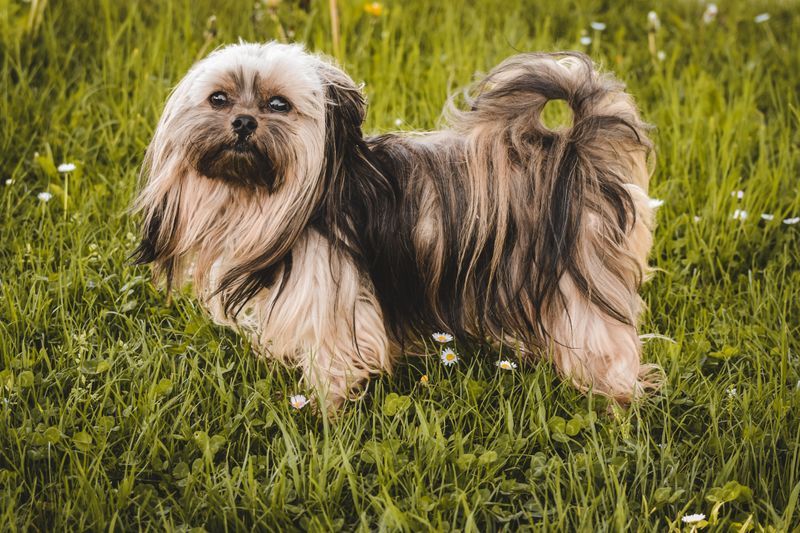
The Lhasa Apso is a small Tibetan breed standing about 10 to 11 inches at the shoulder and weighing roughly 12 to 18 pounds, with a long, hard double coat and a life span of around 12 to 15 years. It was bred as an indoor watchdog, so it is alert, confident and reserved with strangers while being affectionate and often very funny with its own family. The coat grows continuously and needs brushing every other day, or a short clip every six to eight weeks instead. Shedding is lighter than average, though no dog is truly hypoallergenic.
Full Grown Height and Weight
- Height: about 10 to 11 inches at the shoulder, with females usually a shade smaller
- Weight: roughly 12 to 18 pounds, with most adults landing in the mid-teens
- Build: longer than tall, surprisingly solid under all that hair
- Full grown: close to adult height by around ten months, filling out through to about eighteen months
- Muzzle: around an inch and a half, roughly a third of the head's length
- Tail: carried up over the back, often finishing in a small kink at the tip
Pick one up and the weight is a surprise. There is a compact, well-muscled dog under the coat, which is why the breed holds its own on a proper walk instead of needing carrying home. No yard required either, which is why dogs this size turn up so often among the best dog breeds for apartments.
How Long These Dogs Live
Twelve to fifteen years is the usual range, and plenty of Lhasas go past it. Small breeds generally outlive big ones, and a large UK study of more than half a million dogs found that small dogs with longer muzzles came out at the top of the life expectancy tables, which puts this breed in good company on both counts.
A long life is lovely in theory and expensive in practice. Fifteen years means two or three distinct life stages, and the senior years arrive quietly. To place a dog at a given age, this dog age calculator in human years converts by size rather than the flat multiply-by-seven rule.
Tibetan Monastery Origins
The name pairs Lhasa, the holy city of Tibet, with a Tibetan word usually translated as bearded. It is an accurate description. These dogs lived inside monasteries and the homes of Tibetan nobility, where the job was to notice things and say so, while mastiffs handled anything that got through the gate. The breed reached the West late in a very long history, and arrived with that watchful streak intact.
Temperament, Personality and Barking
This is the part worth reading twice before committing. Lhasa Apso temperament is not the uncomplicated sweetness people expect from a small fluffy dog, and that is the point of the breed rather than a flaw in it. It is also not the easygoing nature that makes a breed one of the best dogs for first-time owners.
Why the Barking Starts at the Front Door
A Lhasa barks because barking was the job. Expect a sharp, carrying alert at the doorbell, at footsteps in the hall, at a car door closing two houses down. The bark is bigger than the dog, and in an apartment it carries through shared walls, which is what new owners underestimate most. Training and some management around the door help. A Lhasa that never announces anything is the unusual one.
Living With Children and Other Pets
Lhasas are loyal and playful at home and generally fine with children who know how to behave around a small dog. They have little patience for being grabbed, dressed up or carried about by someone who has not asked, so older, gentler kids are the better match, and the breed rarely shows up on shortlists of the best dog breeds for kids for exactly that reason. With other dogs and with cats they usually settle well when introductions happen early and nobody forces the issue.
Independence and Hours Spent Alone
Here the breed earns its keep. A Lhasa is genuinely self-possessed and does not fall apart the moment the house empties, which is rarer in small companion breeds than people think. This look at anxious dog breeds names the Lhasa among those that tend to cope better with time by themselves. Independence runs both ways: the same dog decides for itself whether your recall cue is worth answering.
Coat Colors, Shedding and Allergy Claims
The coat is the whole reason people fall for this breed, and the whole reason some of them give up on it. It is worth understanding what it actually does.
Gold, Black and Parti-Color Coats
The breed standard allows golden, sandy and honey, dark grizzle, slate and smoke, parti-color, black, white and brown. Dark tips on the ears and the beard are prized. Black and white parti-colors and solid blacks are both entirely standard, so a reputable breeder will never charge a premium for a color or call one rare. Puppy coats change too. A dark puppy often lightens considerably, and the gold adult you were promised may look almost gray at twelve weeks.
Do These Dogs Shed?
Less than most. The Lhasa has a hard, heavy top coat over a dense undercoat, and the hair grows continuously rather than cycling out in seasonal drifts, so shedding is lower than average. What comes loose mostly stays in the coat instead of landing on the sofa. That sounds like a win until you realize what it means in practice: hair that does not fall out has to be brushed out, or it mats against the skin. A pin brush and a metal comb are the two tools that do it, and this guide to the best dog brush for every coat type explains which one reaches which layer.
Hypoallergenic Claims and Dog Allergies
Low shedding gets marketed as hypoallergenic, and the two are not the same thing. The proteins most people react to live in dander and saliva, not in hair length, so a lightly shedding Lhasa still produces them. What it does help with is how much allergen gets spread around a room. Anyone with a diagnosed dog allergy should spend real time with the breed first, ideally with an adult rather than a puppy.
Brushing, Baths and Haircuts for a Full Coat
Grooming is not an optional extra with this breed. It is the daily tax, and deciding how to pay it is the first real choice a new owner makes.
Daily Brushing and Matted Hair
A full-length coat needs brushing every other day at minimum, and most owners find daily easier than catching up. The work has to go right down to the skin. Surface brushing leaves a felted layer underneath that looks perfectly fine until a groomer parts it, and by then clipping off is usually the only humane fix. Armpits, behind the ears and the hair around the rear end are where mats start.
Brush before bath day, never after. Water tightens every tangle it touches, and a mat that went into the bath loose comes out solid. This step-by-step guide to bathing a dog at home covers the rinse and the dry, which matter more on a dense double coat.
Short Hair Cuts: Puppy Clip, Teddy Bear and Summer Trims
Most pet Lhasas live in short hair. A puppy clip takes the body down to an even inch or two and cuts daily brushing to a few minutes. A teddy bear trim keeps the face and legs rounder while the body stays short, which is the look most people picture when they ask for a short cut. A summer trim goes shorter still, though the coat insulates against heat as well as cold, so shaving to the skin is not the kindness it sounds like. Either way, plan on a groomer every six to eight weeks, and use the dog grooming directory to find coat-care products between visits.
Topknots and Keeping Hair Out of the Eyes
Hair grows straight down over this breed's eyes, and left alone it scratches the surface of the eye itself. A topknot is the traditional answer, tied with a soft band and never pulled tight. A short fringe trim is the practical one. Check the eye corners while you are up there, since tear staining builds quickly on a pale muzzle, and wipe with plain warm water.
Common Health Problems and Vet Checks
Lhasas are tough little dogs, with a handful of conditions that justify attention.
Eye Conditions From Cherry Eye to Dry Eye
Eyes are the headline concern. Cherry eye, where the gland of the third eyelid prolapses and sits in the inner corner like a small pink bead, needs surgical repair rather than leaving. Dry eye produces a thick discharge and a dull, irritated surface, and is treatable once diagnosed. Progressive retinal atrophy, which gradually takes sight, also occurs, so ask whether the parents have had their eyes examined. Squinting, pawing at a face or a cloudy patch is a same-week call to the vet.
Kidney Disease in the Breed
Renal dysplasia is the one worth knowing by name. It is a developmental kidney disease, and the Merck Veterinary Manual lists the Lhasa Apso among the breeds in which it has been diagnosed. Being developmental, signs tend to appear in young dogs rather than old ones. Drinking and urinating noticeably more in a dog under two deserves a vet visit, and simple blood and urine tests catch kidney changes before a dog looks unwell.
Knees, Teeth and Keeping Weight Down
Patellar luxation, the slipping kneecap common across small breeds, shows up as a skip in the back leg mid-trot that sorts itself out within a stride or two. Mild cases often need nothing beyond keeping the dog lean. Crowded teeth in a small jaw make dental disease the other near-certainty, and it starts earlier than owners expect, so daily brushing belongs in the routine from puppyhood. This guide to dog dental care at home covers the technique and the chews that genuinely help. Weight matters on every count: a few extra pounds on a fifteen-pound frame strain the knees.
Training Tips and Daily Exercise Needs
Nobody should buy this breed expecting an eager-to-please student. Lhasas are clever and learn fast. They just want to know what is in it for them.
House-Training and Short Reward Sessions
Housetraining is the honest sticking point, and it takes longer with this breed than with many. A small bladder plus a dog that would rather not go out in the rain is a slow combination, so a fixed schedule, a sheltered spot outside and real rewards all help. Keep sessions to five minutes. Food and play work, repetition does not, and anything that feels like being bossed around gets a flat refusal from a dog bred to make its own decisions about who came in.
Walks, Sniffing and Indoor Play
Two short walks a day and some indoor play covers a Lhasa comfortably. Let the walks be slow and sniffy rather than brisk, since this breed gets more from twenty minutes of reading the hedge than from a route march. Puzzle feeders and hide-the-treat games suit that problem-solving streak, and they are what to reach for when a full coat and bad weather make outside unappealing.
Bringing Home a Puppy or Rescue Dog
Lhasa Apso puppies are small, confident and extremely persuasive, which is precisely why the decision deserves slowing down.
What to Ask a Responsible Breeder
Puppy costs vary too much by country and breeder to be useful as a number, so judge what the cost covers instead. A good breeder will have had the parents' eyes examined, can talk specifically about kidney health in the line rather than vaguely about healthy stock, and will ask you as many questions as you ask them. Meet the mother. Ask what the puppies have already met, since a confident, well-socialized Lhasa puppy is far easier to live with than a sheltered one. Then budget honestly for grooming and dental care across the next decade and a half.
Rescue and Adoption Routes
Plenty of Lhasas need rehoming, often surrendered by owners who did not plan for the coat. Breed-specific rescues and small-dog rescues are the place to start, and an adult arrives with its temperament already visible, which removes most of the guesswork. Many arrive matted and get clipped off on intake, so the dog you meet may look nothing like the breed photographs. Once one is home and settling in, the pleasant part begins, and these 508 dog names to say with love are a good place to start arguing with your family about it.
Popular Crosses: Lhasapoo, Shih Apso and Others
The breed crosses often, and four names come up repeatedly: the Lhasapoo with a Poodle, the Shih Apso with a Shih Tzu, the Lha-Cocker with a Cocker Spaniel, and the Lhatese with a Maltese. Crossing does not reliably produce an easier coat, and it does not cancel the eye and kidney issues on the Lhasa side, so ask a cross breeder for the same health testing you would expect from a purebred one. For what mixed heritage does and does not predict, this guide to what a mutt actually is is a sensible place to start.
For a vet-written overview of the breed's care needs alongside this one, the VCA Animal Hospitals breed page for the Lhasa Apso is a reliable second opinion to take to a breeder visit.
A Lhasa Apso asks for a brush in your hand most days, patience with the doorbell, and respect for the fact that it has opinions. Give it those and you get fifteen-odd years of a small, bold, funny dog that decided long ago that watching over its people was the job, and has never seen a reason to stop.
Related Reading


Share a thought, ask a question, or tell us about your own dog. We read every comment.