


Spoodle Dog Breed Guide
 Dog Breeds

Ask an Australian what a spoodle is and the answer comes back in four words: Cocker Spaniel, crossed with Poodle. Ask almost anywhere else and you get a pause, then a guess about a soup spoon. Same dog, different passport, and the name is the only confusing part.
Underneath it sits one of the easier small crosses to live with and one of the harder ones to groom. These are busy, affectionate dogs that want to be in the room with you, and they come with a coat and a pair of ears that need a real routine. The cross has sat near the top of the most popular dog breeds in Australia for years, which means plenty are bred carelessly.
What Is a Spoodle?
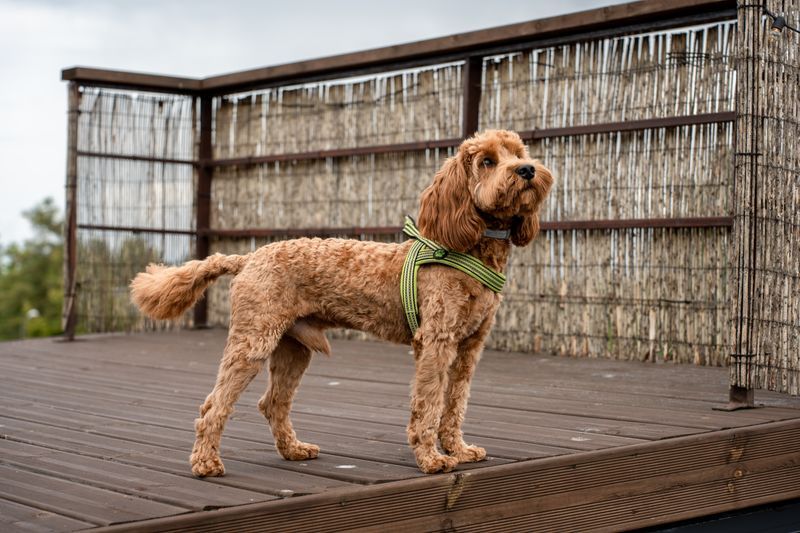
A spoodle is a cross between a Cocker Spaniel and a Poodle, and it is the name used in Australia and New Zealand. Most stand around 14 to 15 inches at the shoulder and weigh roughly 20 to 24 pounds, though toy and standard Poodle crosses fall well either side of that. The coat may be straight, wavy or curly, sheds lightly, and needs brushing several times a week. Lifespan is usually 10 to 15 years.
Both sides of the family were bred to work. The Cocker Spaniel flushed and retrieved birds, the Poodle retrieved them out of cold water, and neither was bred to sit still. That shows up as a dog who follows you from kitchen to laundry and back, and who belongs with the dog breeds that suit active people more than most owners expect.
What the Name Actually Means
It is a portmanteau, spaniel plus poodle, and it has no official standing anywhere. No registry recognizes the spoodle as a breed, because it is a deliberate cross of two purebred parents rather than a breed in its own right. That puts it in the same category as the Cavoodle and the Puggle, which this guide to mixed breed and designer dogs explains in more detail.
Is a Cockapoo the Same as a Spoodle?
Yes. These are the same cross with two names, split almost entirely along geography. Cockapoo is standard in the United States and common in the UK. Spoodle is standard in Australia and New Zealand. You will also see cocker poo, cockerpoo and spoodle dog on the same litter listing.
The muddle is normal in this corner of the dog world. The Goldendoodle goes by Groodle in Australia, and the differences between the retriever crosses are covered in this comparison of the Labradoodle and the Goldendoodle.
Where the Brittany Spoodle Fits In
This one trips people up, and almost nobody explains it. A Brittany Spoodle is not a Cocker cross at all. It is a Brittany crossed with a Poodle, sold mostly by American breeders, who also call it a Brittany Doodle or a Brittnepoo. A mini Brittany Spoodle is the same cross with a smaller Poodle parent.
The Brittany is a leggier, faster gundog, so expect a taller dog with more stamina. Both crosses lean on the Poodle for brains, a breed near the top of the smartest dog breeds. If a breeder uses the two terms interchangeably, ask to see the parents.
How Big Do Spoodles Get?

Size follows the Poodle parent, not the Cocker, so a litter sold as spoodles might come from a Toy, a Miniature or a Standard. That choice also decides the kind of home that suits: a toy or mini cross sits comfortably among the best apartment dogs, while a standard cross wants a yard and a long walk.
Toy, Mini and Standard Weights
- Toy Poodle cross: roughly 9 to 14 inches tall and 9 to 15 pounds
- Miniature Poodle cross: roughly 14 to 16 inches tall and 18 to 26 pounds, the most common spoodle by far
- Standard Poodle cross: roughly 17 to 20 inches tall and 35 to 55 pounds
Most reach adult height by nine to twelve months and finish filling out through the chest by eighteen, so the first year with a puppy covers most of the growing. Adult size is least predictable in the toy crosses, where one litter can throw puppies at both ends of the range.
Coat Colors and How Much Curl to Expect
Cream, apricot, gold, black, chocolate and black-and-white parti are all common, and roan and merle turn up where the Cocker side carries them. Two merle parents should never be bred together, because double merle puppies risk deafness and eye defects.
Curl is the part people guess wrong. A first-generation spoodle can come out with a Cocker's silky, wavy coat, a Poodle's tight curl, or anything between, and littermates often differ. Straighter coats shed more. Curlier coats shed less but mat faster, and this guide to curly haired dogs explains how the curl gene behaves across breeds.
Low shedding is not hypoallergenic. The proteins people react to sit in dander and saliva, which every dog produces. Even the curliest spoodle leaves hair behind, and these pet hair remover tools deal with what lands on the sofa.
Grooming a Spoodle Coat Week by Week
This is the part new owners underestimate. The coat grows continuously, like a Poodle's, so it never reaches a natural length and stops. Left alone it mats, and mats pull at the skin.
Brushing and Preventing Mats
Brush three or four times a week at minimum, daily if the coat is curly, and brush down to the skin rather than over the top of it. Surface brushing leaves a mat forming underneath where you cannot see it. Check behind the ears, under the collar, in the armpits and down the back of the legs.
A slicker brush followed by a metal comb is the whole kit. If the comb snags, there is a mat. This roundup of the best dog brushes covers both tools and which coat types they suit.
Bathing, Drying and Face Trims
Most need a bath every four to six weeks, and every tangle must come out first, because wet mats tighten and set. This guide to bathing a dog at home walks through the order of operations.
Dry the coat right down to the skin afterward. A damp undercoat against warm skin is how hot spots start, and scratching that carries on for days is worth checking against these home remedies for itchy skin.
Plan on a professional groom every six to eight weeks. Between visits, the hair around the eyes, the paw pads and the sanitary area needs tidying, and a shorter puppy clip makes that easier.
Ear Care Comes First With This Cross
If you take one thing from this guide, take this. Long drop ears, a hairy canal and a dog who loves water add up to the most predictable health problem a Cocker Poodle cross has. The canal stays warm and poorly ventilated, which is what yeast and bacteria want.
The Weekly Ear Check
Lift both flaps once a week and look. Healthy ears are pale pink, dry and close to odorless. Head shaking, scratching at one ear, a sour smell, dark waxy discharge, redness or swelling all mean a vet visit rather than a wait-and-see. A dog rubbing an ear along the carpet says the same thing.
Dry the ears after every bath and every swim, keep water out during washes, and ask your groomer to trim the hair at the canal opening. These steps for cleaning dog ears safely at home cover what to use and how far in to go, which is not far.
Inherited Conditions to Ask a Breeder About
Both parent breeds bring their own list, and a cross can inherit from either side. Hybrid vigor is no substitute for testing. Ask for results on both parents covering:
- Progressive retinal atrophy, specifically the prcd form, which both parent breeds carry and which has a simple DNA test
- Hip dysplasia scores, plus patellar luxation in the smaller crosses
- Eye certification for cataracts, common on both sides
- Familial nephropathy, a kidney condition on the Cocker side
- Von Willebrand disease, a bleeding disorder from the Poodle side
Temperament and Life at Home
Affectionate, bright, a little bit silly. Most greet visitors as friends, settle on a lap in the evening, and sulk visibly when the front door closes without them. The Cocker side brings a sensitive streak, so harsh handling lands hard.
Are Spoodles Good Family Dogs?
Generally, yes. Sturdy enough for family life without being big, fond of noise and company, and usually fine with other dogs and often with cats. Watch the small crosses around toddlers, since a 10-pound dog is easy to hurt by accident. The breeds that handle a busy house best are gathered in this list of the best family dogs.
Daily Exercise and Mental Work
Plan on about an hour a day for an adult, split between walking and play. Sniffing and searching tire this dog out faster than distance does. Scatter a handful of kibble in the grass and see what twenty minutes of nose work does.
Time Alone and the Velcro Dog Problem
They bond hard, and that is the trade-off for the affection. Long days alone suit them poorly, and barking, chewing and pacing follow. Build alone time gradually and keep departures boring. Both parent breeds appear in this piece on dog breeds prone to anxiety, worth reading before bringing one into a house that is empty all day.
Training a Spoodle Puppy

First Lessons and What Motivates Them
Clever, food-motivated and keen to please, which makes early training easy and bad habits quick to set. Keep sessions short and the treats small, and drill recall early, because the gundog nose will eventually win an argument with your voice. Practice handling in the first weeks too, ears and paws daily, so the grooming table is never a fight. Jumping up, mouthing and leash pulling are the classic puppy problems here, and all three respond to positive reinforcement training rather than correction.
Questions for a Spoodle Breeder
Ask which Poodle is in the cross and what both parents weigh. Ask for the health results above, in writing. Ask to meet the mother, see where the litter is kept, and hear what happens about socialization before eight weeks. Be wary of hypoallergenic guarantees, rare color premiums and anyone selling several crosses at once.
Plenty end up in rescue when the grooming or the anxiety catches a family off guard, so check breed-specific rescues first. The Merck Veterinary Manual's owner guide to ear infections and otitis externa in dogs is a useful read either way, given where most of this dog's vet visits come from.
A spoodle rewards an owner who brushes regularly, checks the ears without being reminded, and does not mind company in the bathroom. Get those right and you have a cheerful, clever, deeply attached dog for a decade or more.
Related Reading


Share a thought, ask a question, or tell us about your own dog. We read every comment.