
Quiz: How Smart Is Your Dog?

Prove once and for all if your pup is as smart as you think!
Copy: Serena Faber-Nelson
Photography: Sarah Dickerson
Ask any dog owner how smart are dogs and you’ll get a confident answer, usually involving a story about their own pup outwitting a locked gate or a treat jar.
But the science of dog cognition is more interesting than a single bragging point. Researchers who study animal behavior have found that dog intelligence is not one number at all.
It is a spread of different mental skills, and your dog can be brilliant at some while cheerfully clueless at others.


How Smart Are Dogs, Really?
Canine researcher Stanley Coren, a psychologist who has written extensively on the intelligence of dogs, has compared the mental ability of the average dog to that of a human toddler of roughly two to two and a half years old.
By his estimates the typical dog can learn around 165 words, while the brightest can pick up closer to 250.
Dogs can also handle simple counting and notice when a number doesn’t add up, like spotting that a third biscuit went missing from your pocket.
Coren’s framework splits dog intelligence into three broad types. There is instinctive intelligence, the job a breed was developed to do such as herding or retrieving.
There is adaptive intelligence, the problem-solving a dog works out from its own environment. And there is working and obedience intelligence, the formal learning we usually call training.
A dog can rank low in one type and high in another, which is exactly why the honest answer to how smart are dogs is always a profile rather than a single verdict.
What “Smart” Actually Means for a Dog
When scientists measure dog intelligence, they look at several separate abilities rather than one score. The big five are object permanence (knowing something still exists when it is hidden), memory, problem-solving, social cognition (reading human cues), and impulse control.
A scent hound might flunk a puzzle test and still be a genius at following your pointing finger across a room.
This matters because plenty of perfectly clever dogs get unfairly labeled as slow.
Independent breeds such as Huskies and Shibas often ignore problem-solving tasks they simply do not care about, which looks like failure but is closer to having an opinion.
The Signs of a Smart Dog You Can Spot at Home
You do not need a laboratory to notice the signs of a smart dog. Everyday behavior gives plenty away. Here are the clearest indicators that your dog is running a sharp little brain behind those eyes.
1. They Follow Your Gestures
This is the one dogs are secretly world-class at, often outperforming chimpanzees. If you point at an object and your dog looks where you are pointing rather than at your finger, that is genuine social intelligence.
Dogs evolved alongside humans for roughly 15,000 years, so reading our gestures is a real canine superpower. Strong gesture-reading is one of the most reliable signs of a smart dog across every breed.
2. They Solve Problems Instead of Giving Up
Drape a towel over a clever dog’s head and they work it off in seconds. Slide a treat under the couch and a smart dog quickly figures out that a paw reaches where a snout cannot.
Cracking a puzzle feeder, learning to open a cupboard, or working out how to escape a closed gate all point to the same persistent, creative reasoning.
3. They Remember Things You Have Not Practiced Lately
A dog with good memory recalls a command you have not drilled in months, recognizes a houseguest they have not seen in a long time, or reacts to a suitcase coming out because they remember what it means.
Remembering toy names, walk routes, and which cupboard hides the food all point the same direction.
4. They Look to You for Guidance
Many dogs have a high degree of social intelligence, and checking in with you is part of it.
A dog that glances at you when unsure, looks for your approval, or relies on you to read a new situation is showing exactly the kind of human-focused smarts dogs are famous for.
5. They Show Self-Control
Impulse control predicts a surprising amount about trainability. A dog that can hold a “wait” with a treat sitting right in front of them is showing real cognitive maturity, not just good manners.
6. They Try to Communicate
Going to the door when they need out, sitting by the bowl when hungry, or bringing a toy when they want to play are all deliberate attempts to get a message across.
A dog that has built its own little vocabulary of signals is using its brain to bridge the gap between species.
7. They Have Got You Wrapped Around Their Paw
Some of the clearest signs of a smart dog look a lot like mischief.
Knowing which family member caves for table scraps, or angling for a second dinner by pretending no one fed them, is not bad behavior so much as a dog who has figured out how to get what it wants.
Does Dog Intelligence Vary Across Breeds?
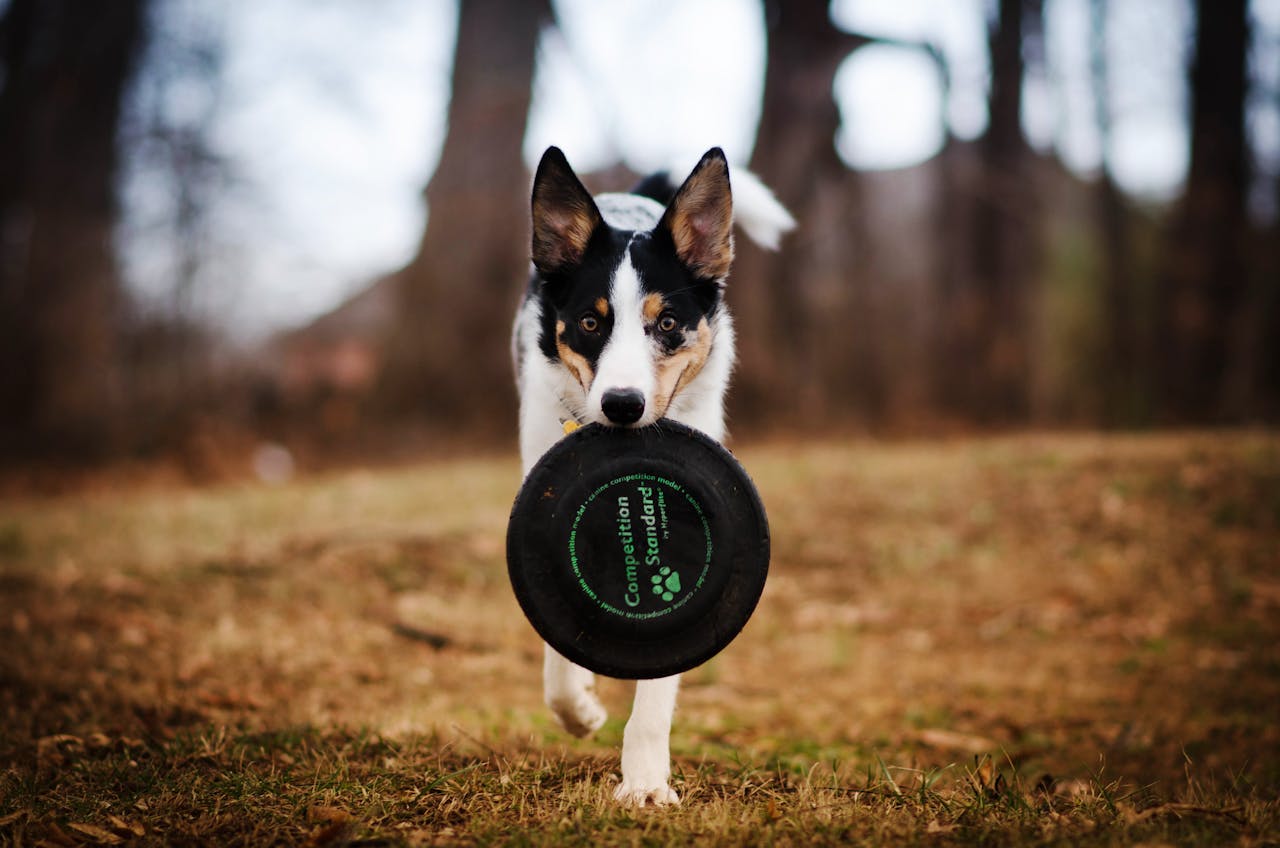
There is real variation between individuals, but some breeds are widely recognized for quick learning and problem-solving. Border Collies usually top the lists, alongside Poodles, Golden Retrievers, German Shepherds, and Australian Shepherds.
Many of these were bred for a clear job such as herding, retrieving, or guarding, which makes their working intelligence easy to see and measure.
Just remember that an absence from the famous lists does not mean a dog is dim. Scent hounds, independent breeds, and countless mixed-breed dogs are highly intelligent in ways that obedience-focused rankings simply do not capture.
The Good Dog IQ Test: 6 Tests You Can Run Today
There is no official canine IQ exam, but you can run a quick home test built around the same abilities researchers measure: object permanence, problem-solving, social cognition, memory, and impulse control.
Because dog cognition is not one number, this gives you a profile across those areas rather than a single score, which is the scientifically honest way to do it.
You’ll need: treats, 3 cups/towel, a blanket or towel, a couch, and ~15 minutes. Test when your dog is alert and a little hungry, in a quiet room.
1. Object Permanence (“Where’d it go?”)
Does your dog understand things still exist when hidden?
Let your dog watch you place a treat under one of 3 cups. Shuffle slowly (or don’t, for an easy version). Let them choose.
| Result | Points |
|---|---|
| Goes straight to correct cup | 3 |
| Finds it after checking one wrong cup | 2 |
| Random / needs a hint | 1 |
2. The Towel Test (Problem-Solving)
Classic from Stanley Coren’s dog intelligence work.
While your dog watches, gently drape a large towel or blanket over their head. Time how long it takes them to get free.
| Result | Points |
|---|---|
| Under 15 seconds | 3 |
| 15–30 seconds | 2 |
| Over 30 sec / gives up | 1 |
3. Pointing Comprehension (Social Cognition) ⭐
This is the one dogs are secretly world-class at — better than chimps.
Place two identical covered cups equal distance away, only one baited (rub a treat on both so smell doesn’t give it away). Without looking at the dog’s eyes, point at the correct cup. Repeat 3 times.
| Result | Points |
|---|---|
| Follows point 3/3 | 3 |
| Follows 2/3 | 2 |
| 0–1/3 (ignores you) | 1 |
4. The Treat-Under-Furniture Test (Reasoning)
Tool-use-ish problem solving.
Slide a treat under a couch — far enough that a paw works but a snout doesn’t.
| Result | Points |
|---|---|
| Uses paw quickly | 3 |
| Tries snout, then switches to paw | 2 |
| Only snout / gives up | 1 |
5. The Stare Test (Memory + Bonding)
Short-term memory.
Show your dog a treat, let them sniff it, then “hide” it under one of two towels while they watch. Walk them out of the room for 60 seconds. Bring them back.
| Result | Points |
|---|---|
| Goes right to correct towel | 3 |
| Searches, finds it | 2 |
| Forgot entirely | 1 |
6. The Patience Test (Impulse Control)
Self-control predicts a lot about trainability.
Put a treat on the floor and say “wait” (or just hold a calm hand up). Time how long before they take it.
| Result | Points |
|---|---|
| Waits 15+ seconds | 3 |
| Waits 5–15 sec | 2 |
| Instant gobble | 1 |
🏆 Scoring (out of 18)
| Score | Verdict |
|---|---|
| 16–18 | Canine Einstein — start teaching them to spell |
| 13–15 | Very Good Brain — sharp, trainable, a little smug |
| 9–12 | Wonderfully Average — exactly where most great dogs land |
| 6–8 | Beauty Over Brains — blissfully uncomplicated, loves you anyway |
Why a “Low Score” Usually Is Not Stupidity
If your dog bombs a test, do not panic. More often than not it means the dog was unmotivated (not hungry enough to bother), stubborn, or simply distracted. Some breeds problem-solve by waiting for you to fix things, which is arguably its own kind of smart.
Age and health matter too, since hearing loss, arthritis, and cognitive decline in seniors can all get in the way of a dog joining in.
Breed bias is real as well. Border Collies and Poodles tend to dominate problem-solving tasks, while scent hounds and independent breeds may “fail” challenges they have no interest in playing. The pointing or gesture test stays the fairest measure across different breeds.
Keeping Your Dog’s Mind Sharp
Whatever their score, every dog benefits from mental enrichment. Puzzle feeders, scent games, new walking routes, short positive training sessions, and activities like nose work or agility all keep boredom away and a brain engaged. A stimulated dog is usually a happier, better-behaved dog, regardless of where they land on any test.
The Honest Answer
So, how smart are dogs? Smart enough to read your intentions, remember your routines, solve small puzzles, and occasionally manipulate you into a second dinner.
The signs of a smart dog are all around you in daily life, from the way they follow your gaze to the patience they show at the food bowl. The fairest thing you can do is appreciate the specific kind of clever your dog happens to be, because there is no single scale that captures it.
Pretty Fluffy is the ultimate lifestyle destination for dog lovers. Discover the best designer dog brands and emerging small pet businesses, the latest dog accessories, healthy dog treat recipes, dog training tips and more. Thank you for being part of our dog-loving community!
Fluffy Editorial is our in-house team of writers and dog nerds. We research every topic carefully, talk to professionals when needed, and focus on sharing honest advice we’d follow with our own dogs.
Copy: Serena Faber-Nelson
Photography: Sarah Dickerson


-
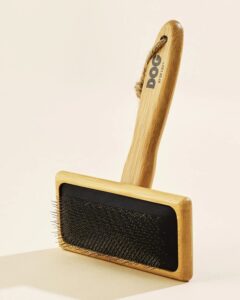
 DOG By Dr Lisa Dog Brush
lovely everyday brush for dog parents who want something gentle and easy to use.

-
DOG By Dr Lisa Dog Brush
lovely everyday brush for dog parents who want something gentle and easy to use.
We missed the giveaway!
We aren’t in Australia but the quiz was fun – Kirby the Dorkie is Lassie❤