


Rattan Dog Beds, Reviewed and Compared
 Dog Product Reviews
A woven basket bed is one of the few pieces of dog furniture that earns a spot in the living room instead of being tucked behind a sofa. That is the appeal, and also the hesitation: a rattan dog bed costs considerably more than a foam one, and the fair question is whether a woven frame holds up under an animal who sleeps on it nightly.
It holds up beautifully for some dogs and poorly for others, and the difference comes down to temperament far more than size. What follows covers how the material behaves, how to size and care for it, and a close look at the Ralf bed by Koko Collective, the handcrafted Australian option.
Is a Cane Dog Bed Worth the Investment?
A cane or rattan dog bed is worth the investment for a calm dog in a warm climate, where the open weave allows air to circulate and the frame outlasts several cushion replacements. It is a poor choice for heavy chewers, diggers, or dogs who have accidents, because natural weave cannot be waterproofed and is satisfying to gnaw. Frames typically last five years or more, against roughly twelve to eighteen months for a foam bed.

How Long a Woven Frame Lasts
The economics look different once the frame and cushion are considered separately. Foam compresses, loses loft and starts holding odor, which is why a foam bed is replaced whole. A woven frame does not compress at all: it takes the structural load while the cushion takes the wear, so the expensive part stays and the cheap part gets swapped. For how materials compare generally, this guide to choosing a dog bed works through the same trade-offs.
Breathability in a Warm Climate
Open weave is the functional argument, not just the aesthetic one. Foam insulates, which is lovely in winter and miserable in summer. A woven base lets air move underneath a sleeping dog, so heat dissipates instead of pooling. Thick-coated breeds and dogs who seek out tile floors settle onto one more readily than owners expect. The same logic drives these elevated dog beds, minus the furniture-grade look.
Sustainability of a Fast-Growing Palm
Rattan is a climbing palm that grows quickly across Southeast Asia and regrows after cutting, so harvesting it does not require clearing forest the way timber does. That matters in a category leaning heavily on polyester fill and synthetic covers with a short road to landfill. Local makers take a similar approach in other materials, and Australian made dog beds cover much the same design-led territory.
Cane, Wicker and Rattan Pet Beds: What the Names Mean
These three words get used interchangeably in product listings, which makes comparison shopping harder than it needs to be. Rattan is the raw material, a solid palm vine. Cane is the stripped outer bark of that vine, used for finer surface weave. Wicker is not a material at all but the weaving technique, and a wicker bed might be rattan, willow, bamboo or seagrass. So a cane dog bed and a rattan pet bed are usually the same object, while a wicker bed could be any of several materials at very different quality levels.

Natural Weave vs Synthetic PE Resin
Plenty of beds described as rattan are woven from PE resin over a steel frame. Synthetic weave is better outdoors, shrugging off rain and UV without splintering. What it lacks is the warmth and slight irregularity that makes natural rattan read as furniture rather than patio equipment. Indoors, natural weave is the better buy; on a covered verandah, synthetic is. Read the material description rather than the product name, which is the only reliable way to tell them apart.
Water Hyacinth and Seagrass Alternatives
Water hyacinth and seagrass turn up often at a lower price, weaving into handsome, chunkier shapes. Both are softer than rattan, and that is the catch: the fibers fray under claws and absorb moisture, so they suit a decorative corner better than a bed a large dog launches into nightly. Styled well they look wonderful, as these pet-friendly home tours show.
Koko Collective's Ralf Bed, Reviewed
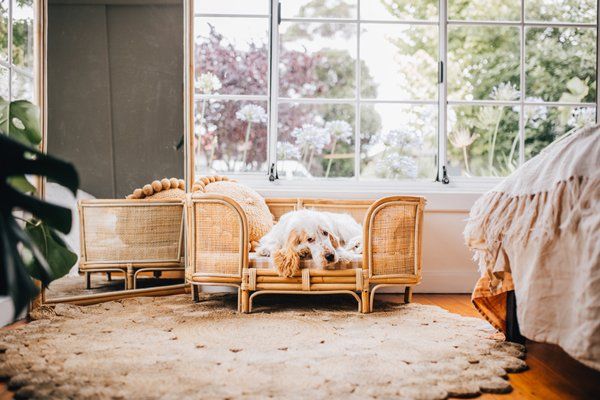
Koko Collective was founded by a sister duo focused on sustainable, ethically sourced homewares, and remains a women-led family business. Each bed is handcrafted by a family of artisans in Indonesia, small-batch production that shows in the finished object. The Ralf is the signature design: a round bed with a tight natural weave and a plush removable cushion.

Craftsmanship and Weave Quality
The weave is the thing to judge, and the Ralf's is tight and even the whole way round, with clean joins and no staples at the stress points. Loose weave is the tell of a machine-assembled bed, and it fails in a specific way: gaps catch claws, then widen. Nothing here rocks or flexes. It reads as furniture that happens to be dog-sized, which is the entire premise.

Cushion Comfort and Washability
The cushion insert is generously filled and covered in a soft fabric, and the round shape suits dogs who curl rather than sprawl. The cover comes off and goes in the machine, the feature that decides whether any dog bed survives real life. The frame wipes clean with a damp cloth. Dogs used to a firmer surface sometimes take a few nights to commit, so give it a week before judging.
Where to Buy in Australia
The range is sold directly through Koko Collective, with the Ralf alongside periodic additional styles and limited-edition cushion covers. Popular sizes sell out, so the mailing list is worth joining if the size you need shows as unavailable.
How to Choose a Luxury Woven Bed
Frame Construction and Finish
Look for a solid rattan or bamboo frame with tight, even weave and no visible staples or glue at the joins. Raw rattan splinters as it ages, so a sealed coating matters, and a good one preserves the natural look rather than adding gloss. The base should sit flat without rocking, and a solid ring base beats thin legs for any dog who arrives at speed.
Measuring Your Dog Correctly
Measure your dog lying in their natural sleeping position, nose to the base of the tail, and add at least 15cm. Check that against the bed's interior sleeping area rather than its external dimensions, which is where sizing mistakes happen, since the frame takes up real width. Aim for a cushion at least 8cm deep for a medium dog.
Caring for a Natural Weave
Maintenance is light but not optional. Vacuum between the weave with a brush attachment so hair and grit do not collect in the gaps and grind against the fibers. Wipe the frame with a barely damp cloth and let it dry fully, since sitting moisture encourages mildew. Keep it clear of radiators and heating vents, because dry heat makes rattan brittle.


Woven Beds vs Foam and Orthopedic Beds
| Woven Bed | Foam / Fabric Bed | Orthopedic Bed | |
|---|---|---|---|
| Lifespan | 5+ years (frame) | 12 to 18 months | 2 to 5 years |
| Breathability | Excellent | Moderate | Variable |
| Aesthetic | Timeless, homewares-grade | Functional, varied | Medical, utilitarian |
| Sustainability | High (natural material) | Low (synthetic fill) | Low to medium |
| Washability | Cushion only (frame wipes) | Usually fully washable | Cover usually washable |
| Best for | Style-conscious owners, warm climates | Budget-conscious, easy care | Senior dogs, joint support |
| Avoid if | Heavy chewers, chilly climates | Dogs needing joint support | Style is a priority |
Which Dogs Suit a Basket Shape
Small to medium dogs who curl up to sleep are the natural fit, since the enclosed round shape gives the nest-like feeling curlers look for. Temperament matters more than breed, and many of these calm dog breeds settle onto a woven bed without ever testing what it tastes like. Dogs who run warm do better on open weave than in a foam donut.
Habits That Rule It Out
Chewing is the decisive one. Woven fiber is satisfying to work at, and a determined dog will unpick a weave in an afternoon, so a chew-resistant fabric bed is the honest recommendation there. Diggers who scratch at bedding before settling wear the weave down faster than it can take. Add any dog still having accidents, and senior dogs or those with joint conditions, who need deep memory foam support a frame and cushion cannot replicate.
Other Australian Brands to Consider
Koko Collective is the standout for handcrafted work, but others are worth checking. Hunting for George occasionally carries natural-material pet accessories, and Temple & Webster and Zanui rotate woven pieces through their ranges. Etsy Australia suits small-maker finds, though quality swings widely, so favor shops with specific material descriptions. More labels are gathered in the dog beds and blankets directory.
Shop the Ralf bed at kokocollective.com.au

FAQ
Frequently asked questions
1Are cane dog beds comfortable without a cushion?
No. The frame provides structure and airflow, never the resting surface. A woven base without a cushion is hard and uneven, and the weave presses uncomfortably into a sleeping dog. Every bed in this category is designed around a removable cushion insert, so cushion depth is worth scrutinizing as closely as the weave.
2Can a wicker dog bed be used outdoors?
Only a synthetic one. PE resin weave over a steel frame is built for rain and UV and handles a patio year-round. Natural rattan, cane and seagrass absorb moisture, then swell, discolor and grow mildew. A natural bed can live in a covered outdoor area that stays genuinely dry, but it should never be rained on.
3Do large dogs fit in a rattan pet bed?
Most designs cap out around 25 to 30kg, because the weave has real structural limits and a heavy dog dropping into one repeatedly will loosen it. Larger sizes exist but are far less common. Check the stated weight capacity rather than guessing from dimensions, since a bed can be wide enough and still not rated for the load.
4How do you stop a dog chewing a woven bed?
Prevention works better than correction here. Redirecting a chewer onto an appropriate toy every time they start on the frame helps, and so does never leaving a known chewer alone with the bed early on. If the habit is established, a woven bed is the wrong purchase: the weave offers exactly the resistance a chewing dog wants, and damage compounds once the first strand goes.
5Is a cane bed suitable for a puppy?
It is a risky stage to buy one. Teething puppies chew indiscriminately, and a woven frame is an obvious target. Puppies also have accidents, which natural weave handles badly. An inexpensive washable bed through the first year, then a woven one once chewing settles, saves a great deal of frustration later on.
6How often should a woven dog bed be cleaned?
Wash the cushion cover every week or two depending on shedding and outdoor time, and vacuum the frame weekly to clear hair and grit from the weave. Wipe it down monthly with a barely damp cloth and let it dry completely. Heavy shedders and dogs with allergies benefit from doing both more often than that.
Related Reading


Share a thought, ask a question, or tell us about your own dog. We read every comment.