


New Puppy Checklist
 Tips & Training
When Sunny came home, we thought we had it covered. We had been through puppyhood once already with Ziggy, we had a bed and a bowl and a very smug sense of preparedness, and we were standing in a pet shop at nine on a Sunday night buying an enzymatic cleaner. Twice. This new puppy checklist is the one we wish had been stuck to our fridge that week. It runs to 25 items across food, sleep, training, grooming and health, and there is a free printable version at the foot of the page if you would rather take a list to the shops than a phone.
What to Buy for a New Puppy
The essentials for a new puppy fall into seven groups: food and bowls, a bed and crate, a collar, harness, lead and ID tag, toilet training supplies, toys, a basic grooming kit, and flea and tick prevention. Buy the food your puppy is already eating before you change anything, and have the crate and bed set up before they walk through the door. Everything else can be bought in the first week. You do not need to have all 25 items on day one.
Here is the full list, so you can scan before you shop:
- Food and feeding: puppy food, food bowl, water bowl, training treats
- Sleep and safe space: puppy bed, crate, comfort toy or blanket, playpen or baby gates
- Walking and ID: collar, harness, short lead, ID tag
- Toilet training: puppy pads, enzymatic cleaner, poop bags
- Play: chew and teething toys, an enrichment or puzzle toy
- Grooming: puppy shampoo and conditioner, soft bristle brush, nail clippers, toothbrush and dog toothpaste
- Health: flea and tick prevention, puppy supplements, a pet first aid kit
- Travel: a carrier or car restraint
Before any of it arrives, walk through the house at puppy height and deal with the cords, the cleaning cupboard and the houseplants. Our guide to puppy proofing your home covers what to look for.

Food and Feeding
This is the part most checklists put first, and for good reason. Find out what your breeder, shelter or rescue has been feeding your puppy and buy that, even if you plan to switch later. Moving house, losing their littermates and changing food all in one day is a lot for a young digestive system. Transition gradually over a week or so once they have settled, and choose a food formulated for growth rather than an all-life-stages product. Your vet can advise on portions, and large breeds who will pass 50 pounds have different requirements again.
Bowls. Stainless steel or ceramic, because plastic scratches and harbors bacteria. Get two, one for food and one for water, and keep the water bowl full at all times. Puppies need considerably more water per pound of body weight than adult dogs, and our guide to how much water a dog should drink has the numbers if you want to keep an eye on it.
Training treats. Small, soft, and low-value enough that you can hand out dozens in a session without upsetting their stomach. You will get through more than you expect in the first fortnight, since almost everything is training right now. Our guide to teaching a dog to sit is a good first cue to spend them on.
Sleep, Crate and Safe Space
A bed. Somewhere that is theirs from day one helps a puppy settle far faster than anything else you can buy. Go for something soft and plush that they can curl into rather than a large flat mattress, and make sure the cover is machine washable, because it will be washed. Our dog bed buying guide covers how to match a bed to how your dog sleeps.
EDITOR'S PICK: Bedsure Small Dog Bed
A crate. Used properly, a crate is not a cage but a den, and it does more for toilet training and settled nights than any other single purchase. Size it so your puppy can stand, turn and lie flat, but not so large that they can use one end as a bathroom. Most crates come with a divider for exactly this reason, so you can buy for their adult size and shrink the space while they grow. Line it with the bed above.
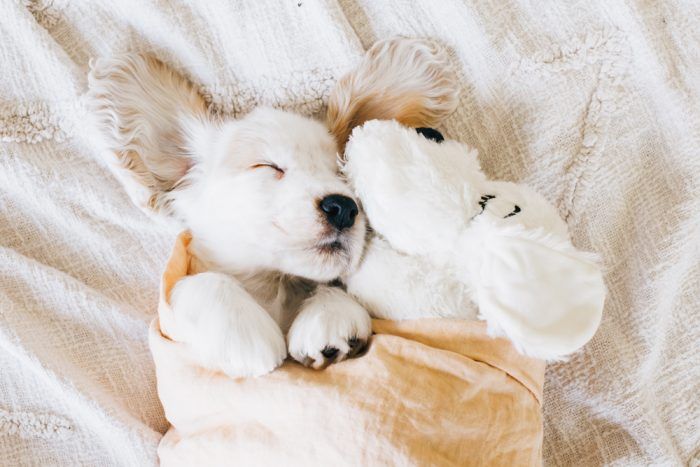
A comfort toy. Your puppy has just been separated from their littermates and will feel it most at night. We bought Sunny a Snuggle Puppy, which has a heat pack and a simulated heartbeat, and it made the first fortnight dramatically easier on everyone.
A playpen or baby gates. Not strictly a day-one purchase, but close. Being able to contain a puppy in one safe room while you take a shower is worth a great deal, and gates keep them off stairs before their joints are ready for them.
Collar, Harness, Lead and ID
Puppy skin is soft, so choose a fabric collar and harness that will not rub. Both should be snug with room for two fingers between the strap and their coat, and both will need checking weekly, because puppies grow at a genuinely startling rate. It is worth getting a rough estimate of their adult weight before you decide whether to buy a cheap starter harness now or invest in something adjustable that will last. For more on fit and care, see our dog collar guide.
Because they sprout up incredibly fast, it can also be a huge help to get a rough estimate of your fluffy friend's eventual adult weight. Having a baseline for their future growth makes it much easier to decide whether to buy a budget-friendly starter harness for now, or invest in a premium adjustable collar that will comfortably last them through adulthood.
Choose a short lead rather than an extendable one. You want full control while you are teaching them to walk beside you, and a long line teaches pulling before you have taught anything else.
ID tag. Non-negotiable, alongside microchipping. Engrave your phone number clearly. Blanket ID tags link to a database so vets and rescues can be notified directly if your dog goes missing.

EDITOR'S PICKS: Pupstyle Creme Brulee Harness, and Meow the Woof ID Tag
Toilet Training Supplies
Puppy pads. These will save your floors while your puppy works out where the bathroom is. They are absorbent and lightly scented to encourage your dog toward them, which newspaper is not. To use them for training rather than just damage control, start with pads near where your puppy is already going, then inch each new pad toward the door or the spot you want them to use.
EDITOR'S PICK: Dundies Washable Puppy Pads. Tip: puppy potty training grass mats mimic the feel of grass and work well for the transition outdoors.
An enzymatic cleaner. This is the item nobody puts on their list and everybody ends up buying at an inconvenient hour. Ordinary household cleaners mask the smell to you but not to your puppy, so they return to the same spot. Enzymatic cleaners break the proteins down entirely. Buy it before you need it. Our cleaning tips for dog owners cover what else to keep on hand.
Poop bags. Get more than you think. A pouch that clips to the lead and holds bags, treats and your phone makes walks considerably less chaotic.


EDITOR'S PICK: Earth Rated Lavender Scented Poop Bags
Toys and Enrichment
If you do not give a puppy something to chew, they will select something themselves, and their taste runs expensive. Sturdy rubber teething toys are the priority. The Puppy Kong earns its place by being three things at once: a chew, a treat dispenser and a ball for early fetch. Add a couple of plush toys with squeakers for play, and rotate them so they stay interesting.
An enrichment or puzzle toy is worth adding early too. Ten minutes of nose work tires a puppy more thoroughly than a long walk, which matters a great deal at the point in the evening when they get the zoomies. Chewing also becomes a genuine need during the teething phase, so having enough of the right things to chew is prevention rather than indulgence. Our dog toy buying guide covers what to look for in terms of safety and durability.

EDITOR'S PICK: Lambwolf Collective NOU Squeaky Enrichment Play Object
Grooming and Health
Grooming Kit
Start grooming long before your puppy actually needs it, because the goal early on is not a clean dog but a dog who is comfortable being handled. Short, positive sessions with plenty of treats now will save you years of wrestling later.
You need a natural shampoo and conditioner made for puppy coats and sensitive skin, a soft bristle brush, and nail clippers. If you plan to trim nails at home, have your vet or groomer show you how first, because cutting the quick once will make the next twenty attempts much harder. Add a dog toothbrush and dog toothpaste, never the human kind, and get them used to having their mouth handled early. The same goes for ears, and our guide to cleaning dog ears safely covers how often and how gently.
For heavy shedders, a pet grooming vacuum kit captures loose hair as you brush, which keeps the house considerably more livable.
EDITOR'S PICK: The Hound Lab Calming Wash Shampoo & Conditioner
Health and First Aid
Book the first vet appointment before your puppy arrives if you can, and take any records the breeder or shelter gave you. Your vet will set the vaccination schedule, advise on worming, and recommend flea and tick prevention suited to where you live, which varies a lot by region.
Puppy supplements can support gut health and immune development, though it is worth asking your vet first, since good puppy food already covers much of the same ground. And put together a pet first aid kit now rather than at the point you need one.
EDITOR'S PICK: Royal Canine Immunity & Digestion Soft Chews
Travel and Out of the House
You will be going to the vet before your puppy is fully vaccinated and cleared for the ground outside, so a carrier is a first-week item rather than a nice-to-have. A quality carrier and a travel harness that meets local restraint regulations mean you can get to appointments, visit friends and eventually reach a dog-friendly cafe without improvising. Our dog carrier buying guide covers sizing and airline compliance.
EDITOR'S PICKS: Wild One Travel Carrier and Sleepypod Air Pet Carrier

Download Your Free Printable Checklist
Two versions of the printable, both free. Stick one to the fridge and take the other to the shops.
Free Printable Puppy Shopping List, Version 1
Free Printable Puppy Shopping List, Version 2


One last thing, and it is the only item on this list that costs nothing. Puppies need a great deal of your time in the first month, more than any product can substitute for. If you can take a week off when they arrive, take it. Our guide to bonding with your puppy is where we would start. Enjoy them. It goes alarmingly quickly.
FAQ
Frequently asked questions
01What do you need for a puppy on the first day?
Food matching what they are already eating, a food and water bowl, a bed, a crate, a collar with an ID tag, a lead, puppy pads and an enzymatic cleaner. Everything else can wait a few days. Having the crate and bed set up before they arrive matters more than having the full list.
02How much does it cost to set up for a new puppy?
Expect a few hundred dollars for the basics, though the range is wide. The crate, bed and carrier are the largest single costs and the ones worth buying properly, since a well-chosen crate lasts into adulthood. Toys, treats and pads are ongoing rather than one-off.
03What puppy supplies are not worth buying?
Anything sized to your puppy right now rather than to their adult size, expensive plush toys before you know whether they are a destroyer, and multiple beds before you learn where they actually like to sleep. Buy one of each, then add once you know your dog.
04Do I need a crate for a puppy?
You do not have to crate train, but a crate makes toilet training and settled nights considerably easier, and gives your puppy a den of their own. Size it so they can stand, turn and lie flat. Most come with a divider so you can buy for adult size and shrink the space while they grow.
Related Reading


Share a thought, ask a question, or tell us about your own dog. We read every comment.
MUST HAVE PUPPY ESSENTIALS + FREE DOWNLOAD CHECKLIST is a very good article and one with lots of ideas to share.
A very good idea that we should put an ID Tag for any new dog. Ditto for getting your new pet micro chipped.
PUPPY TRAINING PADS a good thing for all the puppies for them to be trained good.
I agree that we should always choose a bed that is machine washable – this makes life much easier for any new puppy owner.
Healthy food for your puppies will sure make them happy.
Grooming one of you puppies is one of the essentials in taking care of your puppies.arabic calligraphy
All the puppies in this article are simple cute and adorable. The blog is also helpful for all the pet lovers out there in choosing for their accessories.
Very helpful checklist. we agree that those are must-haves.
You can also add dog training collars. More info here dog training collars
Hi! Something I have found essential but hasn’t been mentioned is an eco-friendly way to deal with the poop. A pet poop specific composter has proven to be a total winner. No more poop in plastic bags in landfil!
http://www.bokashi.com.au/EnsoPet.html
I highly recommend skipping purchasing the pink dahlia collars. I know that this product is from kiss My Mutt. The customer service is beyond awful and the order was filled incorrectly and it took a very long time to ship out. They clearly don’t value anyone’s business. It was mistake after mistake.
Hi
Thank you for this! Bringing our little ruby Cav home in a fortnight..
Do you recommend a particular brand of puppy training pads?
Thanks!!
How exciting!
I wish this brand was around when Soda was a puppy. It actual has sticky strips on the underside to keep the pad in place and is very absorbent: http://www.petbarn.com.au/dogs/dog-training-behaviour-control/toilet-training/animates-dog-puppy-training-pads-1.html
However that said, places like Target and Big-W also have puppy pads that do work well. They may be slightly less absorbent and without the sticky strip, but will be kinder to the budget 🙂