


Golden Retriever vs Labrador: Feathers or Otter Tail
 Dog Breeds

On paper, these two look like the same dog in different coats. Both are big, friendly, sporting retrievers with soft mouths, webbed feet and a lifelong love of tennis balls. The golden retriever vs labrador question only gets interesting once you look at the details that shape daily life: how much hair lands on your sofa, how fast the dog grows up, how hard food is to keep off the counter, and which health risks are worth planning for.
Both breeds sit at the top of every list of best family dogs, so the real question is which one fits your home.
Lab or Golden Retriever: Which Breed Suits Your Home?
A Labrador usually suits a busy, outdoorsy household that wants an easy-care coat and has the energy for a dog that stays puppyish for years. A Golden Retriever usually suits a family that wants a slightly softer, more sensitive companion and does not mind brushing several times a week. Both need daily exercise, both shed, and both live around 10 to 12 years.
Meet the Breeds: Golden and Labrador Retriever Profiles
Both breeds were developed in Britain to retrieve game for hunters. Labradors trace back to the St. John's water dogs that worked alongside fishermen in Newfoundland, while Goldens were bred in the Scottish Highlands during the 1800s for cold, wet country. Today they rank among the most popular dog breeds in Australia and far beyond.
Golden Retriever at a Glance

- Lifespan: 10 to 12 years
- Good for: Families, therapy and assistance work, and owners who enjoy grooming
- Notable trait: A long, water-repellent double coat with feathering on the chest, legs and tail
Labrador Retriever at a Glance

- Lifespan: 10 to 12 years
- Good for: Active households, guide and detection work, and swimming-mad families
- Notable trait: A short, dense coat and an appetite that rarely switches off
Size, Build and Looks: How to Tell a Yellow Lab From a Golden
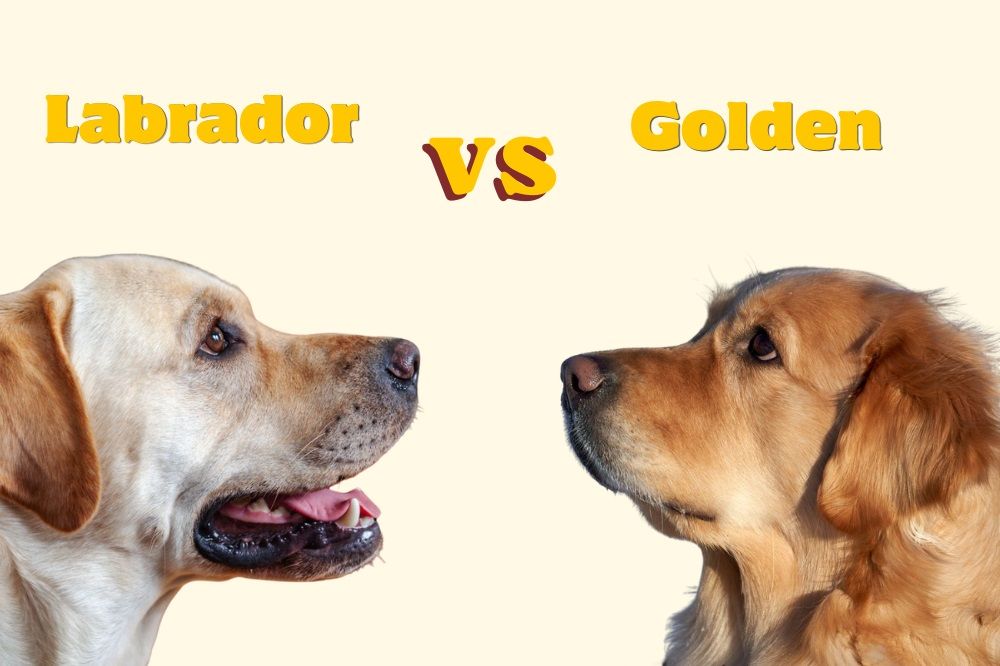
A yellow Lab and a Golden can look strikingly alike from across the park, especially as puppies. Up close, the head gives it away. Labs have a broad skull, a wide muzzle and a stocky, muscular frame, while Goldens have a longer, narrower muzzle and a leaner outline under all that fur.
Height and Weight Compared
Labs are usually the heavier of the two. Most Labradors stand about 21.5 to 24.5 inches at the shoulder and weigh 55 to 80 pounds (roughly 25 to 36 kg). Goldens stand about 21 to 24 inches and weigh 55 to 75 pounds (roughly 25 to 34 kg). Males sit at the top of each range. Either way, you are bringing home one of the classic big dog breeds, so plan for car space, crate size and a sturdy leash.
Coat Colors: Yellow, Black, Chocolate and English Cream
Labradors come in three official colors: black, yellow and chocolate. Yellow covers everything from pale cream to deep fox red. Goldens come in shades of gold, from light cream to dark red. The so-called English cream Golden is simply a pale Golden, often from British-style lines with a blockier head, not a separate breed. If a lower-shedding coat is what you are after, the doodle crosses of both breeds are a different conversation, covered in this Labradoodle vs Goldendoodle guide.
What About Long Haired Labradors?
Some Labs carry a recessive gene for a longer, fluffier coat. When two carriers are bred together, a few puppies can grow wavy fur on the ears, chest and tail and get mistaken for Goldens. Long haired Labs have the same Lab build and personality. The coat simply falls outside the breed standard.
Temperament and Personality Differences
Both breeds are friendly, gentle and famously poor guard dogs. The differences lie in intensity and sensitivity rather than character.
The Sensitive Golden
Goldens are often described as emotionally tuned in. They notice tone of voice, respond well to gentle handling and like being close to their people, which makes them natural therapy dogs. That softness also means harsh corrections can shut them down, and many dislike being left alone for long stretches.
The Exuberant Lab
Labs bring bouncy, full-body enthusiasm to everything. They tend to be a little more independent and confident in new places, and many keep their puppy energy until three or four years old. That sturdy, forgiving nature is a gift with rowdy kids, though a young Lab can knock over a toddler without meaning to.
Which Breed Is Better With Kids?
Both are excellent with children when raised with consistent rules. A Golden often suits families with younger or quieter kids, while a Lab often suits older, active kids who want a playmate for backyard games. This roundup of the best dog breeds for kids covers what to look for in any individual dog.
Training and Intelligence: Food Drive vs People Pleasing
Both breeds rank high on any list of the smartest dog breeds, and both are quick to learn. What motivates them differs. Labs will work for almost any snack, while Goldens tend to respond just as well to praise and a kind word.
Why Labs Are So Food Motivated
Research from the University of Cambridge found that roughly one in five pet Labradors carries a deletion in a gene called POMC, which affects how the brain registers fullness. Carriers tended to be heavier and more food motivated, and the variant was even more common in Labs bred for assistance work. In practice, Labs are easy to train with treats and easy to overfeed.
Training Toys and Puzzle Toys for Busy Retriever Brains
A bored retriever finds its own projects, usually involving shoes. Short training sessions, retrieve games and food puzzles keep both breeds settled, and these puzzle dog toys let a Lab earn part of dinner instead of inhaling it from a bowl.
Shedding and Grooming: Brushes, Baths and Dog Hair
Neither breed is low shedding. Both have double coats that drop hair year round and blow their undercoat heavily in spring and fall.
Grooming a Golden's Feathered Coat
A Golden needs brushing two or three times a week, and daily during heavy shedding, to stop the feathering behind the ears and legs from matting. A slicker brush and an undercoat rake do most of the work. If you own a compatible vacuum, this Dyson Groom Tool review shows how a brush attachment keeps the fluff off your floors.
Lab Shedding Is Sneakier Than It Looks
A weekly brush usually keeps a Lab's coat in order, and it dries quickly after a swim. Do not mistake short for tidy, though. Lab hairs are short and stiff, so they weave into fabric and upholstery and need a strong vacuum to lift.
Exercise, Dog Food and Weight Management
Daily Exercise Needs
Plan on at least an hour of activity every day for either breed, split between walks, off-leash running and play. Labs generally want more intensity, such as swimming, long hikes and endless fetch. Many Goldens are happy with a brisk walk and a good game, then settle more readily indoors.
Feeding a Large Breed Retriever
Both breeds are prone to weight gain, which puts extra strain on their joints. Measure every meal, count treats in the daily total, and choose a large breed puppy food in the first year to support steady growth. These dry dog foods include options for both puppies and adults.

Health and Lifespan of Goldens and Labs
Healthy dogs of both breeds typically live 10 to 12 years. They share several inherited risks, and each carries a few of its own, so ask any breeder for health test results on both parents.
Shared Joint Concerns and Orthopedic Dog Beds
Hip and elbow dysplasia are common in both breeds, along with progressive retinal atrophy, an inherited cause of gradual vision loss. Keeping your dog lean is the single most useful thing you can do for those joints. A supportive memory foam bed helps too, especially as your dog ages, and these dog beds include orthopedic picks sized for large breeds.
Cancer Risk in Golden Retrievers
Cancer is a leading cause of death in Goldens, with hemangiosarcoma and lymphoma among the most common types. Goldens are also prone to subvalvular aortic stenosis, a heart condition breeders can screen for. Check any new lump promptly, and see your vet quickly for unusual tiredness or pale gums.
Breed Specific Conditions in Labradors
Labs can inherit exercise-induced collapse, in which a dog becomes wobbly and weak after intense activity. A simple DNA test identifies carriers. Labs are also prone to obesity and to ear infections, since water-loving dogs with floppy ears trap moisture easily, so dry the ears after every swim.
Spay and Neuter Timing for Both Breeds
A University of California, Davis study comparing the two breeds found that neutering before six months roughly doubled the rate of joint disorders in Labs, while Goldens saw a four to fivefold rise. Neutered female Goldens also showed a higher cancer rate than intact females. It is worth discussing timing with your vet rather than defaulting to an early date. The full neutering study in PLOS ONE sets out the details.
Choosing a Lab or Golden Retriever Puppy
A Golden May Suit You If...
You want an affectionate, people-focused companion for a moderately active family, someone is home for much of the day, and a regular grooming routine sounds relaxing rather than tiresome.
A Labrador May Suit You If...
You lead an outdoorsy life, love the idea of a swimming and hiking partner, prefer a wash-and-wear coat, and have the patience to manage a big appetite and a long puppyhood.
Finding a Responsible Breeder or Rescue
Popularity makes both breeds a target for puppy farms. Meet the puppy with its mother, ask for hip, elbow and eye results for both parents, and consider breed rescues too, where an adult dog's personality is already known. Both breeds also feature among the best dogs for first-time owners, so either can be a wonderful first retriever.
Related Reading


Share a thought, ask a question, or tell us about your own dog. We read every comment.